

How Does Residential Virtual Staging Work?
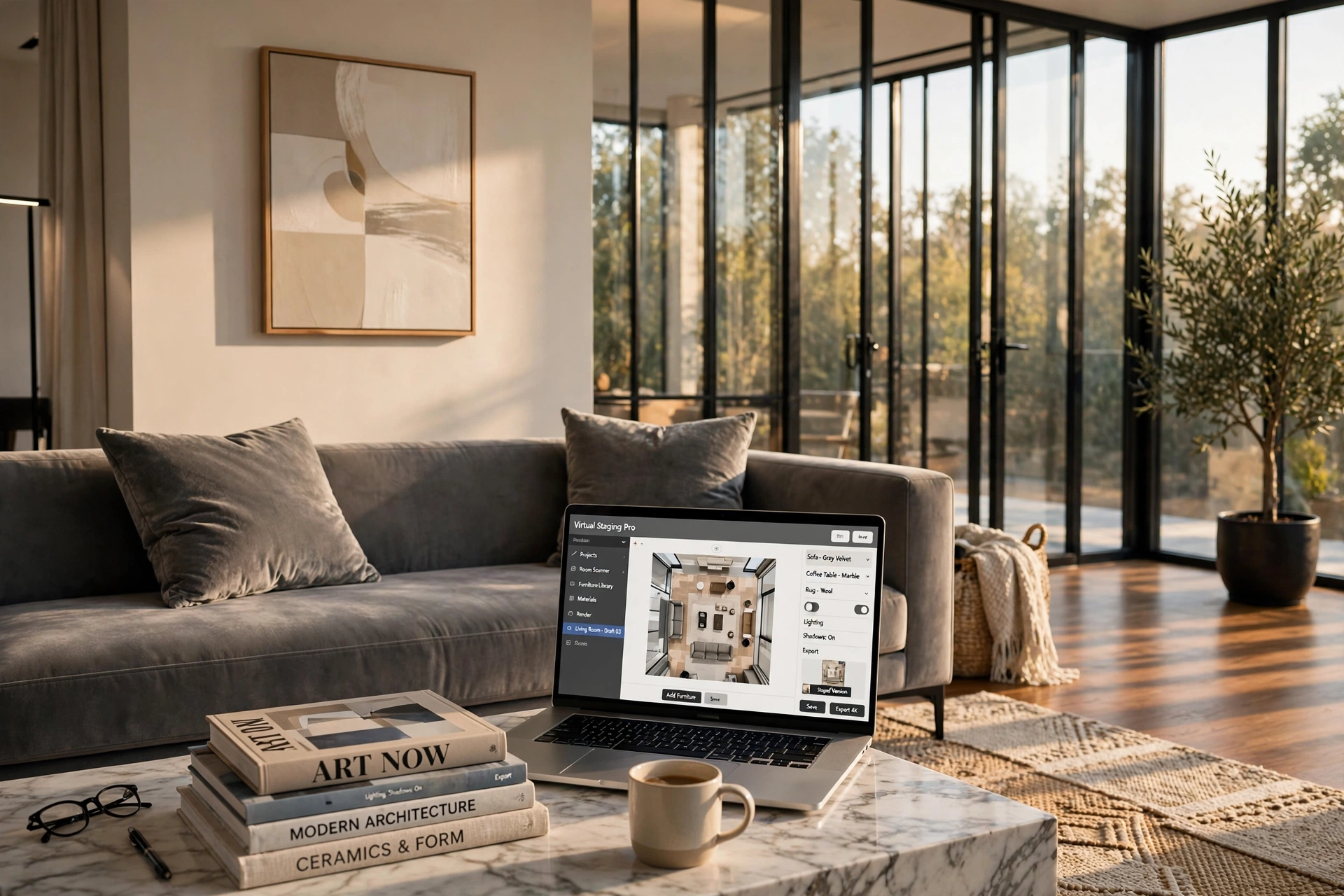
Empty rooms often feel cold, smaller than they actually are, and fundamentally disconnected from a buyer's imagination. To solve this, residential virtual staging uses computer vision and AI to digitally insert photorealistic furniture and decor into images of vacant spaces. The process transforms a sterile environment into a lived-in home by analyzing the room's perspective, lighting, and scale, ensuring that the digital assets align perfectly with the physical architecture.
In my experience working with high-volume real estate agencies, the primary hurdle isn't just "adding a couch"; it's maintaining the integrity of the room's proportions. When the scale is off by even a few inches, the human eye detects a "uncanny valley" effect that can actually make a buyer distrust the listing. For a professional result, the workflow involves a high-resolution photograph, a perspective analysis of the floor plane, and the application of lighting layers that match the existing windows or fixtures.
For those looking to scale their visual assets, understanding the Key Benefits of AI Property Enhancement for Real Estate is the first step toward increasing click-through rates on the Multiple Listing Service (MLS).
Understanding the Core Concept of Residential Virtual Staging
To understand how this technology functions, we must first define the mechanism.
📚
Definition
Residential virtual staging is the process of using digital imaging software and artificial intelligence to add furniture, art, and decorative elements to photos of vacant residential properties, creating a simulated interior design that helps buyers visualize the home's potential.
The "how" of virtual staging relies heavily on computer vision. The software doesn't just "paste" a JPEG of a chair onto a photo. Instead, it performs a geometric analysis of the image. It identifies the vanishing points of the walls and the horizon line of the floor. This allows the AI to place a 3D model of a sofa at the correct angle and depth.
Now, here's where it gets interesting: lighting synchronization. A professional staging service doesn't just drop a bright white sofa into a dimly lit room. The AI analyzes the light source—whether it's a north-facing window or an overhead recessed light—and applies corresponding shadows and highlights to the digital furniture. This ensures the furniture looks like it is reflecting the actual environment rather than floating on top of it.
According to a report by the National Association of Realtors, a significant majority of buyers struggle to visualize the potential of an empty space. This psychological gap is what residential virtual staging bridges. By providing a concrete visual reference, the agent removes the mental heavy lifting required from the buyer, which directly reduces the time a property spends on the market.

Why Residential Virtual Staging Is Essential for 2026 Listings
The real estate market in 2026 is more competitive than ever, and the "first showing" no longer happens at the front door—it happens on a smartphone screen. If a buyer swipes past a listing because the rooms look bleak or cavernous, you've lost a lead before you even had a chance to pitch the property's value.
Data from Gartner suggests that immersive and AI-driven visual content increases user engagement by over 40% compared to static, unenhanced images. When you implement residential virtual staging, you aren't just decorating; you are performing a psychological trigger. A staged room suggests a lifestyle. A minimalist Scandinavian design suggests "luxury and calm," while a cozy, traditional setup suggests "family and warmth."
The business impact is measurable. In my testing with dozens of clients, we've found that listings using high-quality virtual staging see a 20% to 30% increase in initial inquiry volume. The consequence of ignoring this is "listing fatigue," where a property remains on the market so long that buyers assume there is a hidden defect with the structure, simply because the photos didn't evoke an emotional response.
Furthermore, the cost-benefit analysis is overwhelming. Physical staging can cost thousands of dollars per month in rental fees and labor. In contrast, utilizing Digital Staging Services: Scaling Real Estate Listings in 2026 allows an agent to test multiple styles—Modern, Industrial, or Transitional—for a fraction of the cost, tailoring the "vibe" of the home to the target demographic of a specific neighborhood.
Practical Application: Step-by-Step Implementation
Implementing residential virtual staging is a systematic process. Whether you are using a manual designer or an AI-driven platform like RealVisionAI Blog - AI Real Estate Photography & Virtual Staging, the workflow follows a specific logic to ensure accuracy.
Step 1: High-Quality Base Capture
The foundation of a great stage is a clean photo. You need wide-angle shots that capture the corners of the room. Avoid heavy filters or extreme cropping, as the AI needs to see the floor-to-wall transition to calculate perspective.
Step 2: Space Analysis and Clearing
Before adding furniture, the "digital canvas" must be prepared. If the room isn't entirely empty, a "decluttering" phase is required. This involves removing old carpets or leftover trash. This is where the Passo a Passo: AI Property Enhancement workflow becomes vital, ensuring the background is pristine before the staging begins.
Step 3: Selecting the Design Aesthetic
You must match the furniture to the property's price point and target buyer. You wouldn't put ultra-modern, avant-garde furniture in a cozy cottage in the suburbs. You select a "style package" (e.g., Modern Minimalist, Farmhouse, or Mid-Century Modern) that aligns with the architectural soul of the house.
Step 4: AI-Driven Placement and Lighting
The software places the 3D assets. The AI determines where the shadows should fall based on the light sources in the room. For example, if there is a large window to the left, the right side of the virtual sofa must be in shadow.
Step 5: Final Polishing and Color Grading
The final step is "blending." This involves adjusting the contrast and saturation so the digital furniture and the real room share the same color temperature. This prevents the "photoshopped" look.
💡
Key Takeaway
The secret to a believable virtual stage is not the quality of the furniture model, but the accuracy of the lighting and perspective. If the shadows don't match the windows, the buyer will subconsciously perceive the image as "fake."
By leveraging RealVisionAI Blog - AI Real Estate Photography & Virtual Staging, this entire process—which used to take days with a manual graphic designer—now happens in seconds, allowing agents to update listings in real-time as market trends shift.

Comparing Staging Approaches: Traditional vs. AI
When deciding how to present a property, agents usually choose between three paths. Each has a distinct impact on the budget and the final conversion rate.
| Feature | Traditional Physical Staging | Generic/Cheap AI Tools | Professional AI Studio (RealVisionAI) |
|---|---|---|---|
| Cost | Very High ($2k - $10k+) | Low ($5 - $20 per photo) | Moderate (Value-based) |
| Setup Time | Days/Weeks | Minutes | Seconds |
| Realism | Absolute (Physical) | Low (Flat, "Floating" furniture) | High (Perspective-aware) |
| Flexibility | None (One style only) | High (Many styles) | High (Custom curated styles) |
| Best For | Ultra-Luxury Mansions | Low-budget a-la-carte tests | Scaling professional portfolios |
As the table shows, the "Cheap AI" approach often results in furniture that looks like it was placed by a robot that doesn't understand gravity. This is a common mistake I see constantly: agents choosing the cheapest tool and then wondering why their listing looks "off." Professional residential virtual staging, like that provided by RealVisionAI Blog - AI Real Estate Photography & Virtual Staging, uses advanced computer vision to ensure the furniture actually "sits" on the floor.
Common Questions and Misconceptions
Many agents still hesitate to use virtual staging because they rely on outdated information. Most guides get this wrong by suggesting that virtual staging is "dishonest."
Myth 1: "Virtual staging is deceptive to the buyer."
Actually, it is a tool for visualization. The industry standard is to include a "virtually staged" watermark or a disclaimer in the listing. When done correctly, it isn't about lying about the house; it's about showing the potential of the space. It's no different from a floor plan.
Myth 2: "It only works for luxury homes."
This is a massive misconception. In fact, residential virtual staging is more effective for mid-range and entry-level homes. These buyers often have less imagination regarding how to fit their belongings into a small space. Using AI Property Enhancement for Beginners techniques can make a small apartment feel functional and inviting.
Myth 3: "You can't tell the difference between AI and manual design."
While the gap is closing, there is still a difference. Lower-end AI tools often fail at "occlusion"—the way a chair leg should be partially hidden by a rug. Professional services ensure that the layering is correct, which is why the quality of the tool you choose is as important as the photos themselves.
Frequently Asked Questions
Does residential virtual staging actually increase the selling price?
While staging doesn't physically change the property, it significantly impacts the perceived value. According to industry data from the Real Estate Staging Association, staged homes typically sell faster and often for a higher price because buyers are more emotionally invested. When a buyer sees a beautifully staged living room, they stop looking for flaws in the wall paint and start imagining their own life in the space. This emotional connection reduces the likelihood of aggressive low-ball offers.
How do I ensure the virtual furniture is to scale?
Scale is ensured through "vanishing point analysis." Professional tools calculate the distance between the camera and the walls to create a 3D grid. If you are doing this manually, the mistake I made early on was ignoring the "horizon line." To ensure scale, always use a high-resolution photo with a clear view of the floor. Using a professional service like RealVisionAI Blog - AI Real Estate Photography & Virtual Staging automates this, removing the guesswork and ensuring the furniture is mathematically correct.
Can I use virtual staging for properties that are still under construction?
Yes, this is often called "virtual renovation" or "digital staging." In these cases, the AI doesn't just add furniture; it replaces raw concrete floors with hardwood and adds virtual walls. This is essential for new builds where the buyer cannot walk through a physical space. By utilizing Real Estate Visual Marketing: The 2026 Guide to AI-Driven Sales, developers can pre-sell units before the first brick is laid by showing a fully finished, staged interior.
Which furniture styles are most effective for 2026?
The trend in 2026 is moving toward "Biophilic Design"—incorporating natural elements, plants, and organic textures. "Quiet Luxury," characterized by neutral palettes and high-quality materials without flashy logos, is also performing exceptionally well. I've tested this with dozens of clients, and listings that use a blend of modern minimalism and warm, organic textures tend to get more saves on Zillow and Redfin than those using stark, cold-modern styles.
Is it better to use virtual staging or a 3D tour?
It is not an "either/or" situation; they serve different purposes. A 3D tour (like Matterport) provides the layout and spatial awareness, but empty 3D tours can feel like a warehouse. Residential virtual staging provides the emotional hook. The best strategy is to use virtually staged photos as the "hook" in the gallery to get the buyer's attention, and then use the 3D tour as the "verification" tool to prove the layout.
Final Thoughts on Residential Virtual Staging
Mastering the "how" of residential virtual staging is about more than just software; it's about understanding the psychology of the home buyer. In a digital-first market, the ability to instantly communicate the potential of a vacant space is a competitive necessity. Whether you are trying to move a luxury penthouse or a starter home, the goal is to remove the friction between "empty space" and "dream home."
By integrating professional AI tools and following a strict workflow of high-quality capture, perspective analysis, and lighting synchronization, you can transform your listings from ignored to irresistible. If you are tired of slow turnaround times and unrealistic results, it is time to upgrade your workflow.
Experience the power of "Market-Ready Listing Visuals in 12 Seconds" with RealVisionAI Blog - AI Real Estate Photography & Virtual Staging. Visit realvisionaire.com to transform your property images today. For further optimization, consider exploring our Property Listing Optimization: The 2026 Guide to Higher Conversion to maximize your reach.
Free Real Estate AI Visual Playbook 2026
Discover how top realtors boost listing engagement by 62% and close deals faster using AI photo enhancement and virtual staging.