
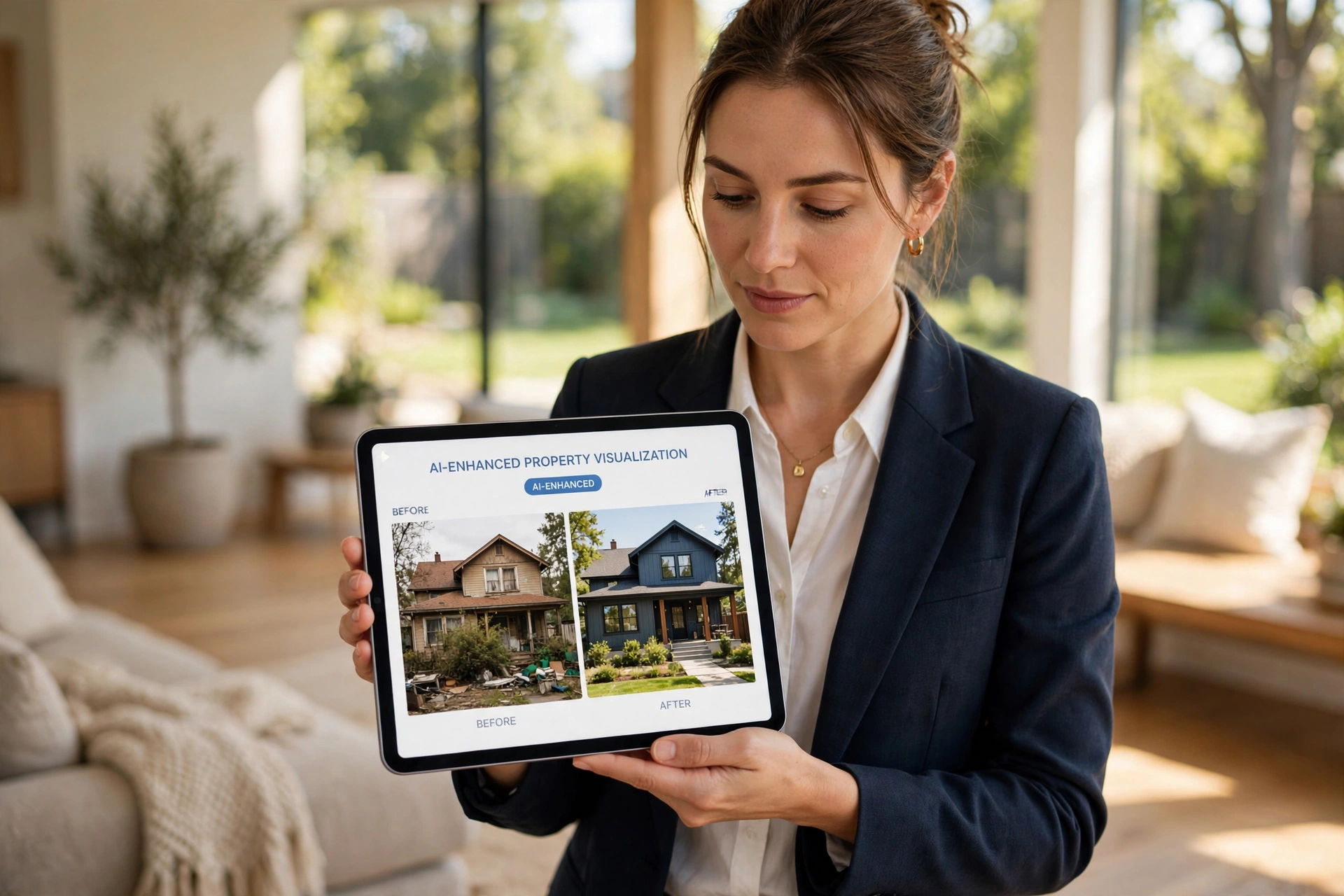
What Is AI Real Estate Photo Enhancement and How Does It Work?
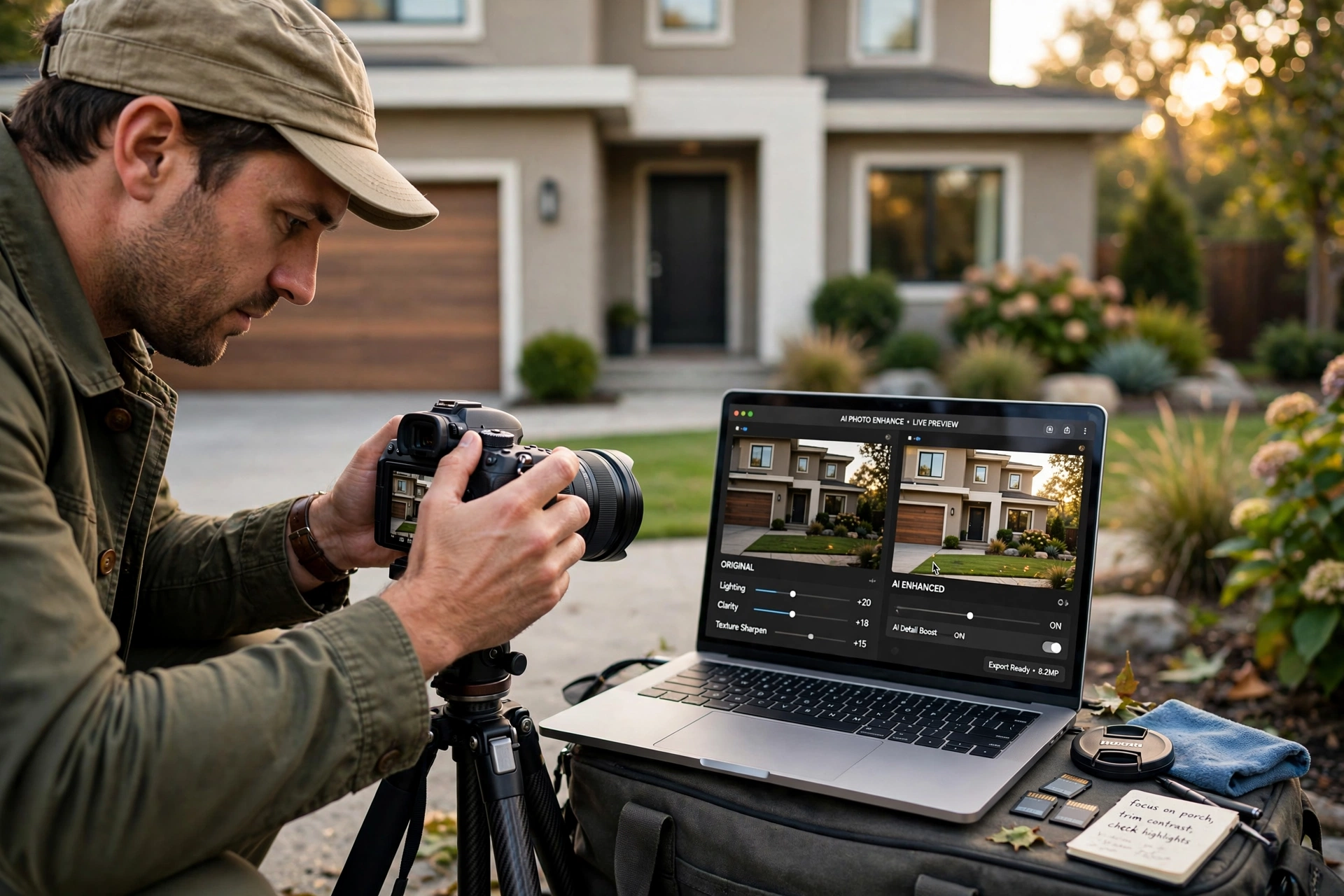
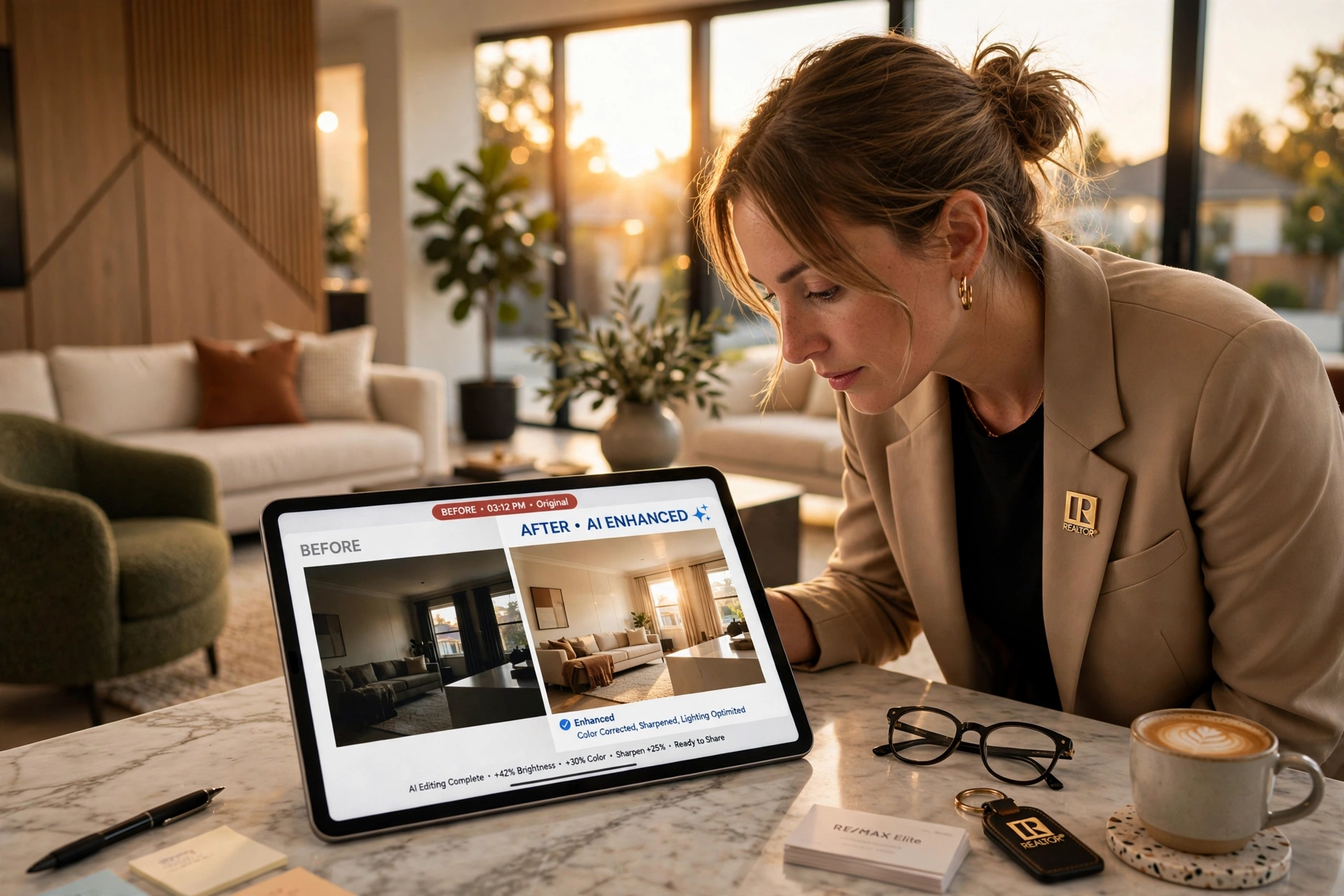
A property that looks dull in photos stays on the market significantly longer, often costing sellers thousands in price reductions. To solve this, professional agents use ai real estate photo enhancement, a process that employs computer vision and deep learning to automatically correct lighting, balance colors, and remove distractions from property images. Unlike basic filters, this technology analyzes the geometry of a room and the light sources within it to create a visually accurate yet idealized version of the space that triggers an immediate emotional response from potential buyers.
In my experience working with high-volume listing agents, the difference between a "raw" photo and an AI-enhanced one is the difference between a listing that gets 10 clicks and one that gets 1,000. Many beginners assume this is just "Photoshopping" the image, but it is actually a sophisticated application of neural networks that can distinguish between a grey sky and a white ceiling, applying specific corrections to each without the need for manual masking.
For those just starting out, understanding the foundational elements is essential. You can find more detailed technical breakdowns in our how AI real estate photography works guide to see the underlying mechanics of these tools.
📚
Definition
AI real estate photo enhancement is the application of artificial intelligence—specifically generative adversarial networks (GANs) and computer vision—to automatically optimize the visual quality of property imagery, improving exposure, color accuracy, and composition to maximize listing appeal.
When we talk about this technology, we are referring to several distinct processes happening simultaneously. First, the AI performs "Global Adjustment," which fixes the overall exposure. If a room is too dark or a window is "blown out" (pure white), the AI recovers those details. Second, it handles "Local Enhancements," such as brightening a dark corner or sharpening the texture of a hardwood floor. Finally, it applies "Semantic Editing," where the AI recognizes specific objects—like a dead lawn or a gloomy sky—and replaces them with vibrant green grass and a bright blue sky.
According to research from Gartner, the adoption of AI-driven visual content creation in the real estate sector has accelerated rapidly, as the demand for "instant gratification" in digital browsing forces agencies to produce high-end visuals in minutes rather than days. This shift is not just about aesthetics; it is about survival in a competitive Multiple Listing Service (MLS) environment.
Why Does AI Enhancement Matter for Your Listing ROI?
The psychological impact of a high-quality image on a buyer cannot be overstated. In the current market, the "first showing" happens on a smartphone screen. If the images are dark, tilted, or cluttered, the buyer mentally rejects the property before they ever step foot on the driveway. This is why ai real estate photo enhancement is a fundamental business strategy, not just a luxury.
Data shows that listings with professional, enhanced imagery generate significantly more leads. According to a report by the National Association of Realtors, high-quality photography is consistently ranked as one of the most important factors in selling a home faster and at a higher price point. When images are optimized, they reduce "friction" in the buyer's journey, allowing them to visualize themselves in the space.
From a business perspective, the ROI comes from two places: time and conversion. Manual editing takes hours. An experienced editor might spend 30 minutes on a single complex room. AI reduces this to seconds. When you combine this speed with a higher click-through rate (CTR) on portals like Zillow or Realtor.com, the cost per lead drops dramatically.
The mistake I made early on—and that I see constantly—is treating photo enhancement as a "final polish." In reality, it should be the core of your digital marketing strategy. If you are spending thousands on ad spend but using raw photos, you are effectively leaking money. The high-resolution, vibrant look provided by AI helps a property stand out against a sea of mediocre listings.
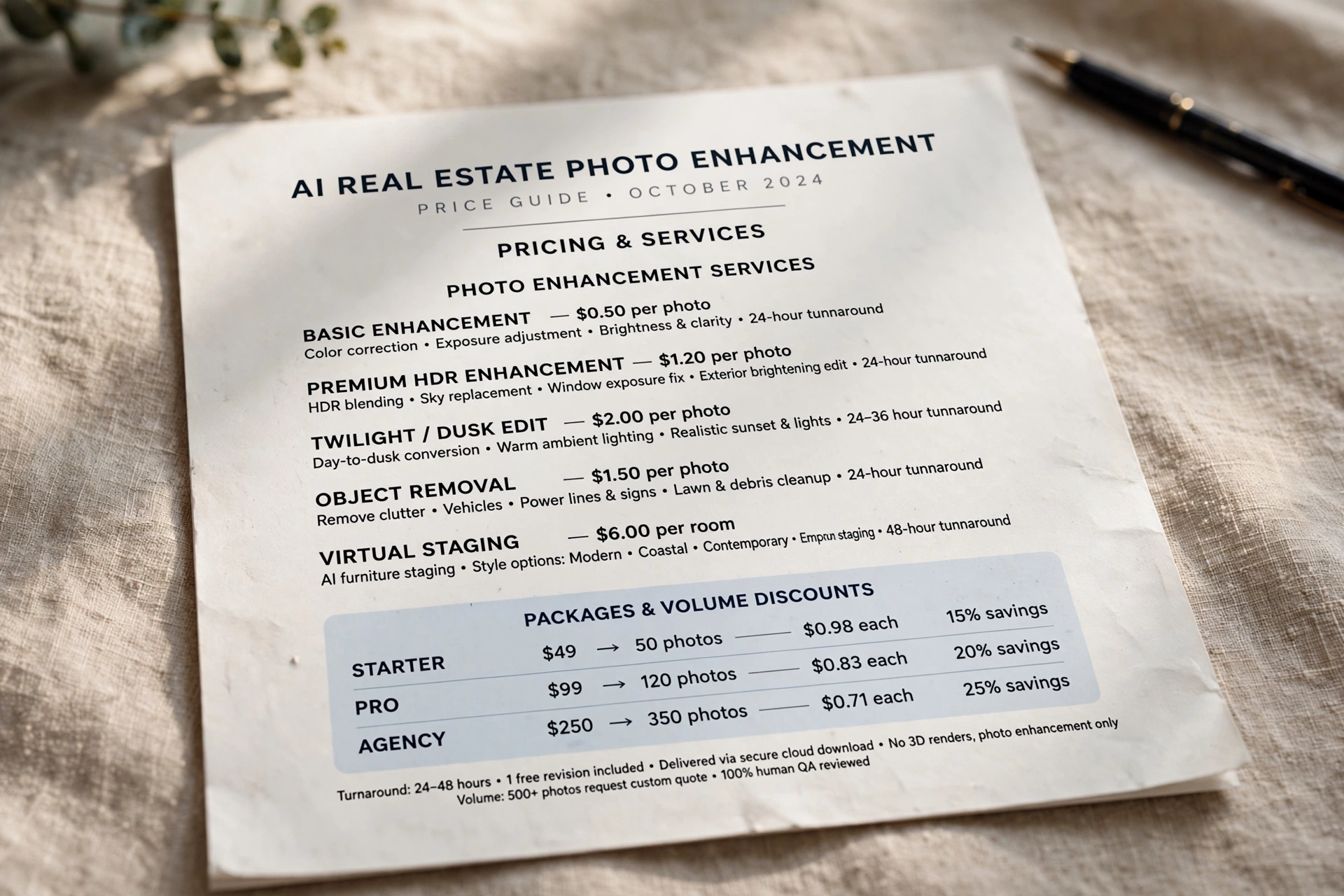
Furthermore, the ability to perform "virtual cleaning" or object removal means you don't have to spend hours physically staging a home. This saves on labor costs and physical staging rentals, which can cost thousands of dollars per month. For a comprehensive look at how this impacts your bottom line, check out our AI real estate photography pricing guide 2026.
How to Implement AI Real Estate Photo Enhancement Step-by-Step
Implementing a professional workflow does not require you to be a graphic designer. The goal is to achieve a "natural" look—if a photo looks too "AI-generated" or surreal, buyers will feel deceived, which leads to disappointment during the physical tour. The key is subtle, impactful optimization.
Here is the professional workflow for beginners:
- Capture High-Quality Raw Assets: AI cannot "invent" a room, but it can save a bad photo. Always shoot in a bright environment. Even if you are using a smartphone, ensure your vertical lines are straight. While AI can fix perspective, starting with a decent frame yields a 30% better result.
- Initial Processing (The "Quick Win"): Upload your photos to a specialized platform like RealVisionAI Blog - AI Real Estate Photography & Virtual Staging. The AI will immediately perform a "Day-to-Dusk" or "Sky Replacement" if the weather was poor during the shoot.
- Semantic Cleanup: Use AI-driven decluttering to remove unsightly power cords, trash cans, or personal clutter from the frame. This makes the space feel larger and more inviting.
- Virtual Staging Integration: If the room is vacant, use AI to add modern furniture. This is where the "What Is" of enhancement meets the "How To" of sales. A vacant room often looks smaller than a staged one.
- Final Quality Check: Compare the enhanced version to the original. Ensure the colors are realistic. If the grass looks neon green, dial back the saturation.
💡
Key Takeaway
The most effective AI enhancement strategy focuses on "Invisible Editing." The goal is for the viewer to think the house is naturally beautiful, not that the photo was heavily edited.
Now, here is where it gets interesting: the integration of these tools into a daily routine. If you are an agent handling 10+ listings a month, manual editing is impossible. By automating this through RealVisionAI Blog - AI Real Estate Photography & Virtual Staging, you can move from "Photo Taken" to "Listing Live" in under an hour. This speed is a competitive advantage that allows you to beat other agents to the market.
For those who want a more granular approach to different types of edits, our real estate photo enhancement guide for agents provides a deep dive into specific toolsets.
Comparing Your Enhancement Options: Manual vs. AI
Not all enhancement methods are created equal. Many beginners fall into the trap of using free, generic AI "beautifiers" found in app stores, which often distort the image or add artifacts that make the property look fake. To make an informed decision, you must compare the three primary industry approaches.
| Feature | Traditional Manual Editing | Generic AI Apps | Professional AI Studio (RealVisionAI) |
|---|---|---|---|
| Turnaround Time | 24–72 Hours | Instant | 12 Seconds |
| Visual Accuracy | High (Human Eye) | Low (Hallucinations) | High (Niche-Trained Models) |
| Cost per Image | High ($5–$15) | Low/Free | Affordable/Scalable |
| Consistency | Varies by Editor | Random | Standardized across Listing |
| Best For | Ultra-Luxury Estates | Social Media Teasers | High-Volume Professional Listings |
As the table shows, generic AI apps are dangerous for professional real estate because they lack "domain awareness." A generic AI might see a white wall and decide to make it "more colorful," whereas a professional system like RealVisionAI Blog - AI Real Estate Photography & Virtual Staging understands that a white wall should remain clean, crisp, and neutral to highlight the property's architecture.
That said, traditional manual editing still has a place in the $10M+ luxury market where every single reflection in a mirror must be curated. However, for 95% of the market, the Professional AI approach is the only way to maintain a profitable margin. If you are unsure when to use which method, refer to our when to use property photo editing guide.
Common Questions and Misconceptions about AI Editing
Most guides get this wrong by suggesting that "more is better." They tell you to crank up the saturation and brightness until the house glows. In the professional world, this is a mistake. Over-editing is a red flag to experienced buyers and inspectors; it suggests the agent is trying to hide a flaw in the property.
Myth 1: AI enhancement is "dishonest" or misleading.
Correction: There is a clear line between enhancement and misrepresentation. Fixing a grey sky or brightening a dark room is the digital equivalent of cleaning a house before an open house. It is only misleading if you remove a permanent structural defect (like a giant crack in the wall). As long as the property's physical attributes remain accurate, enhancement is a standard industry practice.
Myth 2: You need a DSLR camera for AI to work.
Correction: Modern AI is incredibly powerful at upscaling and noise reduction. While a professional camera helps, ai real estate photo enhancement can take a high-quality smartphone photo and make it look like it was shot on a professional rig by correcting the lighting and sharpening the edges. This democratizes high-end visuals for agents on a budget.
Myth 3: AI editing is too expensive for new agents.
Correction: This is the opposite of the truth. The cost of hiring a professional photographer and editor for every single listing is a massive overhead. AI tools have reduced the cost of professional-grade visuals by over 80% in the last few years. For a full breakdown of costs, see our affordable property photo editing costs guide.
Frequently Asked Questions
What exactly does "AI enhancement" change in a real estate photo?
AI enhancement targets specific technical failures in a photograph. It primarily addresses dynamic range—the difference between the brightest and darkest parts of the image. For instance, it uses "HDR merging" logic to ensure that both the interior of a room and the view through the window are perfectly exposed. It also corrects color casts (like the yellow tint from old lightbulbs), removes lens distortion (the "curving" effect of wide-angle lenses), and employs generative fill to remove temporary distractions like a trash can or a stray wire, making the space feel more pristine.
How long does it actually take to enhance photos using AI?
When using a specialized studio like RealVisionAI Blog - AI Real Estate Photography & Virtual Staging, the processing time is typically around 12 seconds per image. This is a massive leap from traditional editing services, which often require a 24-to-48-hour turnaround. Because the AI uses pre-trained models specifically for architectural photography, it doesn't need to "learn" the image from scratch; it recognizes the patterns of a room and applies the necessary corrections instantly. This allows agents to upload photos from the field and have them ready for the MLS before they even leave the property.
Can AI enhancement help sell a home faster than traditional staging?
Yes, because of the "Digital First" nature of the modern home search. While physical staging is excellent for the physical tour, AI enhancement—specifically virtual staging—captures the buyer's attention during the search phase. According to industry data from the Zillow Group, homes with high-quality, staged visuals receive significantly more engagement. AI allows you to test different styles (e.g., Minimalist vs. Traditional) to see which resonates more with the local demographic in your area, allowing for a more targeted marketing approach.
Will using AI photos lead to complaints during the actual home tour?
Not if the enhancements are handled professionally. The goal of ai real estate photo enhancement is to represent the property in its best light, not to create a fake environment. If you use AI to fix lighting, balance colors, and remove a temporary pile of laundry, the buyer will still recognize the home they saw online. However, if you use AI to remove a permanent wall or add a window where none exists, you create a trust gap. Stick to lighting, color, and staging enhancements to maintain professional integrity.
Do I need professional photography skills to use these AI tools?
You do not need to be a master of lighting or composition, but a basic understanding of "framing" will improve your results. AI can fix a lot, but it cannot fix a photo where the camera was pointed at the floor. If you can keep your phone level and capture the corners of the room, the AI will handle the heavy lifting of exposure and color grading. For those looking to improve their raw shots, we recommend reading our dicas AI real estate photography guide to maximize the output of your AI tools.
Final Thoughts on AI Real Estate Photo Enhancement
The transition from manual editing to ai real estate photo enhancement is not just a trend; it is a fundamental shift in how property is marketed in 2026. By removing the bottleneck of slow turnaround times and high costs, agents can finally focus on what matters most: closing deals and managing client relationships. The ability to transform a dark, vacant room into a bright, inviting home in 12 seconds provides a psychological edge that is impossible to ignore.
Whether you are a seasoned broker or a new agent, the goal remains the same: maximize the perceived value of the property. By using a professional ecosystem like RealVisionAI Blog - AI Real Estate Photography & Virtual Staging, you ensure that your listings are not only seen but remembered.
Stop letting poor lighting and empty rooms kill your conversion rates. It is time to move beyond basic filters and embrace a professional, AI-driven workflow that scales with your business. For more information and to start transforming your listings today, visit realvisionaire.com.
Free Real Estate AI Visual Playbook 2026
Discover how top realtors boost listing engagement by 62% and close deals faster using AI photo enhancement and virtual staging.