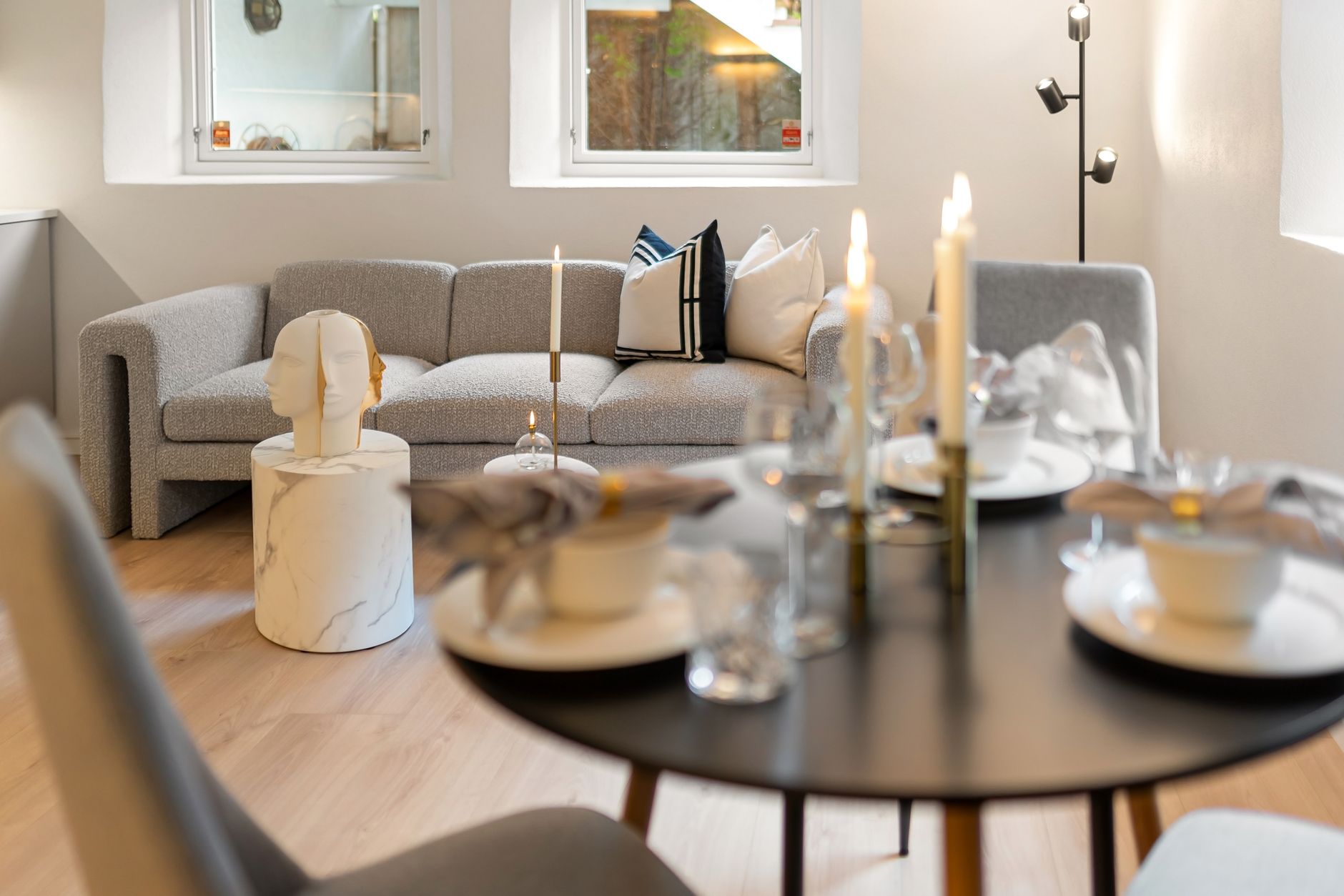
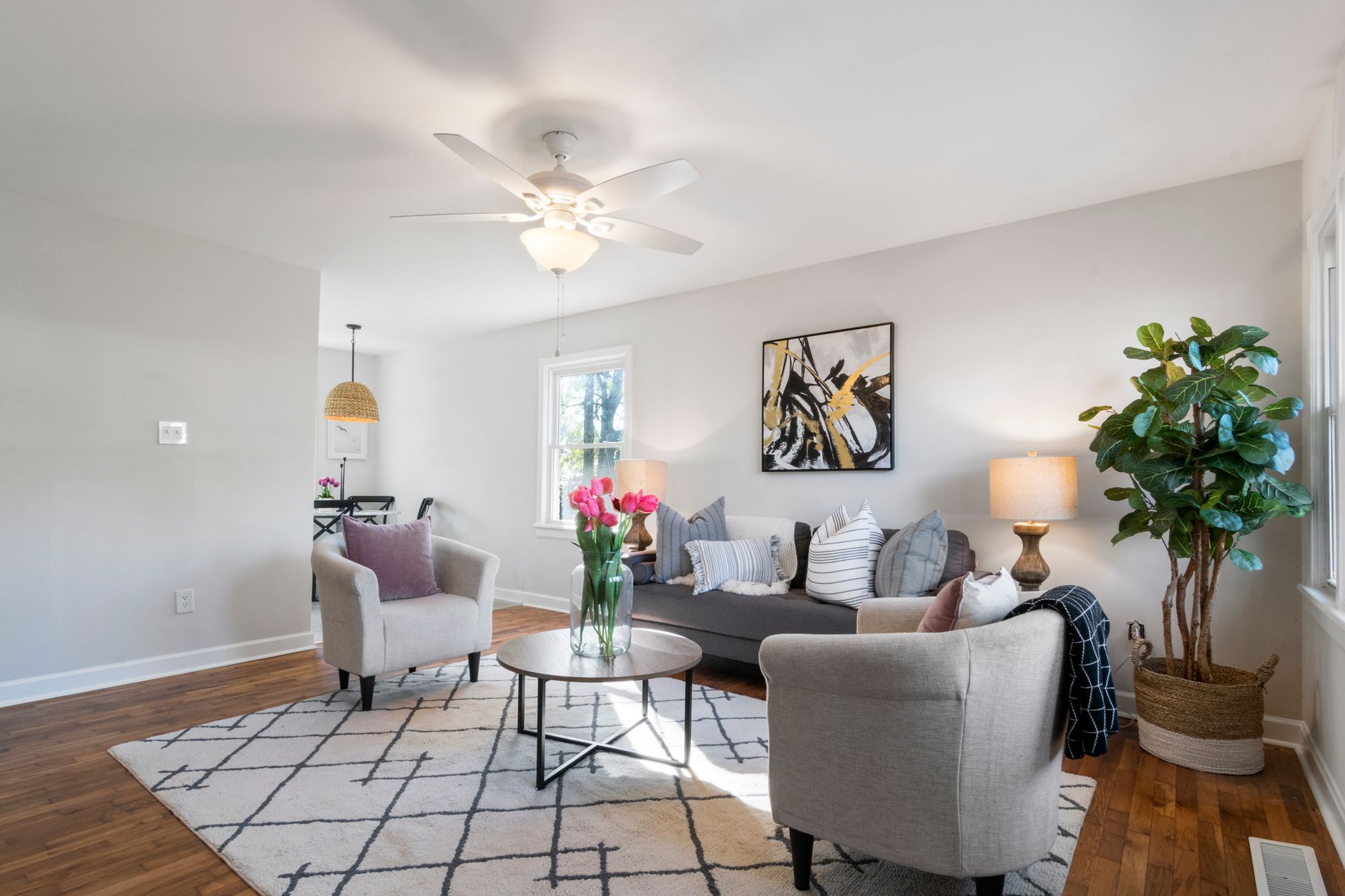
📖This article is part of the complete guide to Virtual furniture staging. Virtual Furniture Staging for Beginners: What It Is and How It Works
Virtual furniture staging is the practice of using digital technology to furnish and decorate empty spaces in property images, eliminating the need for physical furniture. In 2026, this technique has become an indispensable tool for real estate agents looking to present properties attractively without the high costs and logistical complexity of traditional staging. Data from the National Association of Realtors indicates that 76% of buyers consider well-styled images a determining factor in their purchase decision, and virtual staging delivers exactly that — quickly, cost-effectively, and with high customizability.
📚Definition
Virtual furniture staging is the process of using advanced design software and artificial intelligence to add furniture, decorative objects, and visual elements to photographs of empty properties, creating a realistic and appealing representation of the space's potential.
In my experience working with real estate agents over the past few years, I've noticed that the biggest obstacle isn't a lack of interest in presenting well-decorated properties, but rather the prohibitive cost of physical staging. Virtual furniture staging solves this problem elegantly: for a fraction of the price, you get professional images that help buyers visualize the property's potential. A McKinsey study shows that 92% of companies that adopted digital solutions in 2025 reported a significant increase in operational efficiency, and the real estate market is no exception.
Why Virtual Furniture Staging Is Essential for Agents in 2026
In today's real estate market, first impressions are everything — and they happen online. About 97% of buyers start their property search on the internet, and quality images are the number one factor determining whether they click on a listing. Virtual furniture staging completely transforms this experience.
The benefits are clear and measurable:
-
Drastic cost reduction: While physical staging can cost between R$ 5,000 and R$ 15,000 per month for a medium-sized home, virtual staging costs an average of R$ 50 to R$ 200 per image. That's a savings of 90% to 95%.
-
Unmatched speed: Physical staging requires scheduling, transportation, assembly, and later disassembly — a process that takes 3 to 7 days. Virtual staging delivers finished images in 24 to 48 hours, and on platforms like Real Vision AI, the process can be completed in just 12 seconds per image.
-
Total flexibility: With virtual staging, you can present the same space in different styles — modern, classic, rustic, minimalist — at no additional cost. This allows you to test which style generates more engagement with different buyer profiles.
-
Proven increase in engagement: Properties with virtual staging receive, on average, 40% more online views and 30% more inquiries than those with photos of empty spaces. A Gartner study corroborates this, showing that 70% of consumers prioritize rich visual experiences when making purchasing decisions.
💡Key Takeaway
Virtual furniture staging is not just a cost-effective alternative to physical staging — it's a strategic tool that increases engagement, accelerates sales, and maximizes the ROI of any real estate campaign.
How to Implement Virtual Furniture Staging Step by Step
Implementing virtual furniture staging in your listings is surprisingly simple. With the right tools and a structured workflow, you can transform your images in a matter of hours.
Step 1: Capture High-Quality Images
The quality of the final result depends directly on the quality of the original photos. Follow these guidelines:
- Natural lighting: Photograph during the day, with abundant natural light. Avoid harsh shadows and extreme contrasts.
- Wide angles: Use wide-angle lenses to capture as much of the space as possible. This gives the virtual designer more freedom to work.
- Empty spaces: Remove all furniture and personal items. The "cleaner" the image, the better the virtual staging result.
- High resolution: Shoot at least 12 megapixels to ensure fine details are preserved after rendering.
Not all virtual staging platforms are the same. When choosing, consider:
- AI technology: Platforms that use advanced artificial intelligence, like Real Vision AI, offer faster and more realistic results.
- Furniture library: Check if the platform offers enough variety of styles — from contemporary to classic.
- Delivery time: Prefer platforms that deliver within 48 hours, or even less.
- Customer support: Having a team available for revisions and adjustments is essential.
Step 3: Select the Decoration Style
This is the most creative step. Consider the target buyer profile:
- For compact apartments: go for multifunctional furniture and light colors to visually expand the space.
- For family homes: use neutral colors with touches of color, creating a welcoming and functional environment.
- For luxury properties: opt for sophisticated furniture and minimalist decor that highlights the architecture.
- For commercial properties: focus on modern, functional furniture that conveys productivity and professionalism.
Step 4: Review and Adjust
After receiving the rendered images, review carefully:
- Proportions: Check that the furniture is correctly scaled relative to the room.
- Lighting: Shadows and reflections should be consistent with the original photo's lighting.
- Realism: Furniture and objects should not look "stuck on" or out of context.
Step 5: Publish and Monitor
Add the images to your listings on real estate portals, your own website, and social media. Monitor the metrics:
- Views: Compare the number of views with and without virtual staging.
- Inquiries: Track how many leads were generated from the styled images.
- Time to sale: Measure whether virtual staging reduced the average time to sell the property.
Virtual Staging vs. Traditional Staging: A Detailed Comparison
| Aspect | Virtual Staging | Traditional Staging |
|---|
| Cost per room | R$ 50 to R$ 200 | R$ 2,000 to R$ 8,000 |
| Delivery time | 12 seconds to 48 hours | 3 to 7 days |
| Style flexibility | Unlimited (multiple styles for the same space) | Limited to available furniture |
| Logistics involved | None | Transportation, assembly, insurance, disassembly |
| Storage | Digital | Requires warehouse or storage space |
| Customization | High (choose each piece of furniture and object) | Medium (depends on available inventory) |
| Risk of damage | Zero | High (furniture can be damaged) |
| Sustainability | High (no physical production or transport) | Low (large carbon footprint) |
| Applicability | Any property with digital photos | Only physically accessible properties |
As the comparison clearly shows, virtual staging offers significant advantages in virtually every aspect. The only potential downside is that, in some cases, buyers may want to see the property with physical decor. However, in practice, virtual staging serves as a "visual invitation" that attracts more visits to the physical property.
Best Practices for Maximizing Virtual Furniture Staging Results
Based on my experience analyzing hundreds of real estate campaigns, I've compiled the best practices that truly make a difference:
1. Keep Realism a Priority
The goal of virtual staging is not to create a fantasy, but to show the real potential of the space. Avoid overdoing it:
- Use realistically scaled furniture
- Respect the property's original architecture
- Don't add elements that clearly wouldn't fit in the space
2. Know Your Target Audience
The decoration style should reflect the profile of potential buyers:
- Young professionals: prefer modern, minimalist styles with integrated technology
- Families: look for welcoming, functional, and safe environments
- Investors: want to see potential for profitability and versatility
3. Invest in Virtual Lighting
Well-crafted lighting can completely transform the perception of the space. Make sure that:
- Virtual lighting matches the natural light in the photo
- Light points are strategically positioned
- There are no unrealistic shadows or strange reflections
4. Use Colors Strategically
Colors directly influence the perception of space and comfort:
- Light colors: visually expand small rooms
- Dark colors: add sophistication and coziness to large spaces
- Neutral colors: work as a base, allowing the buyer to project their own style
5. Highlight the Property's Strengths
Each property has unique features: a privileged view, a fireplace, a gourmet kitchen. Virtual staging should enhance these points, not hide them. For example:
- Position furniture so the window view is not blocked
- Use decor that directs the eye to the room's focal point
- Add subtle elements that complement, not compete with, architectural highlights
💡Key Takeaway
The most effective virtual staging is one that looks so natural that the buyer has to remind themselves there are no real furniture in the photo. The art lies in making the virtual indistinguishable from the real.
1. Is virtual staging allowed on all real estate portals?
Most major real estate portals allow virtual staging, as long as the images are clearly identified as "images with virtual decor." It's important to check each platform's specific policies, but the practice is widely accepted and even encouraged in 2026. Some portals, like Zillow and Realtor.com, have specific categories for listings with virtual staging.
2. Does virtual furniture staging work for all types of properties?
Yes, it works for virtually any type of property: apartments, houses, penthouses, commercial properties, industrial warehouses, and even land. For land, virtual staging can include outdoor furniture, landscaping, and elements that show the potential use of the space. The only limitation is the quality of the original photos — dark, distorted, or low-resolution images compromise the final result.
3. How long does it take to receive virtual staging images?
On traditional platforms, the turnaround time ranges from 24 to 48 hours. However, AI-based solutions like Real Vision AI can deliver impressive results in just 12 seconds per image. This means you can transform an entire house (10 to 15 photos) in under 3 minutes — a game-changer for agents who need speed.
4. Can I choose specific furniture and styles in the images?
Yes, most platforms offer extensive libraries of furniture and decorative objects. You can select each piece individually, from sofas and tables to paintings and plants. Some platforms even allow you to upload photos of specific furniture you want to use. This customization is one of the biggest advantages of virtual staging over physical staging.
5. Is virtual staging effective for luxury properties?
Absolutely. In fact, virtual staging is particularly effective for high-end properties, where visual presentation is even more critical. Luxury property buyers expect an impeccable visual experience, and virtual staging allows you to create sophisticated environments that highlight every architectural detail. The key is to work with designers specialized in luxury decor.
6. How does virtual staging integrate with digital real estate marketing?
Virtual staging feeds into the entire digital marketing strategy. The rendered images can be used on:
- Real estate portals (Zap Imóveis, Viva Real, ImovelWeb)
- Social media (Instagram, Facebook, Pinterest)
- Lead capture websites
- Email marketing campaigns
- 3D virtual tours (integrated with 360° photos)
7. Is it possible to make adjustments after receiving the finished images?
Most platforms offer one round of free revisions. Small adjustments, like changing a sofa's color or repositioning an object, are usually done at no extra cost. For major changes (swapping out the entire decoration style), there may be an additional charge. That's why it's important to detail your preferences clearly before the work begins.
8. How much does virtual furniture staging cost on average?
Prices vary depending on complexity and the chosen platform:
- Basic solutions (automatic AI): R$ 30 to R$ 80 per image
- Professional solutions (human designers): R$ 100 to R$ 300 per image
- Packages for entire properties: R$ 500 to R$ 2,000 (10 to 20 photos)
Considering that a physical staging session can cost R$ 10,000 or more, virtual staging represents a savings of 90% to 95%, often with superior results.
Common Mistakes in Virtual Furniture Staging and How to Avoid Them
Even with all the advantages, virtual staging can go wrong if not executed well. Here are the most common mistakes I've observed:
1. Overdoing the Decor
The number one mistake is filling the room with furniture and objects, creating a sense of visual clutter. Solution: Keep the decor minimal — less is more. Each piece should have a purpose and contribute to the overall harmony.
2. Ignoring Scale and Proportion
Disproportionate furniture completely breaks the illusion of reality. Solution: Always check that the sofa fits in the room, that the table isn't too big for the space, that the chandelier isn't hanging too low.
3. Using Inconsistent Lighting
Inconsistent shadows and light between the virtual furniture and the real environment is the most obvious sign of artificial staging. Solution: Ensure that the virtual lighting follows the same direction and intensity as the original photo's lighting.
4. Style Mismatch with the Property
Decorating a rustic property with ultramodern furniture, or vice versa, creates a visual clash. Solution: Choose a style that complements the property's architecture and finishes. A beach house calls for light furniture and light colors; an urban apartment, a more contemporary style.
5. Not Identifying Images as Virtual
In some jurisdictions, it's mandatory to inform that images contain virtual staging. Additionally, buyers who find out later may feel misled. Solution: Include a discreet note, such as "Image with virtual decor," on each photo.
The Future of Virtual Furniture Staging
Virtual staging is evolving rapidly, driven by advances in artificial intelligence and augmented reality. In 2026, we already see trends such as:
- Real-time staging: The buyer can "furnish" the property live during a virtual tour
- Integration with augmented reality: The user points their phone at the empty room and sees virtual decor overlaid
- Personalization by profile: Different decoration styles are automatically generated based on the buyer's profile
- Predictive staging: Algorithms suggest the furniture and styles most likely to generate engagement
Real Vision AI is at the forefront of these innovations, offering technology that combines cutting-edge artificial intelligence with professional design to deliver results that impress and convert.
Conclusion
Virtual furniture staging is no longer a novelty — it has become an essential tool in the arsenal of any real estate agent looking to stand out in 2026. With drastically reduced costs, unmatched turnaround times, and impressive visual results, it offers a clear competitive advantage in an increasingly competitive market.
If you're just starting out, my recommendation is: choose a reliable platform like Real Vision AI, start with a pilot project on one or two properties, measure the results, and expand gradually. In no time, you'll see that virtual staging is not just a cost — it's an investment with guaranteed returns.
Ready to transform your listings? Explore the virtual staging solutions from
Real Vision AI and discover how we can help you sell more and faster.
About the Author
RealVisionAI Editorial Team is a specialist in artificial intelligence solutions for the real estate market at
Real Vision AI. With years of experience helping agents and real estate companies maximize their visual potential, our mission is to democratize access to cutting-edge technologies that transform how properties are presented and sold.
Recommended Reading
To deepen your knowledge on the topic, also check out:
Free Real Estate AI Visual Playbook 2026
Discover how top realtors boost listing engagement by 62% and close deals faster using AI photo enhancement and virtual staging.