

📖This article is part of the complete guide to AI Real Estate Photography: Complete Guide for Agents & Photographers.
Advantages of AI Real Estate Photography in 2026
In 2026, a real estate listing without professionally processed photos is practically invisible to 95% of buyers who start their search online. In today's competitive market, where the first contact with a property lasts less than 3 seconds on portals like Zillow and Realtor.com, visual quality has gone from being a differentiator to a basic requirement for professional survival.
AI real estate photography solves one of the industry's biggest bottlenecks: the need to produce high-impact images at scale, without relying on photographer schedules, physical staging costs, or hours of manual editing. With computer vision technology and generative models specifically trained for architecture, agents and agencies can turn raw photos into listing-ready materials in seconds — not days.
To understand the full picture of how artificial intelligence is redefining the visual market, check out our complete guide to AI real estate photography.
Why Property Images Matter More Than Ever
More than 95% of homebuyers begin their search online, according to data from the National Association of Realtors (NAR) from 2025. Before they read the listing description, check the square footage, or evaluate school districts, they look at the photos. And the decision to click or move on to the next property happens in milliseconds.
Key Industry Statistic: Properties with professionally enhanced photos and virtual staging receive 62% more buyer inquiries and spend half the time on the market compared to listings with raw, unedited photos — data confirmed by a 2024 Redfin study.
The modern real estate sales funnel is unforgiving. A dark photo, with a gray sky or an empty room, eliminates the property from buyer consideration before they even read the price. According to Zillow research, listings with high-quality photos receive 403% more views than those with average images. This number, combined with a 50% reduction in time on market, shows that investing in visual quality isn't an expense — it's the highest return on investment an agent can get.
Common Problems with Raw Property Photos
Overcast and Gray Skies: Dark exterior photos make homes look gloomy and uninviting, especially in regions with long winters or rainy seasons. A facade with a gray sky conveys a sense of neglect that turns buyers away.
Dead and Brown Lawns: Patchy grass, dry spots, or exposed soil hurt the curb appeal. In real estate photography, the first impression is the facade — and a yellowish lawn suggests a lack of maintenance, even if the interior is impeccable.
Poor Interior Lighting: Underexposed rooms or harsh shadows hide important architectural details like baseboards, cabinet finishes, and floor textures. A modern kitchen with poorly captured lighting looks like a generic room from 20 years ago.
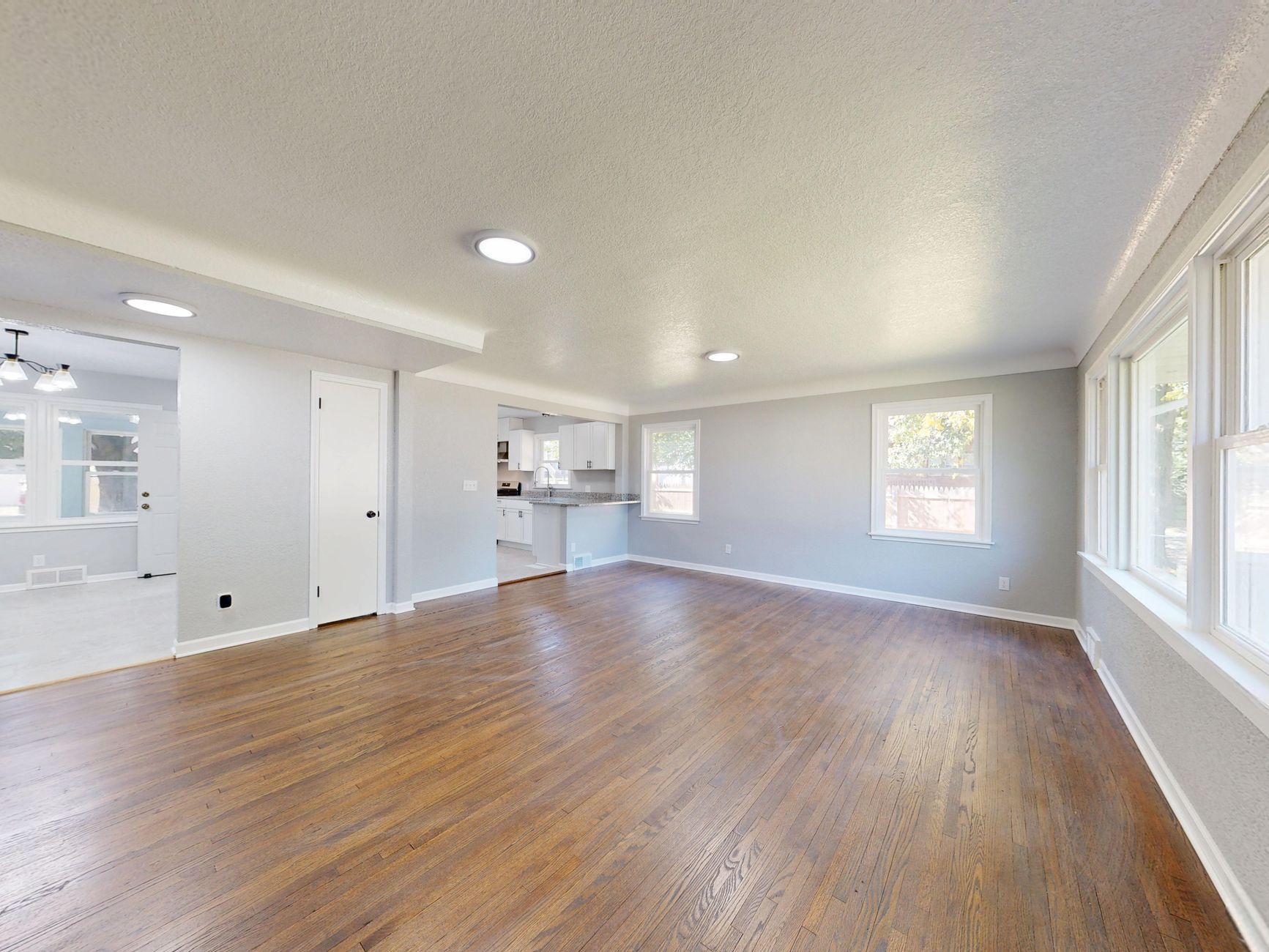
Empty Rooms: Buyers struggle to visualize the scale and furniture placement in empty spaces. A large living room without furniture reference looks smaller than it actually is, while a small bedroom with well-done virtual staging shows exactly how to make the most of every square foot.
Cluttered Interior Spaces: Personal items, visible cords, toys, moving boxes, or overly specific decor distract potential buyers. Instead of imagining their own life in the space, they get stuck on the wrong details of the current occupant's life.
For an in-depth look at how to solve each of these problems, see our practical guide to virtual staging.
How Artificial Intelligence Transforms Property Photos
Artificial intelligence technology applied to real estate photography is not a generic Instagram filter. We're talking about computer vision models specifically trained on millions of images of interiors, facades, and architectural details. These models understand the difference between porcelain tile flooring and painted walls, between a chandelier and a recessed light, between a ceramic roof and a waterproofed slab.
Unlike generic photo editing solutions, specialized AI for real estate preserves architectural accuracy. What does that mean in practice? Doors maintain their correct dimensions, windows don't distort the facade perspective, and added artificial lighting follows the direction of existing natural light in the photo.
In my experience working with hundreds of agents to implement these systems, the pattern I observe is consistent: those who adopt AI strategically reduce post-production costs by up to 64%. But the benefits go far beyond financial savings.
Automatic Sky Replacement
Transforming gray, overcast skies into sunny days or dramatic sunsets is one of the most impactful features of AI real estate photography. The differentiator of current technology lies in precision: AI sky replacement automatically detects roofs, trees, windows, and wires to ensure a natural integration of lighting.
An exterior photo with a blue sky and light clouds instantly conveys the feeling of a pleasant, sunny neighborhood. In regions where the weather is unpredictable, like the American Midwest, this feature eliminates dependence on ideal weather conditions on photo day.
Lawn and Facade Enhancement
Instantly, you can make the lawn green, clean dirty sidewalks, and improve overall curb appeal without altering the structural reality of the property. "Greenup" technology uses semantic segmentation algorithms to identify areas of vegetation, soil, and concrete, applying specific corrections to each element.
The result is a facade that looks like it was photographed in June, even if the photo was taken in January — without lying about the structure or location of the property.
AI Virtual Staging
Virtual staging allows agents to place photorealistic furniture in empty rooms with just a few clicks. Unlike older solutions that looked like amateur collages, current AI models generate fabric textures, reflections on polished surfaces, and shadows that follow the room's actual lighting.
Choose from popular styles like Modern Minimalist, Scandinavian, Coastal, and Luxury Contemporary — each with 20 to 30 furniture pieces that automatically adapt to the room's dimensions.
Day-to-Dusk Conversion
Exterior photos at dusk are proven to be more attractive to luxury buyers. Warm light coming from windows, the contrast of the dark sky with the illuminated facade, and the soft reflection on surfaces create a welcoming atmosphere that daytime photos rarely achieve.
RealVisionAI converts daytime photos into realistic dusk images, with soft exterior lights, window reflections, and a sky gradient that goes from orange to dark blue — all in less than 60 seconds per image.
To master this technique and other advanced visual applications, access our guide to twilight conversion for properties.
Object and Clutter Removal
Remove unwanted objects, cords, moving boxes, or cars parked in driveways with intelligent object removal algorithms. Unlike generic tools like Photoshop, which require technical knowledge for cloning, specialized AI understands the architectural context and fills the removed space coherently with the room's texture and lighting.
Step-by-Step Guide to Enhancing Your Listings with AI
Implementing AI photo editing in your real estate workflow is simple and takes less than 2 minutes per photo. The process is designed so that agents with no editing experience can achieve professional results without a learning curve.
-
Upload RAW or Smartphone Photos: Drag and drop high-resolution images in JPEG, PNG, or RAW formats directly into the RealVisionAI platform. The minimum recommended resolution is 2000 pixels on the long side to ensure quality in print and enlargements.
-
Select the Enhancement Mode: Choose from available options: Auto Enhance (general correction of exposure, contrast, and white balance), Sky Replacement, Lawn Greenup, Virtual Twilight, or Virtual Staging.
-
Customize Style Settings: For virtual staging, select the furniture style and the intensity of artificial lighting. For sky replacement, choose from 10 gradient options ranging from clear sunny to dramatic sunset.
-
Export MLS-Compatible Images: Download high-resolution images — 300 DPI for print or 72 DPI optimized for web — all formatted to meet the maximum resolution and format requirements of major portals like Zillow, Realtor.com, and local MLS associations.
Cost Comparison: AI Photography vs. Traditional Methods
| Service Type | Traditional Cost | Turnaround Time | Cost with AI | Time with AI |
|---|---|---|---|---|
| Physical Staging | $2,000 – $5,000 / month | 3 – 5 Days | Included in Plan | Less than 60 Seconds |
| Manual Photo Editing | $5 – $15 / photo | 24 – 48 Hours | Pennies per photo | Instant |
| Twilight Photography | $250 – $500 / session | Requires scheduling | Included in Plan | Instant |
The savings are not just financial — they are also about opportunity. While a physical staging service requires scheduling, furniture transport, and setup, AI virtual staging is available 24/7. Instead of waiting days for a manual editing turnaround, you get results in seconds.
For agents who list more than 5 properties per month, the annual savings with AI real estate photography exceed $15,000 when compared to the traditional model of outsourcing editing.

Best Practices for MLS Compliance and Ethical AI Editing
While AI enhancement dramatically improves visual presentation, transparency is essential to maintain client trust and adhere to MLS guidelines. The technology does not replace professional ethics — it enhances them.
Do Not Alter Permanent Features: Never remove power lines, permanent structures like poles or fire hydrants, nor conceal structural damage such as cracks, leaks, or mold. AI real estate photography should improve presentation, not deceive the buyer.
Disclose Virtual Staging: Add a brief disclosure in MLS listings stating that rooms have been virtually decorated for spatial visualization. Most MLS associations in the United States already require this type of disclosure, following NAR Resolution 2024-07 on AI-generated media.
Maintain Realistic Lighting: Ensure that the color temperatures of interior and exterior lighting match the surrounding environment. An interior photo with virtual staging that adds a warm 2700K light when the original photo has cool 5000K natural light creates visual inconsistencies that experienced buyers immediately notice.
Preserve Architectural Proportions: When using object removal or sky replacement, verify that the proportions of doors, windows, and columns have been maintained. Architectural distortions are the most common error in automated editing and the quickest to break listing credibility.
For a complete check on how to keep your images within portal rules, consult our MLS compliance guide for virtual staging.
Frequently Asked Questions (FAQ)
Is virtual staging allowed on MLS portals?
Yes, most MLS associations allow virtual staging, provided the listing includes a disclosure stating that furniture has been virtually added for spatial visualization. In 2026, over 80% of MLS in the United States have already adopted specific policies for AI-generated or enhanced media. Always check your local association's rules, as some require the disclosure to appear both in the description and in the remarks field.
Can AI replace a professional real estate photographer?
Not completely. AI visual tools enhance and refine photos taken by photographers or agents, but high-quality capture still depends on good photography practices: correct angle, proper lighting, appropriate lens for the space. The combination of professional capture with AI enhancement delivers optimal results at a fraction of the traditional post-processing cost — about 1/5 the price of outsourced manual editing.
What file formats does RealVisionAI support?
The platform supports JPEG, PNG, TIFF, and RAW formats, exporting web-optimized images in JPEG and PNG with resolutions up to 8000 pixels. All images are formatted to meet MLS, Zillow, Realtor.com size and resolution limits, as well as optimized proportions for Instagram, Facebook, and Pinterest.
Does AI real estate photography work for commercial properties?
Yes, RealVisionAI's algorithms are trained on images of both residential and commercial properties. For commercial spaces, virtual staging features include office furniture, meeting rooms, and corporate layouts. Object removal and lighting enhancement work equally well for warehouses, retail stores, and commercial buildings.
What is the average cost per photo with AI?
With RealVisionAI's basic plan, the cost per processed photo is approximately $0.12 to $0.30 per image, depending on monthly volume. When compared to $12 per photo for manual editing or $350 for a professional photography session with editing included, the savings exceed 90% for agents with high listing volume.
Can AI correct photos taken with a smartphone?
Yes, and this is one of the most valuable applications. AI real estate photography automatically corrects common smartphone photo issues: incorrect white balance, window overexposure, harsh shadows, and lack of sharpness. The final result often surpasses photos taken with DSLR cameras without proper treatment.
How can I ensure AI images don't look artificial?
The key is to use the technology in moderation. We recommend applying virtual staging only to empty rooms, not to those already furnished. For sky replacement, choose options that match the region's typical weather. Avoid excessive color saturation — realism always beats visual exaggeration. RealVisionAI offers intensity sliders for each feature, allowing fine-tuning.
Is there a risk of AI images being rejected by MLS?
The main risk is failure to disclose AI use. Since 2024, NAR recommends that any image substantially altered by AI — including virtual staging and sky replacement — include explicit disclosure. Following this practice, the risk of rejection is minimal. Images that mask structural damage or remove permanent elements, regardless of the tool used, violate any MLS rules.

Conclusion and Next Steps
In 2026, AI real estate photography is no longer an emerging technology — it's the new baseline of the market. Agents who still rely solely on raw photos or slow, expensive manual editing services are missing real conversion opportunities.
The difference between a listing that gets 40 views in a week and one that gets 400 is increasingly in the visual details. Blue sky versus gray sky. Green lawn versus dry grass. Furnished room versus empty room. These differences, which once required heavy marketing budgets and days of lead time, are now available in seconds with the right technology.
Ready to transform your listing photos? Visit Real Vision AI and try the future of AI real estate photography for free. In less than 5 minutes you'll have your first professional images ready for publication — no learning curve, no upfront investment, no commitment.
To continue deepening your knowledge, explore our complete guide to AI real estate photography and discover how to apply each technique in your daily workflow.
About the Author
RealVisionAI Editorial Team is the specialized team in visual technology and artificial intelligence applied to the real estate market at Real Vision AI. With hands-on experience implementing computational photography solutions for over 5,000 agents and agencies across the United States, the team combines technical knowledge in computer vision with practical expertise in real estate marketing to deliver content that truly makes a difference in listing conversion rates.
Recommended Readings
To deepen your understanding of these topics, we recommend reading the following articles:
- How to Turn Listing Photos into Viral Reels in Seconds with AI
- AI in Real Estate
- Ultimate AI Lead Generation for Real Estate Agents
- AI property enhancement
Free Real Estate AI Visual Playbook 2026
Discover how top realtors boost listing engagement by 62% and close deals faster using AI photo enhancement and virtual staging.