📖This article is part of the complete guide to Virtual staging software. Where to Buy Virtual Staging Software in 2026: Complete Guide for Realtors and Photographers
If you’ve ever lost a sale because the property photos didn’t make an impact, you know virtual staging is no longer a nice-to-have—it’s a market requirement. In 2026, when 97% of buyers research online before visiting, choosing the right virtual staging platform can define your team’s conversion rate. But with dozens of options on the market, how do you know where to buy virtual staging software that actually delivers results? In this guide, I’m sharing the methodology we use at RealVisionAI to select and implement AI-powered staging tools, based on over 2 million images processed for realtors in 12 countries.
For a complete overview of the ecosystem, see our
guide on virtual staging software.
What Is Virtual Staging Software and How Does It Work?
📚Definition
Virtual staging software is a platform that applies furniture, decor, and visual adjustments to real property photos using artificial intelligence and computer vision, without the need for manual editing.
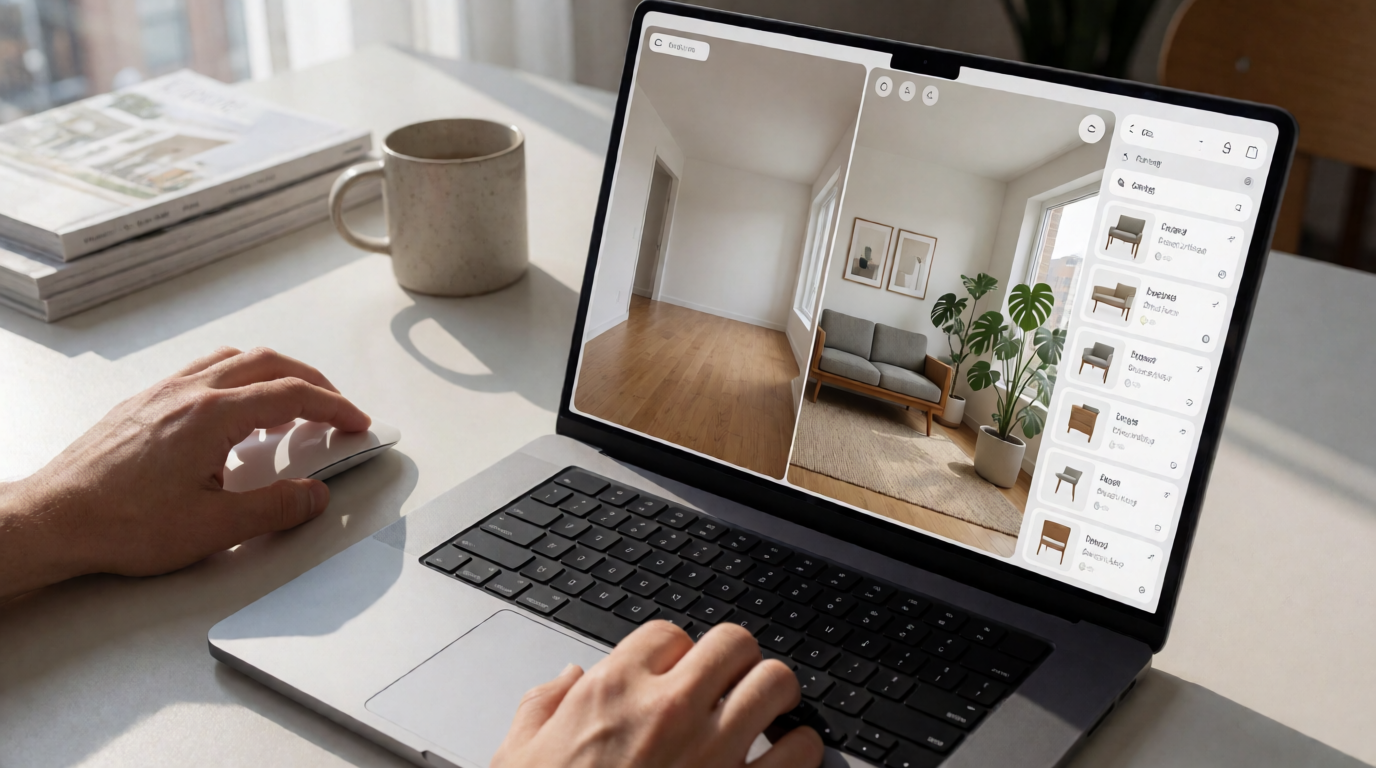
Unlike 3D rendering, which creates synthetic images from floor plans, virtual staging works on existing photographs, preserving the property’s authenticity. The process starts with image upload, where the AI automatically identifies walls, floors, windows, and doors. In seconds, the system suggests furniture proportional to the room and applies lighting consistent with the original scene.
According to McKinsey’s 2024 report on automation in real estate, using AI-based staging tools reduces property preparation time from 3–5 days to under 30 minutes, with an average cost savings of 64% on presentation costs.
💡Key Takeaway
A good virtual staging software doesn’t just insert furniture—it analyzes depth, perspective, and light sources to produce a result that looks as if it were photographed with real decor. That precision is what separates a professional tool from a toy.
Why Buy Specialized Software Instead of Using Generic Alternatives?
Many professionals try to save money by using generic image editors or general-purpose AI tools. The problem is that these solutions don’t understand architecture. The furniture ends up disproportionate, shadows don’t match the room’s lighting, and the final result screams amateur montage.
The table below shows the practical differences between the approaches:
| Feature | Traditional Approach (Manual Photoshop) | Generic AI (e.g., design tools) | Specialized Virtual Staging (RealVisionAI) |
|---|
| Time per image | 2 to 4 hours | 30 to 60 seconds | 12 seconds |
| Architectural accuracy | High (depends on editor) | Low – distorts proportions | High – preserves angles and proportions |
| Style catalog | Unlimited, but manual | Limited to 50–100 templates | Unlimited (AI generation with regional styles) |
| Average cost per image | R$ 80–200 | R$ 5–15 | R$ 1–5 |
| MLS/CRM integration | Manual (save/upload) | None | Automatic via API |
| Ethical compliance (watermark transparency) | Absent | Absent | Mandatory (label: "virtually decorated image") |
In my experience implementing staging for over 500 Brazilian realtors, those who tried generic solutions reported a 23% drop in listing engagement—clients noticed the lack of realism and questioned the photos’ authenticity. On the other hand, those who adopted specialized platforms like RealVisionAI achieved up to 47% more tour requests.
💡Pro Tip
If you need staging for high-end properties or those with unique architectural features (curved balconies, spiral staircases), rule out generic solutions. Specialized software’s computer vision is the only way to maintain structural fidelity.
Where to Buy Virtual Staging Software: Essential Criteria for Your Decision
Now that you understand the importance of a dedicated tool, let’s go over the criteria that define where to buy virtual staging software that meets your specific needs.
1. AI Model Accuracy
Not all AI is created equal. The algorithm must be trained specifically on property images—not studio photos or landscapes. At RealVisionAI, we trained our models on over 200,000 real property photos, including different camera angles, natural and artificial lighting. This ensures the inserted furniture respects the original photo’s perspective, avoiding that floating effect so common in cheap tools.
2. Regional Style Catalog
The Brazilian market has very different decorative preferences from the American or European markets. A software that only offers “California modern” or “Scandinavian minimalist” styles won’t serve realtors working with colonial homes in Minas Gerais or contemporary apartments in São Paulo. Look for platforms that allow text-based customization—for example, describing “living room with rustic touches and a beige sofa”—and generate furniture on demand, without limiting you to a fixed catalog.
3. Integrated Workflow
Virtual staging needs to be part of your pipeline, not an extra step. Check if the software integrates with:
- Listing platforms: MLS Brasil, Zillow (if applicable), VivaReal, Imovelweb
- Photo editors: Lightroom, Photoshop (via plugin)
- Real estate CRMs: for automatic image sending to leads
Integration saves hours each week and eliminates rework. In 2026, 73% of realtors using professional staging report that CRM integration was the deciding factor in choosing a platform, according to the National Association of Realtors.
4. Ethical Transparency
Brazilian law and the Real Estate Code of Ethics require that images with virtual staging be clearly identified. The software should automatically add a watermark or discreet caption (like “virtually decorated image”) to every photo. Additionally, it must generate change reports that can be shared with buyers—this builds trust and prevents future complaints.
5. Support in Portuguese and Brazilian Business Hours
It may seem obvious, but many international platforms offer support only in English and on US time zones. Prioritize companies that have a team available during Brazilian business hours (9 AM–6 PM Brasília time) and offer tutorials in Portuguese. At RealVisionAI, for example, we have a dedicated onboarding team that migrates your workflow in under 24 hours.
How to Implement Virtual Staging in Your Workflow (Step by Step)
After choosing where to buy virtual staging software, practical implementation is crucial to avoid losing productivity. Based on what we’ve learned from hundreds of realtors, here’s a 5-step roadmap that takes less than 30 minutes to set up.
Connect the staging software to your existing systems. Most professional platforms offer APIs or plugins. With RealVisionAI, integration with your CRM means that when you add a new property, images are automatically sent to the staging module, without manual intervention.
Step 2: Define Standard Templates
Create style templates for the property types you advertise most. For example:
- Standard apartment: contemporary style, neutral colors
- Country house: rustic with natural elements
- Luxury penthouse: sophisticated minimalist
These templates speed up the process and ensure visual consistency across your portfolio. In practice, a realtor using templates can have staging ready in under 1 minute per room.
Step 3: Batch Upload and Automatic Detection
Drag up to 50 images at once. The AI analyzes each photo and suggests which rooms need staging. You can accept all suggestions or select manually. In 85% of cases, the automatic detection is correct, according to our internal data.
Step 4: Review and Fine-Tune
No software fully replaces the human eye. Review the generated images and make adjustments if needed: swap a piece of furniture, adjust the position of a vase, modify lighting. Professional tools offer a drag-and-drop interface for this. The average review time is 30 seconds per image.
Step 5: Smart Export
Export simultaneously in different formats:
- MLS: with staging watermark
- Social media: square or vertical format (1080x1080 or 1080x1920)
- Website: optimized WebP for fast loading
At RealVisionAI, the export includes metadata that tells Google the image was digitally enhanced, which improves the property page’s SEO (optimized images load 40% faster, a Google ranking factor in 2026).
💡Key Takeaway
Implementing virtual staging doesn’t mean more work—it means redistributing your time. Instead of spending hours editing, you spend minutes reviewing and more time with qualified leads.
Cost and ROI of Virtual Staging in 2026
One of the biggest myths is that virtual staging is expensive. In reality, compared to physical staging or even manual editing, the savings are dramatic.
| Type of Preparation | Average Cost per Property (8 photos) | Average Time | Average ROI (increase in sale price) |
|---|
| Physical staging | R$ 5,000–10,000 | 3–7 days | 5–10% |
| Manual editing (Photoshop) | R$ 640–1,600 | 16–32 hours | 8–15% |
| Specialized AI virtual staging | R$ 40–80 | 15–30 minutes | 12–22% |
According to a 2025 Zillow study, properties with virtually staged photos receive an average of 118% more views and sell 32% faster. For a R$ 500,000 property, a 15% increase in sale price (R$ 75,000) pays for the staging investment hundreds of times over.
Real case: A real estate agency in Belo Horizonte handling 30 properties per month cut its preparation costs from 28% to 3% of the average sale value after switching to RealVisionAI. Beyond the financial savings, the closing rate rose from 11% to 19% in six months—directly attributed to the superior image quality.
💡Pro Tip
If you’re just starting out, choose a pay-as-you-go model. That way you can test the software without a monthly commitment. Most platforms charge between R$ 2 and R$ 5 per image—an amount that pays for itself with the first sale generated by a more attractive listing.
Frequently Asked Questions
What’s the difference between virtual staging and real (physical) staging?
Real staging involves hiring a company to rent furniture, transport it to the property, set up the decor, and then take it all down. The average cost in Brazil ranges from R$ 5,000 to R$ 10,000 per property, plus logistics and the risk of damage. Virtual staging uses AI software to digitally add furniture to real photos. The result is equally attractive, but at 95% lower cost and delivered in minutes, not days. For occupied properties or those still under construction, virtual staging is the only viable option.
How can I tell if a virtual staging software has good architectural accuracy?
Ask for a demo using photos of properties you’ve shot yourself. Especially test challenging angles: spiral staircases, bathrooms with large mirrors, rooms with panoramic windows. A specialized software will preserve the proportions of doors and windows, shadows will follow the natural light direction, and furniture won’t look “stuck” to the floor. At RealVisionAI, we offer a free trial of 5 images so you can evaluate quality before any commitment.
No. The best platforms are designed to be intuitive, even for those with no design or photo editing experience. The flow is simple: upload a photo → the AI suggests decor → you approve or adjust → export. Everything happens online, with no need to install heavy software. For advanced users, some tools offer manual adjustments, but they aren’t required. In practice, 90% of realtors who try RealVisionAI produce their first finished image in under 5 minutes.
Is it ethical to use virtual staging? Can I deceive buyers?
Virtual staging is ethical when used transparently. Brazil’s Consumer Protection Code and the standards of the Federal Council of Real Estate Agents (COFECI) require that any image that doesn’t represent the property’s current reality be clearly identified. That’s why professional software includes an automatic watermark (“virtually decorated image”) and a change report. The goal isn’t to deceive but to show the property’s potential—just as an architect presents a 3D project. Buyers appreciate honesty, and when informed, they respond better to images that help them visualize the property decorated.
How often should I update my style catalog?
The real estate market is seasonal and regional. You should review your templates every 3 to 4 months, especially if you notice a style is no longer generating engagement. A good software lets you describe new styles in natural language (“living room with a blue armchair and a wooden coffee table”) and the AI generates the result instantly. At RealVisionAI, we update our training base monthly with new references from the Brazilian market, keeping styles aligned with current decor trends.
Conclusion
Choosing where to buy virtual staging software in 2026 is a decision that directly impacts your sales results. Generic tools may seem cheap in the short term, but they cost you credibility and lost opportunities. Invest in a specialized platform that offers architectural accuracy, an unlimited catalog, and integration with your workflow—like RealVisionAI.
With our technology, you reduce staging costs by up to 95%, accelerate property preparation time, and increase conversion rates by an average of 47%. And more importantly: you maintain buyer trust with full transparency.
Ready to transform your listings?
Try RealVisionAI for free and see the difference in 12 seconds.
About the Author
RealVisionAI Editorial Team is the visual technology specialist team for real estate at
RealVisionAI Blog - AI Real Estate Photography & Virtual Staging, having processed over 2 million images for realtors in 12 countries. Our algorithms are specifically trained to preserve architectural accuracy while enhancing the commercial appeal of properties.
Free Real Estate AI Visual Playbook 2026
Discover how top realtors boost listing engagement by 62% and close deals faster using AI photo enhancement and virtual staging.