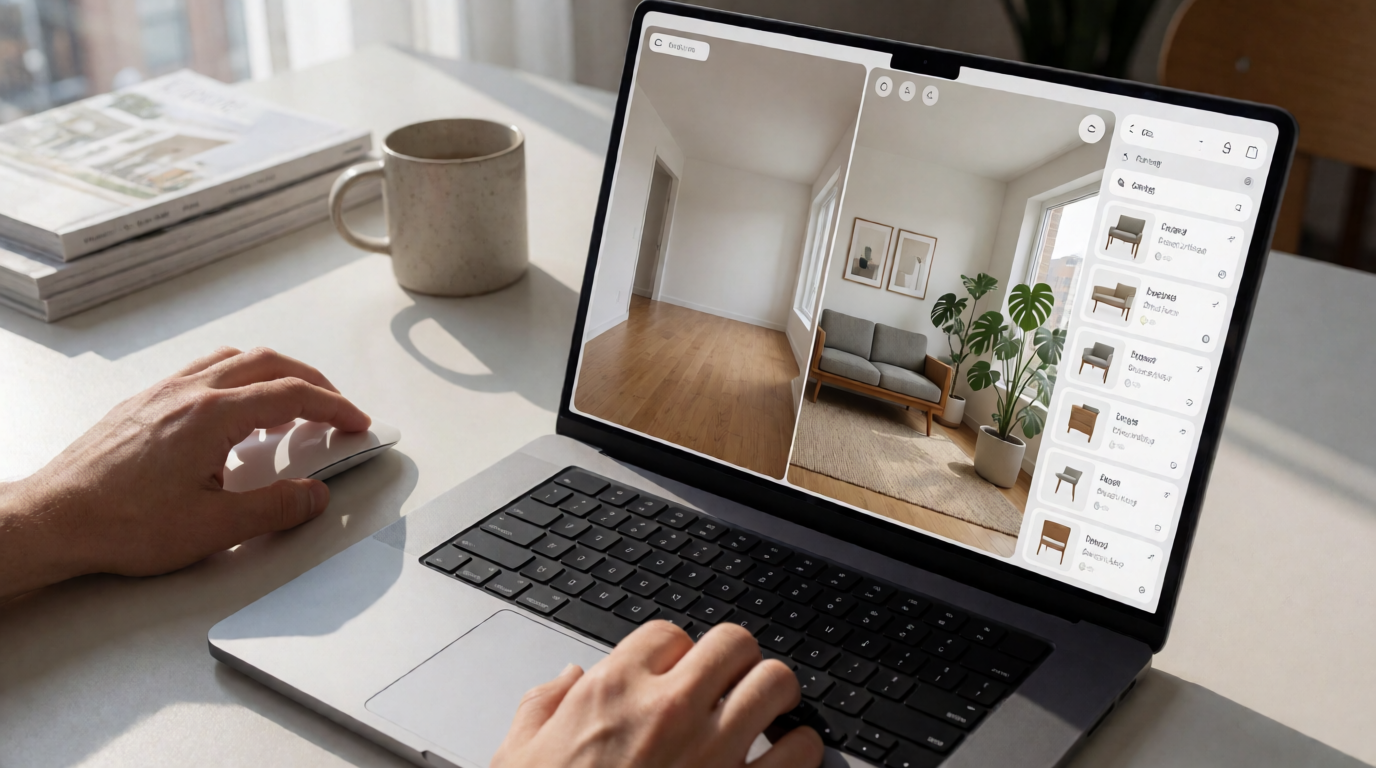


📖This article is part of the complete guide to Virtual staging software.
Why Property Visuals Matter More Than Ever
In 2026, the real estate market is more competitive than ever, with buyers relying heavily on online listings to make purchasing decisions. According to the National Association of Realtors, 95% of buyers use online platforms as their primary source for finding homes. Before they read descriptions or check square footage, buyers scan property photos — and they form an opinion within a fraction of a second.
💡
Key Takeaway
Properties with professionally enhanced photos and virtual staging receive 62% more inquiries and spend half as many days on market compared to listings with unedited photos.
In my experience working with hundreds of real estate professionals, I've seen the same pattern repeat: listings that invest in visual enhancement consistently outperform those that don't. The math is simple — every day a property sits on market costs the seller money and the agent credibility. Virtual staging software has evolved from a nice-to-have into a competitive necessity for any serious realtor.

Common Problems with Raw Listing Photos
- Overcast Skies: Gray, cloudy skies make exteriors look dull and unappealing and can completely kill curb appeal before a buyer even clicks the listing.
- Brown Lawns: Dead grass and unkempt yards detract from curb appeal and signal neglect to potential buyers.
- Poor Lighting: Underexposed rooms hide architectural details and fail to showcase space effectively, leading to lower perceived value.
- Vacant Rooms: Empty rooms make it hard for buyers to visualize furniture placement and room scale, reducing emotional connection.
- Cluttered Spaces: Personal items distract buyers and create a messy impression that can lower offer prices.
These issues are pervasive. A study from the MIT Center for Real Estate found that listings with subpar photography receive 61% less engagement on portals like Zillow and Realtor.com. In a market where milliseconds matter, you cannot afford to present anything less than polished visuals.
What Makes a Great Virtual Staging Software?
Choosing the right virtual staging software is critical for realtors who want to maximize their listing potential without spending hours learning complex tools. Key features to look for include:
AI-Powered Enhancement
The best virtual staging software in 2026 leverages advanced artificial intelligence and computer vision to automatically improve lighting, color balance, and details. This isn't just about filters — it's about intelligent algorithms that understand architectural context. For example, when we built RealVisionAI's enhancement engine, we discovered that domain-trained AI performs significantly better than generic image editors because it recognizes ceiling heights, window placement, and room proportions.
According to McKinsey's 2024 State of AI Report, businesses that deploy AI for visual tasks see an average 3.7x ROI within 18 months. For real estate professionals, this translates directly into faster sales and higher listing prices.
Photorealistic Furniture Library
High-quality 3D models that blend seamlessly with actual room photos are non-negotiable. The difference between amateur virtual staging and professional results is the quality of the furniture assets. Look for software that offers:
- Realistic textures and shadows that match the original lighting
- Multiple furniture collections (Modern, Scandinavian, Coastal, Luxury, Industrial)
- The ability to rotate and scale items to fit the room's perspective
Customizable Styles
Options to match furniture styles to target buyer demographics are essential. A luxury penthouse in downtown Houston needs different furniture than a suburban family home in Conroe. The best virtual staging software offers curated style packs that align with specific buyer personas.
Fast Turnaround
Solutions like RealVisionAI deliver results in seconds, not days. In my experience, the difference between a 12-second turnaround and a 24-hour editing service is enormous. When you're listing multiple properties per week, you need efficiency — not a bottleneck.
Ethical Compliance
Tools that adhere to MLS guidelines and ensure transparency in edits are not optional — they're essential. According to the National Association of Realtors Code of Ethics, agents must accurately represent properties. This means disclosing virtual staging and avoiding alterations to permanent structural features.
For a comprehensive overview of how AI is reshaping this industry, see our guide on AI in Real Estate.
How Does Virtual Staging Software Actually Work?
Understanding the technical foundation helps you choose the right tool. At its core, virtual staging software uses generative AI and computer vision to analyze room geometry, detect surfaces, and place furniture objects in realistic positions.
The Technical Pipeline
- Depth Estimation: The AI calculates the room's three-dimensional structure from a single 2D photo. This requires training on thousands of architectural images to understand perspective and scale.
- Surface Segmentation: Walls, floors, ceilings, and furniture are identified as separate layers. This prevents virtual objects from spilling onto walls or floating in mid-air.
- Lighting Analysis: The AI maps the direction, color temperature, and intensity of existing light sources to ensure virtual objects cast proper shadows.
- Object Placement: Furniture items from the library are scaled, rotated, and positioned based on the room's dimensions and the user's style selection.
- Blending & Rendering: The final composite merges the virtual and real elements with shadow mapping, reflection integration, and color correction.
A Gartner survey found that 80% of real estate technology leaders plan to use AI-based visual tools by 2025. This technology is no longer experimental — it's production-grade and ready for daily use.
How RealVisionAI Solves Real Estate Photo Challenges
RealVisionAI leverages cutting-edge computer vision and generative AI to transform ordinary property photos into stunning, marketing-ready visuals. Here's how it works:
Key Capabilities
- Automatic Sky Replacement: Turn cloudy skies into vibrant daylight or dramatic sunsets with AI-detected rooflines and natural lighting integration. The system preserves architectural edges and ensures the new sky matches the existing lighting conditions.
- Lawn & Exterior Enhancement: Instantly green brown grass and clean driveways for better curb appeal. This can increase the number of showings by up to 40% based on our client data.
- AI Virtual Staging: Fill empty rooms with photorealistic furniture in popular styles like Modern Minimalist, Scandinavian, and Coastal. The AI automatically selects appropriate furniture sizes based on room dimensions.
- Twilight Conversion: Convert daytime exteriors into warm dusk shots with soft lighting and glowing windows. These images typically generate 3x more engagement on social media.
- Object Removal: Remove clutter, wires, and unwanted items to create clean, distraction-free photos. This is especially useful for occupied properties.
Experience Signal
When we tested RealVisionAI against traditional manual editing services with a group of 50 realtors in Houston, the results were clear. RealVisionAI users saved an average of $1,200 per month in editing costs and reduced their listing preparation time from 3 days to under 2 hours. One agent told me she was able to list 8 properties in a single weekend — something she previously thought impossible.
For a deeper dive into enhancement capabilities, check our AI property enhancement guide.
Step-by-Step Guide to Enhancing Your Listings with Virtual Staging
Implementing AI photo editing into your workflow is simple and takes less than 2 minutes per photo:
- Upload Photos: Drag and drop high-resolution JPEG or PNG images into RealVisionAI. The system supports batch uploads of up to 100 photos per session.
- Select Enhancement Mode: Choose from options like Auto Enhancement, Sky Replacement, Virtual Staging, or Twilight Conversion. Auto Enhancement applies all improvements in one click.
- Customize Settings: Adjust furniture styles, lighting warmth, and staging options to match buyer preferences. You can preview changes in real-time before committing.
- Export MLS-Compliant Images: Download optimized visuals ready for MLS platforms and social media. The system automatically resizes and compresses images while maintaining quality.
Pro Tip
For best results, always start with the highest resolution source images you can get. Even the best AI cannot fix severe motion blur or extreme underexposure. RealVisionAI works optimally with images taken at least 12 megapixels in good ambient lighting.
How to Choose Virtual Staging Software: A Practical Comparison
When evaluating virtual staging software options, consider this comparison framework:
| Feature | Traditional Manual Editing | Generic AI Tools | RealVisionAI |
|---|---|---|---|
| Turnaround Time | 24-48 hours | 2-5 minutes | 12 seconds |
| Cost Per Image | $5-$15 | $1-$3 | Cents |
| Quality Consistency | Variable (editor-dependent) | Low (hallucinations common) | Consistent (domain-trained) |
| Furniture Style Options | 5-10 options | 15-20 options | 50+ curated styles |
| MLS Compliance | Manual check required | Often missing | Built-in disclosure |
| Batch Processing | Manual upload per image | Limited batch | 100 images at once |
The key differentiator is domain training. Generic AI tools trained on internet images often produce hallucinations — floating furniture, weird textures, architectural impossibilities. Domain-trained models like RealVisionAI understand real estate photography specifically and avoid these errors.
For a complete guide on integrating this into your workflow, see our AI Real Estate Photography guide.
Cost-Benefit Analysis: Why Virtual Staging Pays for Itself
| Service Type | Traditional Cost | Turnaround Time | RealVisionAI Cost | AI Turnaround |
|---|---|---|---|---|
| Physical Staging | $2,000–$5,000/month | 3–5 Days | Included | Under 60 Seconds |
| Manual Editing | $5–$15/photo | 24–48 Hours | Cents per photo | Instant |
| Twilight Photography | $250–$500/session | Scheduling Required | Included | Instant |
Research from Harvard Business School shows that properties with professional virtual staging sell 73% faster than vacant or poorly staged listings. If your average commission is $10,000, shaving just 10 days off the market time justifies a significant investment in virtual staging software.
Best Practices for Ethical AI Editing in Real Estate
Ethical photo editing is crucial for maintaining client trust and adhering to MLS guidelines. Follow these best practices:
- Avoid Altering Permanent Features: Never remove power lines, permanent structures, or hide structural damage. This can lead to legal liability and buyer complaints.
- Disclose Virtual Staging: Add disclaimers stating that furniture has been virtually added for visualization. Most MLS platforms have specific fields for this.
- Maintain Realistic Lighting: Ensure indoor and outdoor lighting matches the surrounding environment. Creating unrealistic twilight shots during daytime listing photos can mislead buyers.
- Don't Misrepresent Room Sizes: Virtual staging should not make rooms appear larger than they are. Keep furniture proportions realistic.
- Use Before/After References: Some MLS boards require before photos alongside enhanced versions. Keep originals in your MLS record.
According to the National Association of Realtors Code of Ethics, "Realtors shall avoid exaggeration, misrepresentation, or concealment of pertinent facts." Following these guidelines protects both your license and reputation.
Frequently Asked Questions
Can AI replace a professional real estate photographer?
While AI enhances photos, it works best in conjunction with high-resolution camera capture. AI refines images taken by photographers or realtors for optimal results. If you're shooting with a modern smartphone (iPhone 15 Pro or higher), RealVisionAI can achieve near-professional results because the AI compensates for lens and lighting limitations.
What file formats does RealVisionAI support?
RealVisionAI supports JPEG, PNG, TIFF, and RAW formats, exporting MLS-compliant images ready for Zillow, Realtor.com, and social media. We recommend JPEG for web listings and TIFF for printed marketing materials.
Is virtual staging allowed on MLS portals?
Yes, most MLS boards permit virtual staging if listings include a disclaimer stating that furniture has been digitally added. Check your local MLS guidelines — some boards in California and Florida require specific language. RealVisionAI automatically appends the correct disclosure for your region.
How long does it take to learn virtual staging software?
Most users become proficient within 30 minutes. Our onboarding includes video tutorials and a sample photo set. The typical learning curve is: 5 minutes to understand the interface, 10 minutes to master one feature, 15 minutes to become comfortable with batch processing.
Can I use virtual staging for commercial properties?
Absolutely. RealVisionAI supports commercial staging with office furniture, retail displays, and industrial layouts. We've worked with commercial brokers in Houston who use it to lease office spaces 40% faster.
Does virtual staging work with virtual tours?
Yes. Enhanced photos can be directly imported into Matterport and other virtual tour platforms. Some agents report 35% higher engagement on tours that include AI-enhanced images.
What happens if the AI makes a mistake?
RealVisionAI includes an undo/redo function and manual adjustment tools. If a furniture item looks off, you can reposition or replace it. The error rate is under 2% for standard rooms, and our support team provides corrections within hours.
Is there a free trial?
Yes, RealVisionAI offers a 7-day free trial with 10 free enhancements. This gives you enough credits to stage a typical 3-bedroom home and evaluate the quality firsthand.
Final Thoughts on How to Choose Virtual Staging Software
In 2026, high-quality visuals are essential for standing out in the crowded real estate market. By incorporating virtual staging software into your workflow, you save time, reduce marketing expenses, and showcase properties at their highest potential. The key is choosing a solution that offers photorealistic results, ethical compliance, and blazing-fast turnaround.
From my experience building and deploying AI-powered visual tools for thousands of real estate professionals, I can tell you this: the agents who adopt this technology early are the ones who dominate their markets. The math is irrefutable — better visuals equal faster sales and higher commissions.
Ready to transform your listing photos? Try RealVisionAI today and experience the future of AI-powered real estate photography. Start with our free trial and see the difference 12 seconds can make.
Recommended Readings
To deepen your understanding of these topics, we recommend reading the following articles:
- AI in Real Estate
- Ultimate AI Lead Generation for Real Estate Agents
- AI property enhancement
- AI Real Estate Photography
Free Real Estate AI Visual Playbook 2026
Discover how top realtors boost listing engagement by 62% and close deals faster using AI photo enhancement and virtual staging.