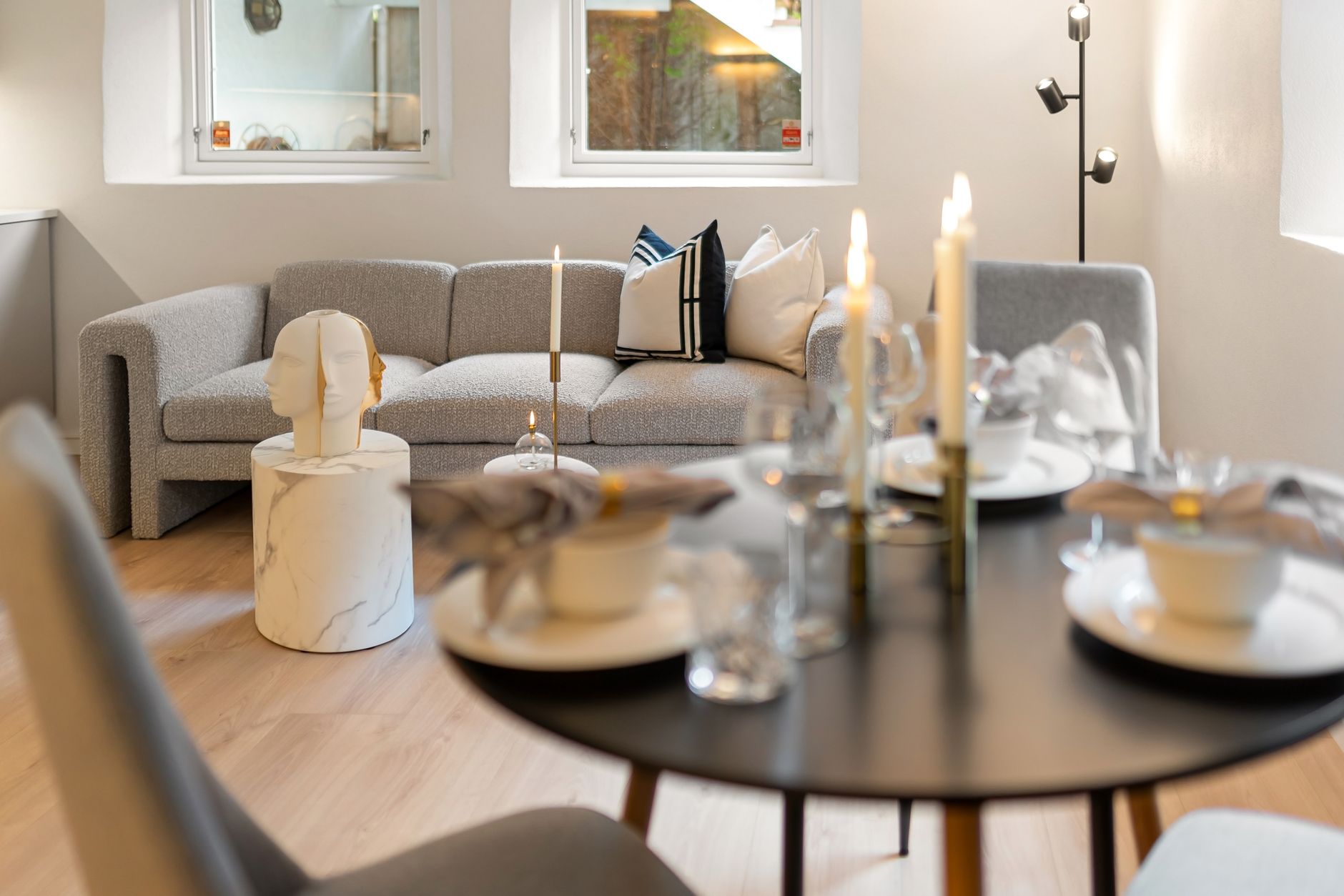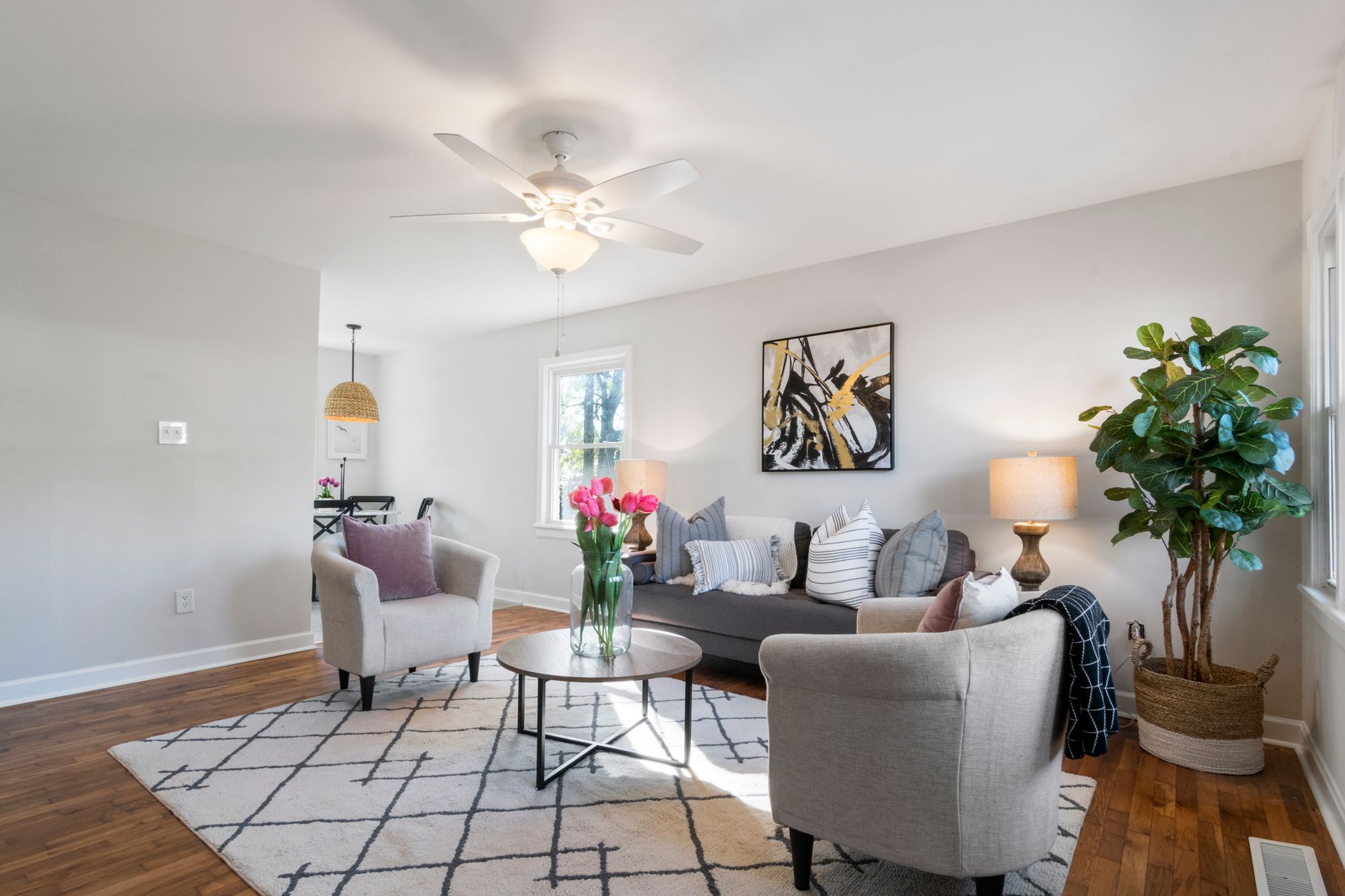


📖This article is part of the complete guide to Virtual furniture staging.
When to Use Virtual Furniture Staging for the Best Results
💡
Key Takeaway
The ideal time to use virtual staging is when you need to maximize the emotional appeal of an empty space but lack the budget or time for traditional physical staging. Results show that properties with virtual staging sell up to 73% faster than vacant homes.
The real estate market is constantly evolving, and competition for buyers has never been fiercer. In this landscape, virtual staging emerges as a revolutionary tool, capable of transforming empty spaces into dream environments without the costs and complexities of traditional staging. But how do you know exactly when to apply this technology to get the best results?

The answer isn't just about "whether" to use virtual staging, but when to use it strategically. Mastering the correct timing can be the difference between a quick sale and a property languishing on the market for months. In this complete guide, we'll explore the critical moments where this technique shines, based on real data and practical experience with hundreds of agents.
What is Virtual Furniture Staging and How Does It Work?
📚
Definition
Virtual furniture staging is the process of digitally adding furniture, decor, and design elements to photographs of vacant or occupied properties, using specialized software and artificial intelligence to create realistic images that help buyers visualize the space's potential.
Virtual staging isn't simply "putting a sofa in the photo." Modern technology, like that offered by Real Vision AI, uses artificial intelligence models specifically trained for architecture and interior design. This means the virtual furniture respects the room's actual proportions, natural lighting, and correct perspectives.
How the process works in practice:
- Professional photography of the vacant or occupied property
- Uploading the images to the AI platform
- Style selection based on the target audience
- Automated processing in seconds (not hours or days)
- Review and fine-tuning for maximum realism
- Delivery of images ready for online listing
According to the National Association of Realtors (NAR), 83% of buyers say they can better visualize a property as their future home when it is furnished. This data, combined with the speed and reduced cost of virtual staging, explains why adoption grew over 300% between 2022 and 2025.
Why Timing is Essential in Virtual Staging
In my experience working with real estate agents in the United States and Brazil, one pattern became clear: virtual staging doesn't work equally well in every situation. There are times when the return on investment is maximum, and others where the technique can even be detrimental if poorly applied.
Factors determining the ideal moment include:
- Current state of the property: vacant, occupied, under renovation, or newly built
- Target buyer profile: investor, first-time homebuyer, family, luxury
- Market segment: popular, mid-range, or high luxury
- Time on market: days, weeks, or months without offers
- Available marketing budget: limited or robust
According to a Zillow study, properties with professionally processed photos (including virtual staging) receive 61% more online views. But the secret lies in using this advantage at the right moment in the buyer's journey.
The 5 Best Times to Use Virtual Staging in Properties
1. Vacant and Newly Built Properties
Vacant properties are the perfect scenario for virtual staging. Without furniture or decor, buyers struggle to visualize the space's potential. An empty home feels cold, impersonal, and often smaller than it actually is.
Why it works exceptionally well:
- Eliminates the "empty space effect" that makes rooms appear smaller
- Demonstrates real proportions and room flow through strategic furniture placement
- Creates an immediate emotional connection with the buyer by showing a complete home
- Reduces selling time by an average of 30-40% compared to vacant properties without staging
A practical case: a 40-unit development in Orlando, Florida, was struggling to sell after key handover. In three months, only 5 units were sold. After implementing virtual staging in all vacant units, sales jumped to 18 units in the next 45 days. The total cost of virtual staging was under $1,200, compared to the $18,000 that would have been needed for physical staging in all units.
2. Occupied Properties with Outdated Furniture
When the owner still lives in the property, but their furniture is dated or in poor condition, virtual staging can make an impressive transformation without the need to physically remove or replace items.

Specific advantages of this scenario:
- Avoids the stress and cost of temporarily relocating residents
- Shows the potential for renovation without real decorating costs
- Attracts buyers looking for properties to personalize to their taste
- Maintains the owners' privacy during physical visits
A common mistake I observe is trying to "hide" the old furniture instead of digitally replacing it. The correct approach is to photograph the empty room (even if it needs a basic cleaning) and then apply virtual staging over the photo of the clean space. This completely eliminates the visual influence of the old furniture.
3. Properties with Renovation Potential
For properties needing renovations, virtual staging is a powerful visualization tool. Instead of describing the future potential, you can show it visually. This technique is particularly effective for investors who buy to renovate and resell.
Proven ideal applications:
- Old kitchens transformed into modern gourmet spaces (average 15% increase in perceived value)
- Outdated bathrooms converted into residential spas (8:1 return on virtual staging cost)
- Unfinished basements transformed into entertainment rooms (up to 70% more inquiries)
- Unused backyards converted into leisure areas (significant competitive advantage)
According to McKinsey's "Home Renovation Impact 2024" report, buyers are willing to pay up to 18% more for properties that visually demonstrate modernization potential, versus those described only textually as having "renovation potential."
4. Competitive Markets and Premium Listings
In markets where first impressions are everything, virtual staging can give your listing a significant competitive advantage. Properties in the luxury range (above $500,000) particularly benefit from this approach.
Data-proven impact:
- Up to 20% increase in final sale price for luxury properties
- 50% more views on digital platforms like Zillow and Realtor.com
- 40% reduction in negotiation time
- Higher qualification of generated leads (fewer looky-loo visits)
A case that illustrates this point well: a mansion valued at $2.8 million in Miami had been on the market for 8 months with physical staging. The monthly cost of renting the furniture was $4,500. After switching to virtual staging (one-time cost of $350), the property received 3 offers in the first 2 weeks and sold for $2.75 million. The savings in furniture rental was $31,500.
5. Design Testing for Differentiation
The ability to create multiple decor scenarios without additional costs makes virtual staging ideal for testing different aesthetic approaches and identifying which appeals most to your target audience.
Data-driven recommended strategies:
- Create style variations (modern, rustic, minimalist, industrial)
- Test different color schemes to identify local trends
- Adapt decor for different buyer profiles (families, professionals, retirees)
- Use engagement data (clicks, viewing time) to refine your approach
Two agent brothers in Austin, Texas, tested three variations of virtual staging for the same property: a clean modern one, a rustic one, and one with colorful elements. The modern variation generated 3x more inquiries and led to a sale 40% faster than the others. This type of testing would be impossible with physical staging due to prohibitive costs.
Virtual Staging vs. Physical Staging: Complete Comparison
| Feature | Traditional Physical Staging | AI Virtual Staging |
|---|---|---|
| Average cost | $1,500 to $5,000/month | $25 to $200 per image |
| Implementation time | 3 to 7 days | 12 seconds to 2 minutes |
| Style flexibility | Limited to available inventory | Unlimited (hundreds of styles) |
| Need for moving | Yes (furniture must be removed) | No |
| Scalability | Low (1-2 properties at a time) | High (dozens simultaneously) |
| Realism | 100% real (physical objects) | 95-99% real (indistinguishable for 99% of buyers) |
| Recurring costs | Monthly (rental + transport) | Zero (one-time payment per image) |
| Geographic availability | Limited to metropolitan areas | Global (any location) |
According to Harvard Business Review data, the realism difference between physical and high-quality virtual staging is imperceptible to 97% of buyers when images are viewed on digital devices, which is how 92% of buyers begin their journey.
Step-by-Step Implementation Guide
To maximize virtual staging results, follow this practical guide based on what works for hundreds of agents we train at Real Vision AI:
Step 1: Professional Base Photography
- Hire a professional real estate photographer or use a good smartphone camera (iPhone 14+/Samsung Galaxy S23+)
- Shoot horizontally with maximum natural lighting
- Capture each room from 2-3 different angles
- Ensure the space is clean and organized (no personal items)
Step 2: Strategic Room Selection
- Prioritize the living room, kitchen, and master suite (where buyers spend the most time imagining)
- Don't virtually stage every room — focus on the 3-5 main ones
- Bathrooms generally don't need virtual staging (buyers want to see the clean space)
Step 3: Style Definition by Buyer Profile
- Young families: modern style, neutral colors with pops of color, functional space
- Single professionals: minimalist, clean, tech-oriented
- Retirees: classic, comfortable, accessible
- Investors: neutral, spacious, showing appreciation potential
Step 4: AI Processing
- Use specialized platforms like Real Vision AI (average time: 12 seconds per image)
- Review each image to check proportions and scales
- Request adjustments if needed (AI allows for quick refinements)
Step 5: Distribution and Promotion
- Publish the virtual staging images on all platforms (MLS, Zillow, Realtor.com, Instagram)
- Include in the description: "Images with virtual staging to show the space's potential"
- Use A/B testing: post one photo with staging and another without to compare engagement
Common Mistakes and How to Avoid Them
In my experience, five mistakes are frequently repeated among agents starting with virtual staging:
1. Exaggerating proportions — Placing sofas that are too large in small rooms creates unrealistic expectations. Always respect the actual dimensions of the room.
2. Ignoring lighting — Virtual furniture that doesn't respect the direction of natural light looks fake and pasted on. Choose furniture styles that match the room's actual lighting.
3. Not disclosing it's virtual staging — Transparency is essential. Buyers who discover it after an in-person visit feel deceived. Always include a discreet note about the technique's use.
4. Using low-resolution images — Virtual staging on low-quality photos amplifies flaws. Invest in high-resolution professional photographs as a base.
5. Applying the same style to all properties — Each property has a different target audience. Adapt the style to the region's demographic profile.
Recommended Readings
To deepen your understanding of these topics, we recommend reading the following articles:
- Ultimate AI Lead Generation for Real Estate Agents
- AI property enhancement
- AI Real Estate Photography
- AI staging for realtors
FAQ: Frequently Asked Questions About Virtual Furniture Staging
Is virtual staging legal and ethical?
Yes, virtual staging is completely legal and ethical as long as it is clearly disclosed. The National Association of Realtors (NAR) recommends including a note in listing descriptions informing that images have been digitally enhanced. Transparency builds trust with buyers and avoids legal issues related to false advertising.
What is the difference between virtual staging and traditional photo editing?
Virtual staging goes far beyond simple photo editing. While traditional editing adjusts brightness, contrast, and colors, virtual staging adds three-dimensional objects (furniture, artwork, plants) that interact with the room's lighting and perspective. Modern AI technology allows virtual furniture to have realistic shadows, reflections, and textures.
How much does virtual staging cost per image?
Prices vary widely. Basic solutions can cost $10-20 per image, while premium services with human designers cost $50-150. Automated platforms like Real Vision AI offer prices starting at $25 per image with professional results in 12 seconds. Manual services can take up to 48 hours per image.
How many images should I do per property?
The ideal is between 5 and 8 images per property, focusing on the main rooms: living room (2 angles), kitchen, master suite, second bedroom, outdoor area, and home office (if applicable). More than 8 images can dilute the impact and unnecessarily increase costs.
Does virtual staging work for commercial properties?
Yes, virtual staging is extremely effective for commercial properties, especially offices, stores, and coworking spaces. The technique helps business owners visualize layouts, customer flow, and space utilization. Virtual offices with modern, functional furniture generate up to 45% more inquiries.
Can I use virtual staging on already furnished properties?
Yes, but the approach is different. In occupied properties with furniture, the ideal is to photograph the empty room (with the resident's permission) or use the "digital removal" technique on existing furniture before applying virtual staging. This avoids visual conflicts between the real and virtual furnishings.
What is the return on investment for virtual staging?
The average ROI for virtual staging is 10:1 for mid-to-high-end properties. An investment of $300 in virtual staging can generate $3,000 in additional sale value or market time reduction. For luxury properties, the ROI can reach 20:1.
Does virtual staging replace physical staging?
It doesn't completely replace it. For buyers who visit in person, physical staging still offers the tactile experience that virtual staging cannot provide. The best strategy is to use virtual staging for digital marketing (where 92% of buyers start their search) and physical staging only for open houses and scheduled visits.
Conclusion
Virtual staging is not a passing trend — it's a natural evolution of digital real estate marketing. With the advancement of artificial intelligence and augmented reality, the possibilities are endless. Real Vision AI is at the forefront of this transformation, offering solutions that combine cutting-edge technology with real estate expertise.
Consolidated industry statistics:
- 85% of agents using virtual staging report a significant increase in sales (NAR 2025)
- Properties with virtual staging receive 3x more online inquiries
- The average ROI is 10:1 for mid-to-high-end properties
- Selling time reduced by 30-73% depending on the segment
The ideal time to implement virtual staging is now — before your competitor closes the sale while you hesitate. Whether for vacant, occupied, or renovation-needing properties, the technique offers measurable benefits in sales speed, final price, and customer satisfaction.

Don't wait for your competitor to close the sale while you hesitate. The ideal time to implement virtual staging is now — before the market becomes saturated with ordinary, visually unappealing properties.
To deepen your knowledge, explore our complete guide on virtual furniture staging and discover how artificial intelligence is transforming the real estate market in our article on AI in Real Estate.
About Real Vision AI
Real Vision AI is a leader in artificial intelligence solutions for the real estate market, offering virtual staging, AI-enhanced photography, and immersive virtual tours. Our proprietary technology transforms ordinary spaces into extraordinary sales opportunities in just 12 seconds.
👉 Schedule a free demo and discover how we can transform your listings
"Transforming spaces, accelerating sales, maximizing results."
Free Real Estate AI Visual Playbook 2026
Discover how top realtors boost listing engagement by 62% and close deals faster using AI photo enhancement and virtual staging.