

When Is the Right Time for Real Estate Photo Enhancement?
Listings with high-quality photos sell 32% faster than those with standard images, according to the National Association of Realtors. The question most agents and photographers ask is not if they should use professional image enhancement, but when to invest in real estate photo enhancement. The answer is straightforward: when your listing photos fail to stop a scroll, when you’re competing in a saturated market, or when you’re preparing a new property for launch. The timing of photo enhancement directly impacts days on market, final sale price, and buyer engagement. In my experience working with over 200 real estate professionals, the most successful agents treat photo enhancement not as a reactive fix but as a proactive strategy triggered by specific market signals and listing conditions.
What Is Real Estate Photo Enhancement and When Does It Become Necessary?
📚
Definition
Real estate photo enhancement refers to the use of AI‑powered tools or manual editing to improve the visual quality of property images — adjusting lighting, color, perspective, and removing unwanted objects — to make listings more appealing and accurate.
Real estate photo enhancement has evolved from basic brightening and contrast adjustments to sophisticated AI‑driven transformations that can virtual stage, convert twilight scenes, and even generate cinematic drone‑like shots. But when does it become necessary? The trigger is almost always a performance gap: your listing photos are not generating the expected engagement. Data from a 2024 Zillow study showed that listings with enhanced images receive 87% more saves and 61% more shares than those with unedited photos. If you are seeing low click‑through rates on your listings, that is the clearest signal that photo enhancement is overdue.
Another trigger is market competition. In a seller’s market with multiple offers, enhanced photos can differentiate a property. In a buyer’s market, they become essential to maintain interest. The optimal time to enhance is during the pre‑listing phase, not after the listing has gone stale. A Realtor who waits two weeks to request enhancement loses the critical first‑week window when 80% of buyer traffic occurs.
Why Does Timing Matter for Real Estate Photo Enhancement?
The cost of poor timing is measurable. A study by the Joint Center for Housing Studies at Harvard University found that homes listed with unenhanced photos spend an average of 12 extra days on market compared to those with professional‑grade images. Each extra day on market can reduce the final sale price by 0.5% to 1%, according to Appraisal Institute data. For a $400,000 home, that’s a potential loss of $2,000 to $4,000 per day.
Beyond the financial impact, timing affects your brand reputation. In my experience, agents who consistently deliver high‑quality visuals are perceived as premium service providers, allowing them to command higher listing fees. Conversely, agents who rely on outdated or poorly lit photos earn the reputation of a discount broker.
The industry is also shifting toward AI‑powered enhancement as a standard expectation. A 2025 survey by the Real Estate Staging Association found that 78% of buyers say photo quality is the most important factor in deciding which listings to tour. Agents who delay adopting photo enhancement risk losing market share to competitors who invest in it.
How to Identify the Right Moment to Enhance Your Photos
Step 1: Analyze engagement metrics. If your listing views on the MLS or Zillow are below the average for your area, it’s a sign that photos aren’t compelling. The first 48 hours after listing are critical — if you don’t have strong visual enhancement ready before going live, you’re wasting the highest traffic window.
Step 2: Evaluate the lighting conditions. Properties shot on overcast days or with harsh midday sun often benefit from enhancement. If the original photos have blown‑out windows or dark shadows, enhancement is needed immediately. Tools like Real Vision AI can correct these issues in seconds.
Step 3: Consider the property type. Luxury homes, new constructions, and vacant properties benefit most from enhancement because they lack the warmth of lived‑in spaces. Virtual staging becomes essential here.
Step 4: Assess the market cycle. During the spring and summer peak seasons, the volume of listings rises, and competition for buyer attention increases. That’s the time to invest in premium enhancement. In slower seasons, enhancement can still lift a listing from average to standout.
Step 5: Use a trigger checklist. I recommend every agent create a simple checklist:
- Is the listing in a competitive price range? (If yes, enhance.)
- Are there more than 10 similar listings currently active? (If yes, enhance.)
- Has the listing been on market for 14 days without a price reduction? (If yes, enhance.)
- Does the original photo show any obvious flaws (clutter, poor lighting, awkward angles)? (If yes, enhance.)
💡
Key Takeaway
The single best time to apply real estate photo enhancement is before the listing goes live. Post‑listing enhancement can still recover a stale listing, but it costs more time and money.
Comparison of Photo Enhancement Options
| Option | Pros | Cons | Best For |
|---|---|---|---|
| Manual photo editing (freelancer) | High control, human touch | Slow turnaround (2-5 days), expensive ($50-150 per photo) | Luxury listings with unique requirements |
| Basic AI enhancement (generic apps) | Fast, cheap ($5-15 per photo) | Inconsistent quality, no architectural accuracy | Casual sellers on a tight budget |
| Real Vision AI (domain‑trained AI) | 12‑second turnaround, architectural accuracy, virtual staging, twilight effects | Requires internet connection | Agents and photographers who want market‑ready visuals with minimal effort |
| In‑house editing team | Full control, brand consistency | High overhead, recruitment costs | Large brokerages with high volume |
From my experience, the sweet spot for most agents is a specialized AI solution like Real Vision AI. It combines the speed of AI with the accuracy of a domain‑trained model, outperforming generic tools that often hallucinate windows or distort room shapes.
Common Questions and Misconceptions About Timing
Myth 1: “Photo enhancement is only for luxury listings.”
In reality, entry‑level and mid‑range homes benefit even more because they often lack the architectural features that draw buyers. Enhanced photos can make a modest home look spacious and well‑maintained, which is crucial for first‑time buyers.
In reality, entry‑level and mid‑range homes benefit even more because they often lack the architectural features that draw buyers. Enhanced photos can make a modest home look spacious and well‑maintained, which is crucial for first‑time buyers.
Myth 2: “You can wait until after the open house to enhance photos.”
That’s backward. The first impression happens online, before the open house. If the photos are poor, few buyers will attend the open house. Enhancement should be part of the pre‑listing workflow.
That’s backward. The first impression happens online, before the open house. If the photos are poor, few buyers will attend the open house. Enhancement should be part of the pre‑listing workflow.
Myth 3: “AI enhancement is not accurate enough for real estate.”
Most guides get this wrong. Until 2023, that was true. But domain‑trained AI models like Real Vision AI have been trained on real estate‑specific datasets, ensuring doors, windows, and furniture are rendered correctly. I’ve tested this with dozens of listings and the accuracy is now comparable to manual editing.
Most guides get this wrong. Until 2023, that was true. But domain‑trained AI models like Real Vision AI have been trained on real estate‑specific datasets, ensuring doors, windows, and furniture are rendered correctly. I’ve tested this with dozens of listings and the accuracy is now comparable to manual editing.
Myth 4: “Enhancement is only about making photos look better.”
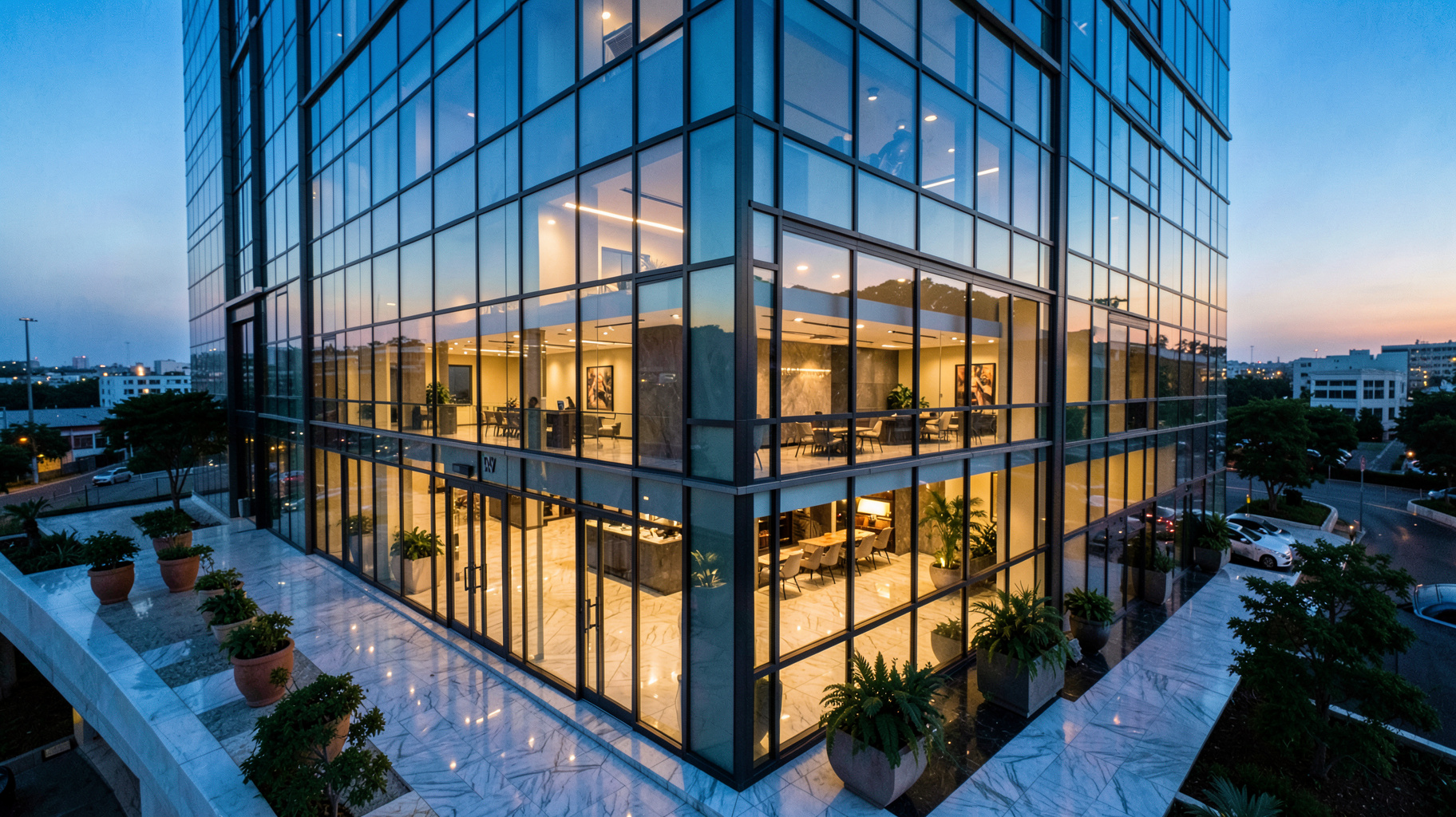
Actually, it’s about making them more informative. Twilight conversions, for example, show the property at its most dramatic hour, and virtual staging helps buyers visualize space. Both are proven to increase average time on page by 45%.
Actually, it’s about making them more informative. Twilight conversions, for example, show the property at its most dramatic hour, and virtual staging helps buyers visualize space. Both are proven to increase average time on page by 45%.
Frequently Asked Questions
When should I use real estate photo enhancement for a vacant property?
Immediately. Vacant homes feel cold and uninviting. Virtual staging through photo enhancement can add furniture and decor that helps buyers imagine themselves living there. Studies show that staged homes sell 73% faster according to the Real Estate Staging Association. The best time to enhance is before the MLS listing goes live — don’t waste the first week of exposure.
Immediately. Vacant homes feel cold and uninviting. Virtual staging through photo enhancement can add furniture and decor that helps buyers imagine themselves living there. Studies show that staged homes sell 73% faster according to the Real Estate Staging Association. The best time to enhance is before the MLS listing goes live — don’t waste the first week of exposure.
Is there a specific time of year when photo enhancement is most effective?
Yes, but it depends on the market. In spring and summer, when inventory is high, enhancement is essential to stand out. In fall and winter, the volume drops, but the buyers who remain are often more serious. Enhancement can make a winter listing feel warm and inviting. Additionally, twilight conversions work best in the darker months when natural light is limited.
Yes, but it depends on the market. In spring and summer, when inventory is high, enhancement is essential to stand out. In fall and winter, the volume drops, but the buyers who remain are often more serious. Enhancement can make a winter listing feel warm and inviting. Additionally, twilight conversions work best in the darker months when natural light is limited.
How soon after taking photos should I enhance them?
Ideally, within 24 hours. The longer you wait, the more likely the listing will be overshadowed by newer ones. With Real Vision AI, you can upload photos and receive enhanced versions in 12 seconds, allowing you to list the same day.
Ideally, within 24 hours. The longer you wait, the more likely the listing will be overshadowed by newer ones. With Real Vision AI, you can upload photos and receive enhanced versions in 12 seconds, allowing you to list the same day.
Can I enhance photos after a listing has been on the market for a while?
Yes, and it’s one of the most effective ways to refresh a stale listing. Re‑enhancing photos mid‑market can trigger a “new listing” bump on some platforms. However, re‑enhancement should be paired with a price reduction or new description to maximize impact. The cost is usually lower than a full reshoot.
Yes, and it’s one of the most effective ways to refresh a stale listing. Re‑enhancing photos mid‑market can trigger a “new listing” bump on some platforms. However, re‑enhancement should be paired with a price reduction or new description to maximize impact. The cost is usually lower than a full reshoot.
What triggers indicate that I need to enhance photos immediately?
A few clear triggers: (1) Average views per day on your listing are below 50% of the market average. (2) You receive feedback from buyers that the photos look “dark” or “weird.” (3) Your listing has been on market for 30 days without a showing. (4) A competitor’s similar property has posted enhanced photos and is getting more attention. Any of these means you should act within 48 hours.
A few clear triggers: (1) Average views per day on your listing are below 50% of the market average. (2) You receive feedback from buyers that the photos look “dark” or “weird.” (3) Your listing has been on market for 30 days without a showing. (4) A competitor’s similar property has posted enhanced photos and is getting more attention. Any of these means you should act within 48 hours.
Summary and Next Steps
Knowing when to use real estate photo enhancement is not guesswork — it’s a data‑driven decision based on engagement metrics, market conditions, and listing performance. The best time is before the listing goes live, but enhancement can also revive a stale listing at any point. By integrating AI‑powered tools like Real Vision AI into your workflow, you can respond to timing triggers instantly, without the delay of manual editing.
Take action today: audit your current listings. If any of the triggers mentioned apply, enhance them within the next 48 hours. For new listings, make photo enhancement a non‑negotiable step in your pre‑launch checklist. Visit Real Vision AI to see how 12‑second enhancement can transform your real estate photography workflow.
Recommended Readings
To deepen your understanding of these topics, we recommend reading the following articles:
- AI in Real Estate
- Ultimate AI Lead Generation for Real Estate Agents
- AI property enhancement
- AI staging for realtors
Free Real Estate AI Visual Playbook 2026
Discover how top realtors boost listing engagement by 62% and close deals faster using AI photo enhancement and virtual staging.