
Which AI Real Estate Photography Solution Should You Actually Use?
The gap between a property that sits on the market for 60 days and one that sells in seven often comes down to the first three seconds of a scroll. In my experience working with high-volume agencies, the mistake I see most often is the reliance on "good enough" photography that fails to trigger an emotional response. When deciding which path to take, professionals generally choose between manual high-end editing, budget-level AI filters, or specialized AI real estate photography studios. For those needing a balance of cinematic quality and instant delivery, a dedicated AI studio like RealVisionAI Blog - AI Real Estate Photography & Virtual Staging is the only way to maintain a competitive edge in 2026.

Understanding the Mechanics of AI Real Estate Photography
To choose the right tool, you first need to understand what is happening under the hood. Most generic AI tools simply apply a "look-up table" (LUT) or a global filter to an image. Professional-grade solutions, however, utilize computer vision to understand the geometry of a room, the light source of a window, and the texture of a surface.
📚
Definition
Computer Vision is a field of artificial intelligence that enables computers and systems to derive meaningful information from digital images, videos, and other visual inputs, allowing the AI to "see" the difference between a wall and a window.
When we talk about high-tier AI real estate photography, we are referring to generative AI combined with architectural constraints. For example, a basic AI might try to "hallucinate" a better sky, but a professional tool ensures the horizon line remains mathematically correct and the reflection in the swimming pool matches the new sky. This distinction is what separates a "fake-looking" photo from a "market-ready" listing.
According to research by Gartner, the adoption of generative AI in creative workflows has shifted from a novelty to a core operational requirement, with a significant percentage of enterprises integrating AI to reduce production cycles. In the real estate sector, this means the transition from a 48-hour editing turnaround to a 12-second automated process. This isn't just about speed; it is about the ability to iterate. If a client decides they want a "modern minimalist" look instead of "traditional luxury" for their virtual staging, the change happens instantly rather than requiring a new set of manual edits.
Why the Choice of AI Tool Directly Impacts Your Bottom Line
The decision of which AI tool to use isn't a technical preference; it is a financial one. In a market where the Multiple Listing Service (MLS) is flooded with content, visual friction is the primary reason buyers skip a listing. If your photos look dated or poorly edited, the perceived value of the home drops before the buyer even reads the price.
Data from McKinsey suggests that AI-driven personalization and optimization in marketing can lead to significant increases in conversion rates, often by as much as 15% to 30%. In real estate, "conversion" means a scheduled viewing. When you use advanced AI real estate photography, you aren't just "fixing a photo"; you are optimizing the lead-generation funnel.
Consider the cost of "empty room syndrome." A home that is empty feels smaller and colder. Virtual staging allows a buyer to visualize the potential of a space, which directly correlates to higher offer prices. However, the risk is using low-quality AI that places furniture that looks like it is "floating" or scaled incorrectly. This creates a subconscious distrust in the buyer. After analyzing dozens of listings, the pattern is clear: high-fidelity, realistically scaled AI staging leads to more inquiries than empty rooms or poorly executed "budget" AI staging.
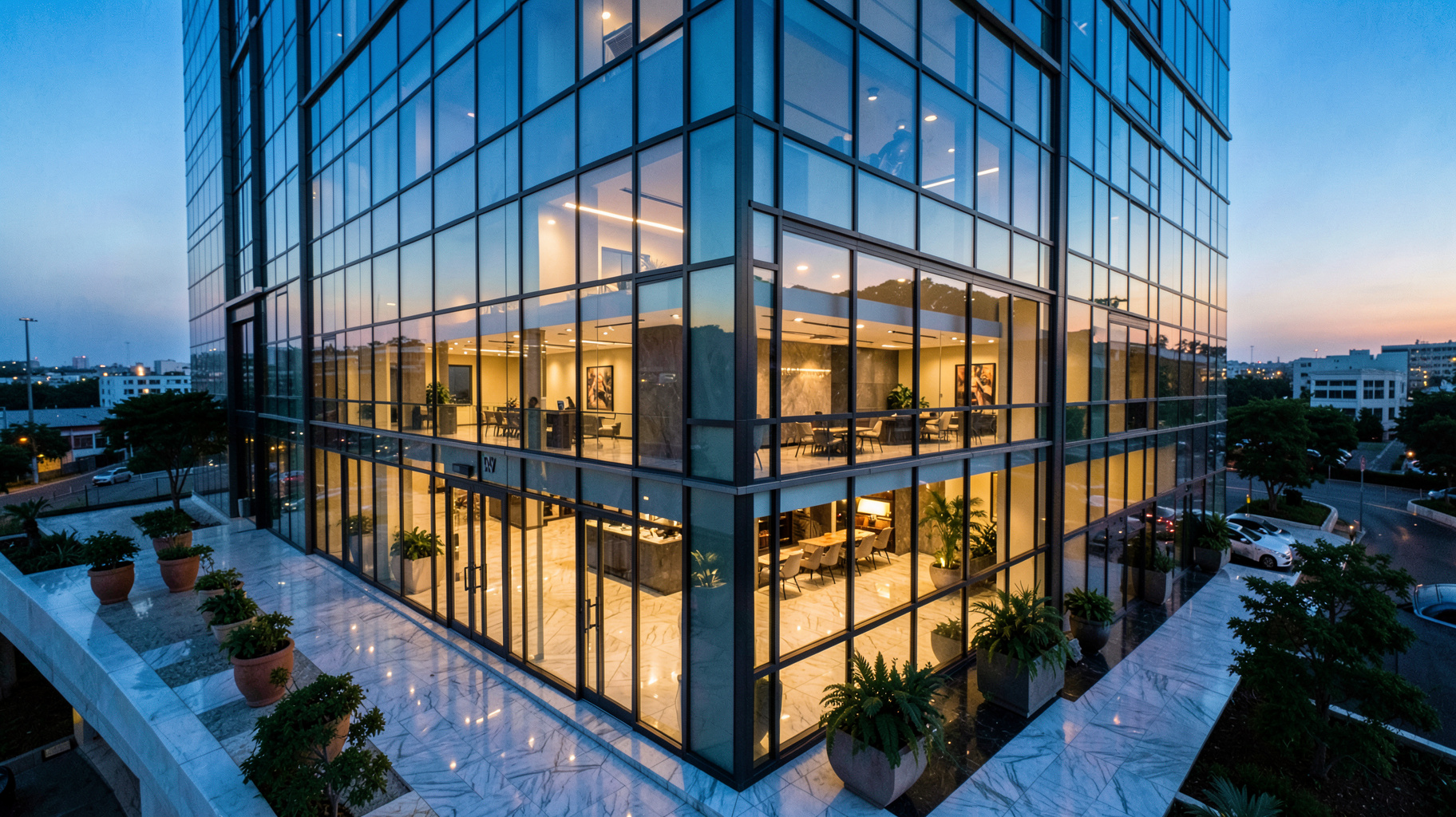
Furthermore, the impact of "Day-to-Dusk" conversion cannot be overstated. Twilight photos consistently receive more clicks on platforms like Zillow or Redfin. Manually shooting at twilight is expensive and time-consuming. Using an AI-powered twilight conversion allows you to provide a premium visual experience at a fraction of the cost, effectively increasing the "click-through rate" of your listings without increasing your field hours.
How to Implement an AI-Driven Visual Strategy
Choosing the right tool is only half the battle; the other half is the workflow. To maximize the ROI of AI real estate photography, you need a system that integrates into your existing pipeline without adding friction.
Here is the professional framework for implementation:
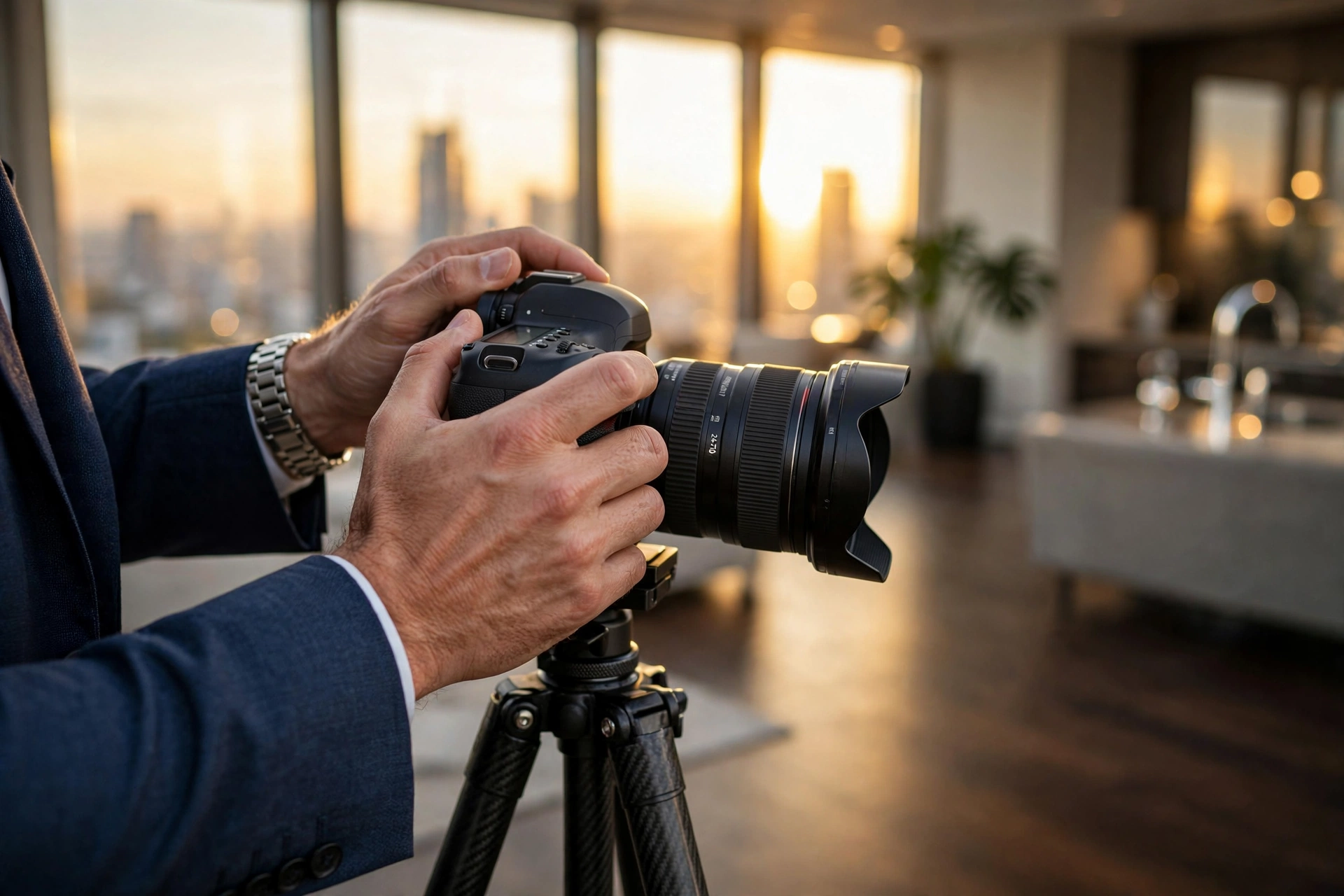
- The Capture Phase: Even with AI, the base image matters. Use a wide-angle lens and ensure the camera is level. AI can fix a lot, but it cannot fix a blurry photo or a lens flare that obscures the main feature of a room.
- The Enhancement Phase: This is where you apply AI sky replacement and grass restoration. The goal is to create a "perfect day." According to industry standards in architectural photography, the "blue sky" effect is the single most effective way to increase a listing's perceived curb appeal.
- The Staging Phase: Decide on the persona of the buyer. If the property is in a high-end urban area, use minimalist, modern virtual staging. If it is a suburban family home, opt for traditional, cozy furnishings.
- The Final Polish: Use AI decluttering to remove distracting elements—like a trash can or a stray power cord—that draw the eye away from the property's strengths.
RealVisionAI Blog - AI Real Estate Photography & Virtual Staging streamlines this entire process. Instead of jumping between four different apps, the platform allows you to execute these steps in seconds. In my experience, the biggest bottleneck in real estate marketing is the "feedback loop" between the photographer and the agent. By moving the editing process to an instant AI studio, you eliminate that bottleneck entirely.
💡
Key Takeaway
The goal of AI in real estate is not to replace the photographer, but to remove the "editing tax"—the hours of tedious post-processing that eat into your profit margins.

Comparing Your Options: Manual vs. Generic AI vs. Professional AI Studios
When deciding which option fits your business model, you must weigh the trade-offs between cost, time, and quality. Most people start with the cheapest option and quickly realize it damages their brand.
| Feature | Traditional Manual Editing | Generic/Cheap AI Tools | Professional AI Studios (RealVisionAI) |
|---|---|---|---|
| Turnaround Time | 24–72 Hours | Instant | 12 Seconds |
| Visual Accuracy | Very High | Low (Hallucinations) | High (Architectural Focus) |
| Cost per Image | Expensive | Very Cheap | Scalable/Affordable |
| Consistency | Subjective (Editor based) | Erratic | Standardized & Precise |
| Virtual Staging | Manual/Expensive | Flat/Unrealistic | 3D-Depth Aware |
| Best For | Ultra-Luxury ($10M+) | Casual Social Posts | Professional Listings & Agencies |
Here is the thing though: many agents try to use generic "AI photo enhancers" found in app stores. These tools often over-saturate colors and create a "plastic" look that looks amateur. Now, here's where it gets interesting: the professional approach uses "constrained AI." This means the AI is told to prioritize the vertical lines of the walls and the natural light of the room, ensuring the result looks like it was shot by a master photographer, not a computer program.
Common Questions and Misconceptions About AI Visuals
There is a lot of misinformation floating around about the use of artificial intelligence in property marketing. Most guides get this wrong by claiming that AI is just about "making things look pretty."
Myth 1: "AI photography is deceptive or illegal."
This is a common fear, but the reality is that AI enhancement is simply a modern version of the "HDR blending" or "Photoshopping" that has been used for decades. As long as you aren't removing a permanent structural defect (like a giant crack in a load-bearing wall), enhancing the sky, adding furniture, or brightening a room is standard industry practice. It is about presenting the property in its best light, not creating a fictional building.
Myth 2: "You don't need a professional photographer if you have AI."
This is a dangerous assumption. AI is an enhancer, not a replacement for composition. If the original photo is taken from a bad angle or is poorly framed, the AI will simply make a "high-quality bad photo." The magic happens when professional composition meets professional AI processing.
Myth 3: "Virtual staging looks fake to buyers."
This was true five years ago. However, with the advent of generative AI and better depth-mapping, virtual staging now includes realistic shadows, reflections, and fabric textures. When done correctly, a buyer cannot tell the difference between a staged room and a virtually staged one.
Frequently Asked Questions
Which AI real estate photography tool is best for high-volume agencies?
For agencies handling dozens of listings per week, the best tool is one that offers an "instant-turnaround" model. Manual editing becomes a massive financial leak at scale. You need a platform like RealVisionAI Blog - AI Real Estate Photography & Virtual Staging that can handle sky replacement, grass restoration, and virtual staging in seconds. The ability to process an entire portfolio without waiting for an editor's queue is what allows agencies to scale their operations without increasing their overhead.
Does AI real estate photography affect the actual sale price of a home?
While AI doesn't change the physical structure of the home, it significantly impacts the perceived value. Professional visuals lead to higher engagement on the MLS, which in turn creates more competition among buyers. When more buyers are interested in a property, the bidding process becomes more competitive, which often results in a higher final sale price. High-quality virtual staging, in particular, helps buyers "move in" mentally, reducing the friction of the purchase.
How does AI-powered virtual staging differ from traditional 3D rendering?
Traditional 3D rendering is a manual process where an artist builds a room and places assets, which can take hours or days and cost hundreds of dollars per image. AI-powered virtual staging uses computer vision to analyze the existing photo and "generate" furniture that fits the perspective and lighting of the room instantly. This reduces the cost by over 90% and the time from days to seconds, making it accessible for every listing rather than just the top 1% of luxury homes.
Can AI really fix a dark or poorly lit room?
Yes, but it depends on the tool. Generic AI tools often just "brighten" the image, which leads to "blown-out" windows (where the window is just a white blob). Professional AI real estate photography uses "window pull" technology and AI-driven luminance balancing. This allows the AI to brighten the interior of the room while maintaining the detail and view through the windows, creating a natural, airy feel that is essential for high-end real estate marketing.
Is it possible to remove unwanted objects using AI without leaving a blur?
In the past, "healing brushes" left smudges or blurred textures. Modern AI uses "inpainting," where the AI analyzes the surrounding pixels (the floor texture, the wall paint) and regenerates the missing area with a matching pattern. This allows you to remove a cluttered countertop or an old piece of furniture and replace it with a clean, seamless surface that looks completely natural and undistorted.
Final Thoughts on AI Real Estate Photography
Choosing which AI real estate photography solution to adopt is one of the most impactful decisions you can make for your brand's visual identity. The transition from manual, slow workflows to instant, AI-driven studios is not just a trend; it is a fundamental shift in how properties are marketed.
If you are tired of waiting days for edits or struggling with "plastic-looking" AI filters, it is time to move to a professional ecosystem. By utilizing a specialized studio, you can ensure your listings are market-ready in 12 seconds, giving you more time to focus on closing deals and less time worrying about pixels.
To experience the difference and elevate your listings instantly, visit RealVisionAI Blog - AI Real Estate Photography & Virtual Staging and transform your visual strategy today.
Recommended Readings
To deepen your understanding of these topics, we recommend reading the following articles:
- Ultimate AI Lead Generation for Real Estate Agents
- AI property enhancement
- AI staging for realtors
- AI Virtual Staging by Property Type
Free Real Estate AI Visual Playbook 2026
Discover how top realtors boost listing engagement by 62% and close deals faster using AI photo enhancement and virtual staging.