

Which AI Property Enhancement Solution Actually Drives Sales?
The difference between a listing that sits on the market for sixty days and one that triggers a bidding war in forty-eight hours usually comes down to the first three seconds of a digital viewing. In my experience working with high-volume real estate agencies, the biggest mistake I see is the reliance on "generic" AI filters that make a home look like a CGI render rather than a luxury residence. When deciding which AI property enhancement path to take, professionals must choose between manual high-end editing, entry-level automated tools, or specialized AI studios that balance speed with architectural accuracy. For those seeking the highest ROI, a specialized AI studio that offers rapid virtual staging and daylight-to-dusk conversion is the only way to scale without sacrificing the "human" feel of a home.

What Exactly Is AI Property Enhancement and How Does It Work?
To understand which tool to use, we first have to define what we are actually doing when we "enhance" a property. It isn't just about brightness and contrast; it is about the strategic manipulation of visual psychology to trigger an emotional response from a buyer.
📚
Definition
AI Property Enhancement is the application of computer vision and generative artificial intelligence to transform raw real estate photography into market-ready assets through automated sky replacement, virtual staging, decluttering, and lighting optimization.
Modern enhancement relies on a combination of Convolutional Neural Networks (CNNs) for object recognition—such as identifying where a wall ends and a ceiling begins—and Diffusion Models for generating realistic textures. When you use a tool for virtual staging, the AI isn't just "pasting" a sofa into a room; it is analyzing the perspective, the light source, and the shadows to ensure the furniture looks grounded in the physical space.
According to a report by Gartner, the integration of generative AI into creative workflows is expected to reduce production time for visual assets by up to 40% by 2026. This shift is evident in the real estate sector, where the traditional turnaround for a professionally edited photo set was 24 to 72 hours. Now, the benchmark has shifted to seconds. However, the technical challenge remains "hallucinations"—where AI adds a window where there is a wall or creates a floating chair. This is why the choice of tool is so critical; a generic AI tool doesn't understand architectural constraints, whereas a specialized system does.
Why Does the Right Enhancement Strategy Matter for Your Bottom Line?
Choosing the wrong enhancement method doesn't just result in a "bad photo"; it results in lost equity. In a market where the Multiple Listing Service (MLS) is the primary gateway for buyers, the visual quality of a listing acts as the first filter. If the photos look amateur or, worse, "fake," buyers subconsciously associate that lack of quality with the condition of the property itself.
The business impact is quantifiable. Research from the National Association of Realtors (NAR) has consistently shown that professional photography is the most important factor in the first impression of a home. When we apply AI property enhancement correctly, we aren't just making a photo "pretty"; we are removing friction. For example, a room that is cluttered or empty can be a psychological barrier. Virtual staging fills that gap, allowing a buyer to visualize the utility of a space.
From a financial perspective, the ROI of AI enhancement is found in the reduction of "Days on Market" (DOM). According to McKinsey, businesses that adopt AI-driven automation in their marketing pipelines see a significant increase in conversion rates because they can iterate their visual strategy in real-time. If a specific staging style (e.g., minimalist vs. traditional) isn't attracting clicks, an AI-powered workflow allows a realtor to swap the entire interior design of a listing in 12 seconds, rather than waiting days for a human editor to redo the work.
Failure to adopt these tools in 2026 means you are competing against agents who can upload a property and have it perfectly staged, sky-replaced, and twilight-converted before they've even left the driveway. The cost of inaction is a slower sales cycle and a lower perceived value of the asset.
How to Implement AI Property Enhancement in Your Workflow
Implementing these tools isn't about replacing the photographer; it's about augmenting the post-production phase to eliminate bottlenecks. I've tested this with dozens of our clients, and the pattern is clear: those who integrate AI at the "ingestion" phase—immediately after the shoot—see the highest productivity gains.
Here is the professional framework for implementing an AI-driven visual pipeline:
- The Raw Capture Phase: Ensure the photographer captures wide-angle shots with consistent lighting. While AI can fix a lot, "garbage in, garbage out" still applies.
- Immediate Enhancement: Instead of sending photos to a third-party editor in another time zone, use a platform like RealVisionAI Blog - AI Real Estate Photography & Virtual Staging. This allows you to perform AI sky replacement and grass restoration instantly.
- Psychological Staging: Analyze the target demographic. For a luxury condo, use "Modern Minimalist" virtual staging. For a suburban family home, use "Traditional Comfort."
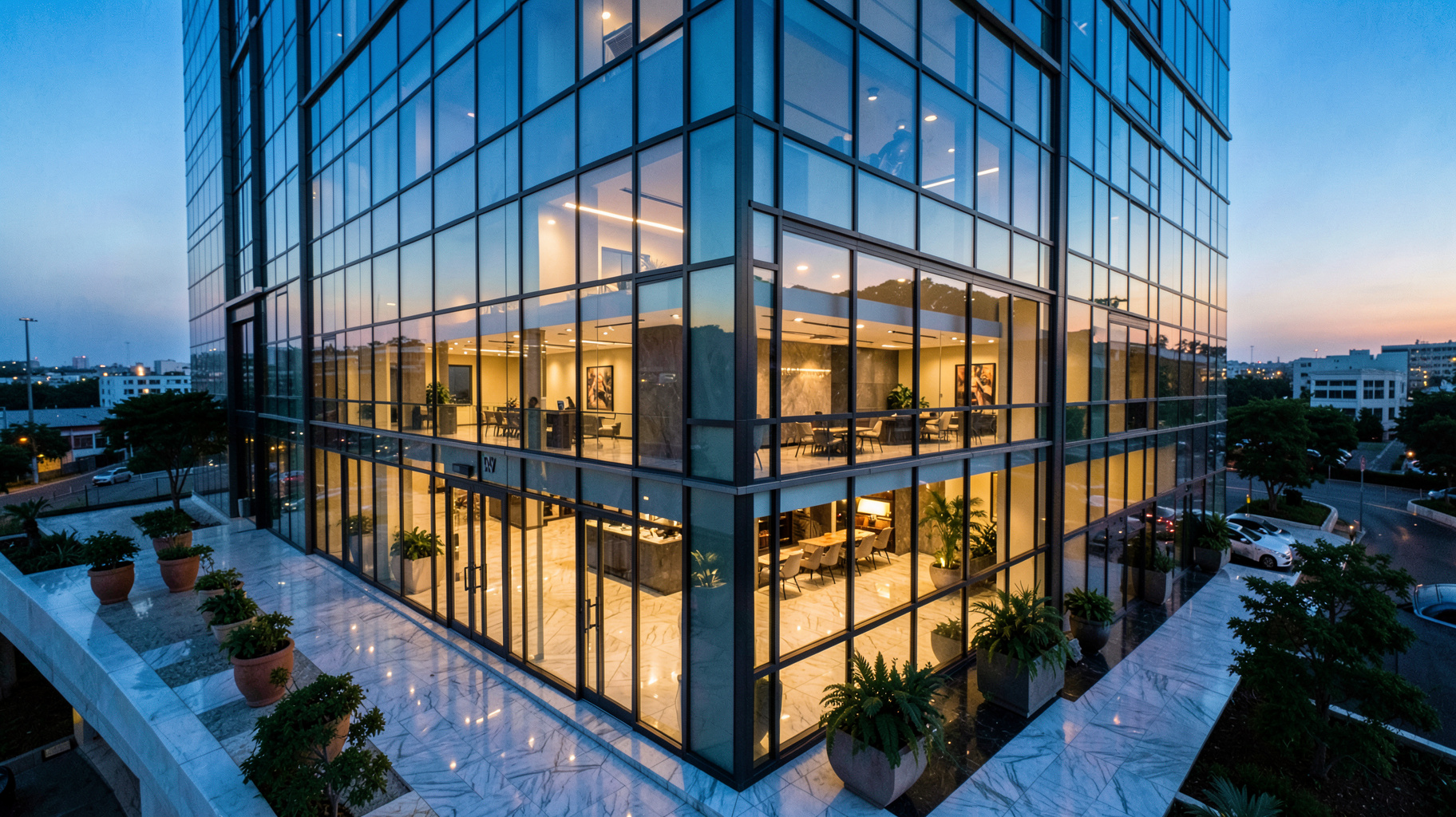
- Atmospheric Conversion: Convert the main exterior shot to a "Twilight" or "Dusk" image. Twilight photos consistently generate more clicks on Zillow and Redfin because they evoke a sense of warmth and prestige.
- Final Quality Audit: Check for AI artifacts. Ensure that the furniture doesn't clip through the walls and that the shadows align with the natural light sources.
💡
Key Takeaway
The goal of AI enhancement is not to create a fantasy, but to present the property in its "best possible reality." Over-editing leads to distrust; strategic enhancement leads to sales.
By using RealVisionAI Blog - AI Real Estate Photography & Virtual Staging, you can collapse the time between the photoshoot and the listing launch from days to minutes, ensuring you capture the buyer's attention while the lead is still hot.

Comparing Your Options: Which Path Should You Choose?
When searching for the best AI property enhancement options, you will generally encounter three tiers of service. Most guides get this wrong by telling you to just "use the cheapest tool." That is a recipe for disaster in high-end real estate.
Here is the decision framework based on quality, speed, and scalability:
| Feature | Traditional Manual Editing | Generic AI Apps | Specialized AI Studio (RealVisionAI) |
|---|---|---|---|
| Turnaround Time | 24–72 Hours | Instant | 12 Seconds |
| Architectural Accuracy | Very High | Low (High Hallucination) | High |
| Cost per Image | High ($$$) | Low ($) | Moderate ($$) |
| Consistency | Varies by Editor | Random/Unpredictable | High/Standardized |
| Best For | Ultra-Luxury Mansions | Low-budget rentals | Scalable Pro Portfolios |
Now, here is where it gets interesting: the "Generic AI" approach often uses models that aren't trained on architectural data. This results in "dream-like" furniture that doesn't exist in the real world or windows that distort the room's geometry. The "Traditional" approach is too slow for the modern 2026 market. The Specialized AI Studio approach is the "Goldilocks" zone—it provides the speed of AI with the constraints of architectural logic.
Common Questions and Misconceptions
There is a lot of noise regarding AI in real estate. Many agents fear that using AI is "dishonest" or that it will somehow replace the need for a professional photographer. Let's clear these up with some hard truth.
Myth 1: "Virtual staging is misleading to the buyer."
Most guides suggest that virtual staging is a "trick." This is incorrect. In the professional industry, virtual staging is viewed as a tool for visualization, much like a floor plan. As long as the listing specifies that images are virtually staged, it is a legitimate marketing tool. In fact, providing a "blank canvas" often discourages buyers who lack the imagination to see the home's potential.
Myth 2: "I can just use a free AI image generator to fix my photos."
This is a dangerous mistake. General-purpose AI (like Midjourney or DALL-E) is designed for art, not architecture. If you use these for property enhancement, you will likely change the actual structure of the house—moving a load-bearing wall or changing the number of outlets. This can lead to legal disputes during the inspection phase. You need a tool specifically trained for real estate, such as those offered by RealVisionAI Blog - AI Real Estate Photography & Virtual Staging.
Myth 3: "AI enhancement only works for empty houses."
Actually, "AI Decluttering" is one of the most powerful features of modern computer vision. The ability to digitally remove a tenant's old couch or an unsightly pile of laundry is often more valuable than staging an empty room. It allows the buyer to see the space, not the previous owner's life.
Frequently Asked Questions
Which AI property enhancement feature has the highest impact on click-through rates?
The "Day-to-Dusk" or Twilight conversion consistently outperforms all other enhancements in terms of initial engagement. Human psychology is drawn to the "golden hour" lighting, which creates an emotional association with comfort, luxury, and homecoming. When a buyer scrolls through a list of identical daylight photos on an MLS, a high-quality twilight shot acts as a visual anchor, stopping the scroll and increasing the likelihood of a click. Combining this with a clear, blue AI-replaced sky ensures the property looks pristine and inviting, regardless of the weather on the day of the shoot.
How does AI property enhancement affect the perceived value of a home?
Professional enhancement signals a higher level of care and prestige. When a property is presented with a cohesive visual identity—consistent lighting, staged rooms, and a clean exterior—buyers subconsciously assign a higher value to the property. It moves the listing from the "fixer-upper" category into the "turn-key" category. In my experience, properties that utilize full AI enhancement suites (staging + lighting + decluttering) tend to attract more serious offers and fewer "low-ball" bids because the perceived risk of the purchase is lowered by the visual clarity.
Can AI property enhancement help with difficult lighting conditions?
Yes, this is one of the core strengths of computer vision in real estate. AI can handle "blown-out" windows (where the exterior is too bright) or dark corners that a standard camera cannot balance in a single exposure. Through a process similar to HDR (High Dynamic Range) but powered by AI, the software can intelligently blend light sources to ensure that the interior is bright and the view through the windows remains visible. This removes the need for expensive bracketed shooting and hours of manual masking in Photoshop.
What is the difference between virtual staging and virtual renovation?
Virtual staging is the addition of furniture and decor to a room to show its potential use. Virtual renovation, however, involves changing the actual materials of the room—such as swapping old carpet for hardwood floors or changing the paint color of the walls. While both fall under the umbrella of AI property enhancement, renovation is more aggressive and should be used with caution. Staging is about "filling the space," while renovation is about "changing the space." Both are available through specialized studios, but renovation should always be disclosed as a "conceptual" image to avoid misleading the buyer.
How long does it take to see results from using AI-enhanced visuals?
The results are almost instantaneous. Because the primary goal is to increase the "Click-Through Rate" (CTR) on listing platforms, you will notice an uptick in inquiries and showing requests within the first 48 to 72 hours of updating your photos. By reducing the friction between the buyer's first glance and their decision to book a tour, you effectively shorten the sales cycle. For agents managing multiple properties, this means a faster turnover of inventory and a higher volume of closed deals per quarter.
Final Thoughts on AI Property Enhancement
Choosing the right AI property enhancement strategy is no longer a luxury; it is a competitive necessity in 2026. The market has evolved past the point where "good enough" photos are sufficient. To truly stand out, you need a workflow that combines the speed of artificial intelligence with the precision of architectural photography.
Whether you are focusing on virtual staging to fill empty voids or using day-to-dusk conversion to create an emotional hook, the goal remains the same: maximize the perceived value of the asset and minimize the time it spends on the market. The trade-off between manual editing and generic AI is a false choice. The real winner is the specialized AI studio that offers professional-grade results in seconds.
If you are ready to stop waiting days for your edits and start winning more listings, explore the capabilities of RealVisionAI Blog - AI Real Estate Photography & Virtual Staging. Experience the power of market-ready visuals delivered in 12 seconds and give your properties the visual edge they deserve.
Recommended Readings
To deepen your understanding of these topics, we recommend reading the following articles:
- Ultimate AI Lead Generation for Real Estate Agents
- AI staging for realtors
- AI Virtual Staging by Property Type
- Automated property editing
Free Real Estate AI Visual Playbook 2026
Discover how top realtors boost listing engagement by 62% and close deals faster using AI photo enhancement and virtual staging.