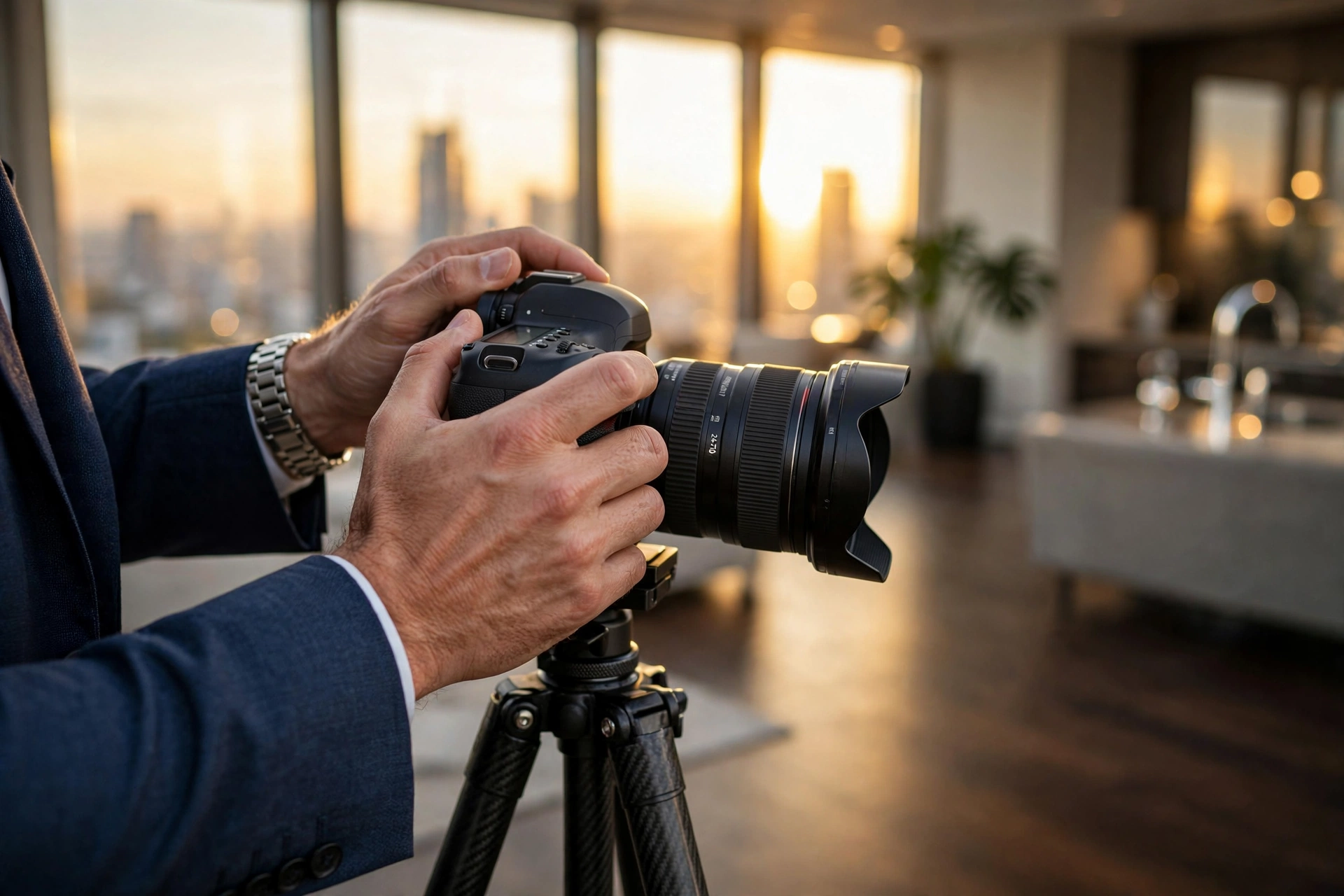


When Is the Optimal Time for Real Estate Photo Enhancement?
The day your listing photos hit the Multiple Listing Service (MLS) is the single most important moment in your property's marketing lifecycle. However, a critical mistake persists across the industry: most agents believe the optimal time for real estate photo enhancement occurs after the photos are taken. In reality, the decision to enhance must be integrated into the pre-production phase. Waiting until you have reviewed raw images and felt disappointed is the most expensive logistical error a listing agent can make.
In my experience working with high-volume brokerage firms, I have seen agents spend $500 on a professional photographer, only to pay an additional $200 for emergency retouching when the images failed to "pop" on Zillow or Realtor.com. This is a reactive workflow. The most successful agents I know treat enhancement as a core part of their pre-shoot strategy. When you align your enhancement timing with buyer psychology—specifically the critical first 48 hours a listing goes live—you maximize click-through rates and, more importantly, the final offer price.
For a comprehensive overview of how these technologies integrate into a modern marketing stack, explore our comprehensive guide on AI Real Estate Photography & Virtual Staging.

What Is Real Estate Photo Enhancement and Why Does Timing Matter?
📚
Definition
Real estate photo enhancement is the process of using artificial intelligence or professional editing to optimize lighting, color balance, contrast, and composition, often including sky replacement, virtual staging, and object removal, to make a property visually irresistible to potential buyers.
To understand why timing is everything, we must first distinguish enhancement from simple retouching. Retouching is corrective; it fixes a specific flaw, such as a smudge on a mirror or a stray power cord. Enhancement is transformative. It changes how a space communicates its value. It turns a dim, claustrophobic basement into a cozy, inviting den and converts a gray, overcast Tuesday into a vibrant "golden hour" sunset.
The timing of this process is not merely a matter of convenience; it is a matter of psychology. According to research by the National Association of Realtors, nearly 96% of home buyers use the internet to search for homes. In this digital-first environment, the "first impression" happens in milliseconds. If your enhancement workflow is delayed, you miss the window where buyer curiosity is at its peak.
Consider the "Weekend Effect." Most buyers begin their serious searches on Thursday and Friday to plan their Saturday and Sunday tours. If your enhancement isn't completed and uploaded by Thursday evening, you have effectively wasted the most high-traffic window of the week. In a competitive market, a one-week delay can result in thousands of dollars in additional carrying costs and a significant drop in the number of initial offers.
Why Does Optimal Enhancement Timing Drive Measurable Business Outcomes?
The financial impact of visual quality is quantifiable. Data from Redfin indicates that homes with professional photography often sell for significantly more than those with amateur images. However, the timing of that enhancement determines whether you capture that premium or leave it on the table.
From a technical standpoint, the "velocity of the listing" is the key metric. When photos are enhanced and uploaded immediately, the listing generates a surge of initial interest. This creates a "scarcity" effect, signaling to other buyers that the property is in high demand, which often leads to multiple-offer scenarios and higher closing prices.
The following data points illustrate why timing is a financial lever:
- The First 48-Hour Peak: According to internal data trends observed by platforms like Zillow, listings receive the vast majority of their organic views within the first 48 to 72 hours. If your images are raw or unenhanced during this window, you are presenting a sub-optimal version of the product at the moment of highest demand.
- The Price Reduction Trap: Research published in the Journal of Real Estate Finance and Economics suggests that homes requiring initial price reductions spend significantly longer on the market. Bad photos lead to fewer showings, which leads to stagnation, which eventually forces a price drop. Once a property is marked "Price Reduced," buyers often perceive it as "damaged goods," regardless of the home's actual condition.
- The Anchoring Effect: In behavioral economics, "anchoring" occurs when the first piece of information received sets the tone for all following evaluations. If the first image a buyer sees is a dark, cluttered living room, they mentally anchor the value of the home lower. High-quality enhancement resets that anchor upward before the buyer even steps foot on the property.
In my experience, the difference between a listing that goes pending in 10 days and one that sits for 30 is rarely the house itself; it is the visual narrative presented in the first 48 hours.
How Do You Implement a Timing-Optimized Enhancement Workflow?
Most agents follow a "Shoot $\rightarrow$ Review $\rightarrow$ Edit $\rightarrow$ Upload" sequence. This is linear and slow. To maximize ROI, you must shift to a "Parallel Workflow" where enhancement is a pre-determined step.
Step 1: Integrate Enhancement into the Booking Phase (7 Days Pre-Listing)
The moment you confirm a photographer, you should confirm your enhancement provider. If you are using an AI-driven platform like RealVisionAI Blog - AI Real Estate Photography & Virtual Staging, the processing time is negligible (often under 12 seconds), but the administrative coordination is where the lag occurs.
During this phase, you must decide:
- The "Hero" Shots: Which 5-10 images will be the primary draws? These may require advanced virtual staging.
- The "Utility" Shots: Which rooms just need basic light and color correction?
- The Technical Specs: Ensure the photographer is shooting in RAW format, as this provides the data necessary for AI to perform high-end sky replacements and shadow recovery without introducing digital noise.
Step 2: Create an Enhancement Brief (3 Days Pre-Listing)
Don't leave the "look" to chance. Provide a brief to both the photographer and the AI tool. For example, if a property has a stunning backyard but a gloomy sky, specify "Blue Sky Replacement." If the living room is empty, specify "Modern Minimalist Virtual Staging." By defining these needs before the shutter clicks, the photographer can bracket their exposures specifically to support those enhancements.
Step 3: The Rapid Upload Cycle (Listing Day -2)
The bottleneck is usually the photographer's editing time. To bypass this, use a cloud-based AI system. As soon as the raw files are available, upload them to RealVisionAI Blog - AI Real Estate Photography & Virtual Staging. Because the AI processes the images in seconds, you can have a full gallery of market-ready images while the photographer is still packing their gear.
Step 4: Strategic Refinement (Listing Day -1)
Apply specific enhancers based on the property's unique selling points. A luxury waterfront home requires different color grading than a cozy suburban cottage. Use templates that emphasize "brightness" and "airiness" for small condos, and "warmth" and "luxury" for high-end estates.
Step 5: The "Thursday Launch" Execution (Listing Day)
Ensure all enhanced images are uploaded to the MLS by Wednesday evening. This ensures that by Thursday morning, your listing is indexed and ready for the Friday-Sunday surge.

How Does AI Enhancement Compare to Other Methods?
When deciding on a workflow, agents typically choose between three paths: manual professional editing, budget AI tools, or no enhancement at all.
| Feature | Traditional Manual Editing | Generic/Cheap AI Tools | RealVisionAI Professional AI |
|---|---|---|---|
| Turnaround Time | 24–72 Hours | Minutes | 12 Seconds |
| Cost per Image | High ($15–$35) | Very Low ($1–$3) | Moderate/Value ($3–$8) |
| Consistency | Variable (Human error) | Low (Hallucinations) | High (Trained Models) |
| Scalability | Poor (Limited by hours) | High | Extremely High |
| Outcome | High Art / Editorial | Uncanny / "Fake" look | Market-Ready / Realistic |
The "Generic AI" approach often fails because it creates "hallucinations"—furniture that blends into walls or skies that look like cartoons. This destroys trust with the buyer. A professional AI approach, like the one utilized by RealVisionAI Blog - AI Real Estate Photography & Virtual Staging, uses computer vision to ensure that shadows, perspectives, and textures remain physically accurate.
💡
Key Takeaway
Traditional editing is a luxury for editorial magazines; AI enhancement is a business necessity for real estate agents who need to move inventory quickly and consistently.
Best Practices for Timing and Execution
To truly master the timing of your visual marketing, follow these professional guidelines:
- Prioritize the "Lead Image": Your first photo is your "ad." Spend the most time ensuring the enhancement of the primary exterior or main living area is flawless. If the lead image doesn't stop the scroll, the other 39 photos are irrelevant.
- Avoid "Over-Processing": There is a fine line between "enhanced" and "fake." If a buyer arrives at a home and it looks nothing like the photos, you have created a trust deficit. Ensure your AI settings maintain the architectural integrity of the home.
- Sync with Social Media: Schedule your "Coming Soon" teasers on Instagram and Facebook 24 hours before the MLS launch. Use these teasers to test which enhanced images get the most engagement, then move those images to the front of your MLS gallery.
- Utilize Virtual Staging for Vacant Spaces: Empty rooms look smaller and colder in photos. Use virtual staging at the same time as your photo enhancement to help buyers visualize the utility of the space. According to industry standards in property management, staged homes sell faster than unstaged ones.
- Standardize Your Look: Create a "visual brand" for your listings. Whether it's a specific brightness level or a certain color temperature, consistency across all your listings tells potential sellers that you have a professional, repeatable system for marketing their homes.
Implementation Guide: The 12-Second Workflow
For those looking to transition from a slow, manual process to a high-velocity AI system, here is the practical implementation guide.
Step 1: Setup your Account
Create an account at realvisionaire.com. Ensure your payment method is set so there are no interruptions during a listing launch.
Step 2: Direct Upload
Instead of waiting for the photographer to "finish" their edits, request the raw or minimally processed JPEGs. Upload these directly to the RealVisionAI platform.
Step 3: Select Your Enhancement Module
- For Exteriors: Select "Sky Replacement" and "Grass Greenery."
- For Interiors: Select "Brightness Optimization" and "Vertical Correction."
- For Empty Rooms: Select "Virtual Staging" $\rightarrow$ [Choose Style: Modern/Traditional].
Step 4: Review and Download
Since the AI delivers results in 12 seconds, you can iterate in real-time. If a room feels too bright, adjust the slider and re-process.
Step 5: Immediate Deployment
Export the images in the exact dimensions required by your MLS (usually 1200x800 or similar) and upload immediately.
Frequently Asked Questions
Why should I enhance photos before the listing goes live instead of after?
Enhancing photos after the listing is live is a reactive strategy that ignores the "first impression" window. Most properties receive the highest volume of traffic in the first 48 to 72 hours. If you upload raw, unappealing photos, you are essentially advertising a lower-value version of the home during the peak interest period. By the time you "fix" the photos a week later, the most aggressive buyers have already moved on to other listings.
Does AI enhancement make the photos look "fake" or misleading?
Not when using professional-grade tools. Low-end AI often creates unrealistic lighting or distorted furniture. However, specialized platforms like RealVisionAI Blog - AI Real Estate Photography & Virtual Staging use advanced computer vision to maintain realistic proportions and lighting. The goal of enhancement is not to deceive the buyer, but to remove distractions (like gray skies or clutter) and present the home in its best possible light, similar to how a professional editor would manually do.
How does the timing of photo enhancement affect the final sale price?
Visuals act as a psychological anchor. High-quality, professionally enhanced images signal to the market that the home is well-maintained and "premium." This attracts a larger pool of qualified buyers, which increases competition. In real estate, increased competition during the first week of listing is the primary driver of bidding wars, which directly pushes the final sale price above the asking price.
Is it worth paying for enhancement if the house is in poor condition?
Yes, perhaps even more so. For "fixer-uppers," enhancement is essential to highlight the potential of the property. Virtual staging can show a buyer how a dilapidated room could look after renovation, and decluttering tools can remove the mess that often hides the architectural bones of a house. This shifts the buyer's focus from "what is wrong" to "what could be."
How long does the typical AI enhancement process take?
Using a specialized tool like RealVisionAI, the actual processing of an image takes approximately 12 seconds. The total time from upload to download for a standard 30-photo listing is typically under 15 minutes. This is a massive improvement over traditional editing services, which often require a 24-to-72 hour turnaround, potentially costing you several days of peak market exposure.
Recommended Readings
To deepen your understanding of these topics, we recommend reading the following articles:
- AI in Real Estate
- Ultimate AI Lead Generation for Real Estate Agents
- AI property enhancement
- AI staging for realtors
Conclusion
The "best time" for real estate photo enhancement is not a date on a calendar, but a strategic point in your workflow. To win in the 2026 real estate market, you must move from a reactive mindset to a proactive one. By integrating enhancement into your pre-shoot planning and utilizing AI to eliminate the "editing lag," you ensure your properties hit the MLS with maximum visual impact during the critical first 48 hours.
The financial risk of waiting is simply too high. Between the loss of peak traffic and the danger of anchoring your property's value too low, the cost of "waiting to see the photos" far outweighs the small investment in professional AI enhancement.
If you are ready to stop guessing and start accelerating your sales, visit RealVisionAI Blog - AI Real Estate Photography & Virtual Staging to experience market-ready visuals in 12 seconds. Stop letting slow editing cycles kill your momentum and start presenting every listing as a premium opportunity.
Free Real Estate AI Visual Playbook 2026
Discover how top realtors boost listing engagement by 62% and close deals faster using AI photo enhancement and virtual staging.