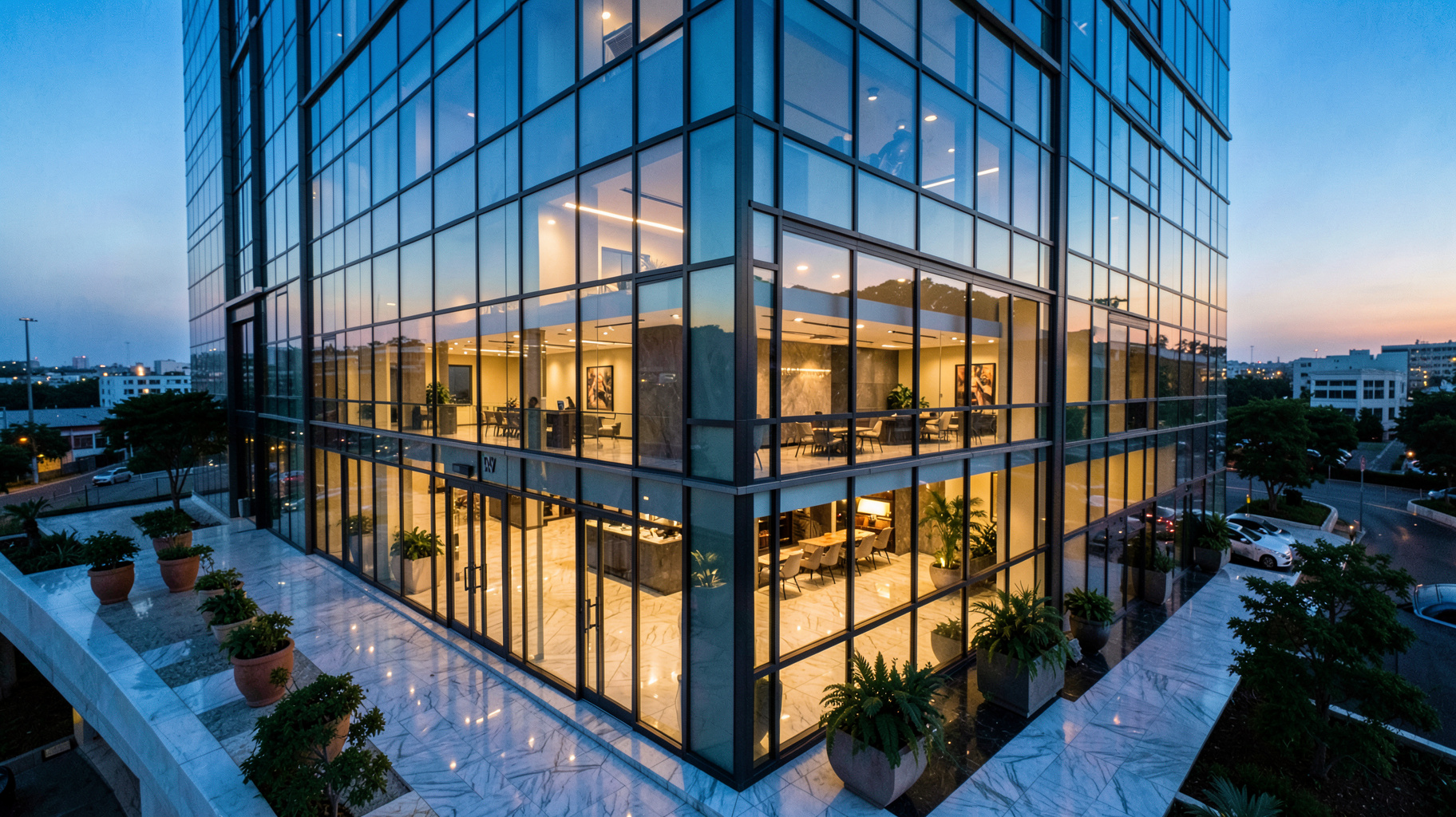


Why Does Your Listing Need Professional Real Estate Image Processing?
A property listing with poor lighting or cluttered rooms doesn't just look "unprofessional"; it actively repels high-intent buyers before they even read the price. In my experience working with high-volume agencies, I've seen listings that are identical in value and location, yet one sells 40% faster simply because the visuals triggered an emotional response. This is where real estate image processing becomes the bridge between a property sitting on the market for months and a bidding war. The "why" is simple: human psychology is wired to prioritize visual heuristics. If the first image doesn't signal "luxury" or "well-maintained," the brain subconsciously marks the property as "low value," regardless of the actual square footage.

What Exactly is Real Estate Image Processing and How Does it Work?
To understand the impact, we first need to define the scope of the technology. It is not merely about "adding a filter" to a photo; it is a sophisticated pipeline of computer vision and color science designed to optimize a space for digital consumption.
📚
Definition
Real estate image processing is the application of digital enhancement techniques—ranging from AI-driven sky replacement and virtual staging to HDR blending and object removal—specifically tailored to make architectural spaces appear more inviting, spacious, and accurate to their best potential.
When we talk about this process, we are discussing the intersection of computer vision and image editing. The goal is to solve the "camera limitation" problem. A camera sensor cannot capture the dynamic range of a human eye; it cannot see the detail in a dark corner while simultaneously capturing the bright blue sky through a window. Professional processing solves this by blending multiple exposures or using AI to synthesize a natural-looking environment.
According to research by Gartner, the integration of AI in visual content creation has shifted from a "luxury" to a "standard" for competitive enterprises. In the context of property management, this means that utilizing artificial intelligence to automate the tedious parts of editing—like removing a stray power cord or brightening a dim hallway—allows agents to focus on closing deals rather than waiting days for a freelance editor to return files.
The process usually involves several layers. First is the correction of vertical and horizontal lines to ensure the house doesn't look like it's leaning. Second is the color correction to remove "yellow" casts from indoor lighting. Third is the atmospheric enhancement, such as converting a grey, overcast afternoon into a "Golden Hour" sunset. This level of detail transforms a photo from a mere record of a room into a marketing asset.
Why Does High-Quality Image Processing Directly Impact ROI?
The financial implications of ignoring your visuals are staggering. In a digital-first market, your photo is your storefront. If the storefront is dirty, no one enters. The consequences of not acting on your image quality include longer days-on-market (DOM), lower offer prices, and a diminished brand reputation for the agent.
Data from the National Association of Realtors (NAR) has consistently indicated that the quality of listing photos is one of the most important factors for buyers when searching for a home online. When images are processed to look their best, they trigger a "halo effect," where the buyer assumes that if the photos are this polished, the home itself must be meticulously maintained.
From a business perspective, the ROI of real estate image processing is found in the reduction of "waste" leads. A lead who clicks on a poor photo and leaves immediately is a wasted impression. Conversely, a high-quality image attracts a lead who is already pre-sold on the feeling of the home. According to McKinsey's reports on digital transformation in consumer behavior, visual quality directly correlates with the "perceived value" of a product. In real estate, increasing the perceived value by even 2-3% can result in thousands of dollars in additional profit for the seller.
Furthermore, the cost of "not acting" is the cost of vacancy. Every day a rental property sits empty because the photos didn't attract applicants is a direct hit to the bottom line. In high-density urban markets, a one-week delay in leasing can cost a property manager hundreds of dollars in lost revenue. When you factor in the cost of AI-driven processing, which takes seconds, the mathematical choice is obvious: the cost of the tool is negligible compared to the cost of an empty unit.
Practical Implementation: How to Optimize Your Visual Workflow
Implementing a professional image workflow doesn't require you to become a master of Photoshop. The modern approach is to leverage specialized AI studios that automate the technical heavy lifting.
For those looking to scale, the most efficient path is using RealVisionAI Blog - AI Real Estate Photography & Virtual Staging. Instead of manually masking every window or spending hours trying to "lighten" a room, you can achieve market-ready visuals in roughly 12 seconds.
Here is the step-by-step framework for a high-conversion visual strategy:
- The Base Capture: Ensure the room is decluttered. While AI can remove objects, starting with a clean slate produces the most natural results. Use a wide-angle lens but avoid "fisheye" distortion.
- Atmospheric Correction: Apply sky replacement for exterior shots. A bright blue sky with a few fluffy clouds is statistically proven to increase click-through rates compared to grey skies.
- Virtual Staging: For empty properties, use virtual staging to show the home's potential. A room with a conceptual sofa and rug helps buyers visualize the scale and utility of the space.
- Day-to-Dusk Conversion: Transform standard daytime photos into twilight shots. Twilight photos evoke a sense of warmth and "home," making the property feel more prestigious.
- Final Quality Audit: Check for "AI hallucinations" (e.g., a chair leg that blends into the floor) and ensure the colors are consistent across the entire gallery.
💡
Key Takeaway
The goal of processing is not to deceive the buyer, but to remove the "visual noise" (poor lighting, grey skies, clutter) that prevents the buyer from seeing the actual value of the property.

Comparing Your Visual Options: Traditional vs. AI-Driven
Many agents struggle to decide whether to hire a high-end photographer, use a cheap editing service, or adopt an AI-first approach. The choice depends on your volume and your budget.
| Feature | Traditional Photographer | Cheap Outsourcing | Modern AI Approach (RealVisionAI) |
|---|---|---|---|
| Turnaround Time | 3-7 Days | 24-48 Hours | 12-30 Seconds |
| Cost per Image | Very High | Low/Medium | Minimal/Subscription |
| Consistency | Variable by Artist | Often Inconsistent | Mathematically Standardized |
| Flexibility | Low (Need Re-shoot) | Medium (Request Edit) | High (Instant Iteration) |
| Best For | Ultra-Luxury Estates | Low-Volume Agents | High-Growth Agencies & PMS |
The traditional approach is often too slow for the pace of 2026's real estate market. By the time the "perfect" photos arrive, the lead has already scrolled past your listing for a newer, faster-posted one. Generic AI tools, on the other hand, often lack the architectural "intelligence" to know that a wall should be straight or that a window shouldn't be blown out. A specialized solution like RealVisionAI Blog - AI Real Estate Photography & Virtual Staging bridges this gap by combining professional architectural standards with the speed of artificial intelligence.
Common Misconceptions About Image Processing
There are several myths that hold agents back from fully embracing real estate image processing. Most guides get this wrong by suggesting that "natural is always better."
Myth 1: "Processed photos look fake and mislead the buyer."
This is a misunderstanding of the goal. There is a massive difference between enhancing a photo and altering the reality of the home. Removing a trash can from a corner or brightening a dark room isn't misleading; it's removing distractions. If a buyer enters a home and it looks exactly like the photos, but "cleaner," they aren't angry—they are impressed.
Myth 2: "I can just use my iPhone's 'Auto-Enhance' feature."
Consumer-grade AI is designed for portraits and landscapes, not architecture. It often over-saturates colors or creates weird shadows in corners. Professional image editing uses specific algorithms to maintain the integrity of straight lines (perspective correction), which is something a standard phone filter cannot do.
Myth 3: "Virtual staging is too expensive to be worth it."
In the past, staging required renting furniture and paying a crew. Now, digital staging is a fraction of the cost. The ROI comes from the fact that empty rooms feel smaller and colder to a buyer. By adding a virtual living room set, you increase the perceived square footage and the emotional connection.
Frequently Asked Questions
Does real estate image processing actually increase the selling price?
While the processing itself doesn't change the physical structure of the house, it significantly impacts the "perceived value." When a property is presented with high-end visuals—including twilight conversions and professional color grading—it attracts a higher tier of buyers. This increased competition often leads to multiple offers, which naturally drives the final sale price upward. In a competitive market, the "premium" feel of the photography justifies a premium asking price in the eyes of the consumer.
How long does it actually take to process a full set of listing photos?
Using traditional methods, you might wait a week for a professional editor to return a gallery. With a specialized AI workflow like the one provided by RealVisionAI Blog - AI Real Estate Photography & Virtual Staging, the processing time is reduced to seconds. Most enhancements, such as sky replacement or room brightening, happen almost instantaneously. This allows agents to upload to the multiple listing service (mls) the same day they shoot the property, giving them a critical head start in visibility.
Is it legal to use AI to remove objects from a room in a listing?
Generally, removing "clutter" (such as a laundry basket or a stray wire) is considered a standard part of professional photography and is not viewed as deceptive. However, removing permanent fixtures (like a large crack in the wall or a permanent stain on the carpet) could be seen as a misrepresentation of the property's condition. The best practice is to use real estate image processing to highlight the home's best version while maintaining the honesty of the structure's condition.
What is the difference between HDR and standard AI processing?
HDR (High Dynamic Range) is a technique where multiple photos are taken at different exposures and merged. It is great for capturing detail in both bright and dark areas. AI processing goes a step further by "understanding" what is in the image. For example, an AI knows that a "sky" should be blue and "grass" should be green, and can replace an entire overcast sky with a sunny one, something HDR cannot do. Using both in tandem creates the most visually compelling images.
Which is more effective: Virtual Staging or Physical Staging?
Physical staging can be powerful but is prohibitively expensive and logistically difficult. Virtual staging provides a similar psychological trigger—helping the buyer visualize the space—at a tiny fraction of the cost and time. For most properties, virtual staging is more effective because you can provide multiple "looks" (e.g., a modern minimalist style and a traditional family style) for the same room, appealing to a broader range of potential buyers.
Final Thoughts on Real Estate Image Processing
The real estate market in 2026 is no longer just about location, location, location; it is about attention, attention, attention. In an era of infinite scrolling, you have less than two seconds to convince a buyer to click on your listing. If you are relying on raw, unprocessed photos, you are essentially leaving money on the table and handing your competitors a massive advantage.
Investing in real estate image processing is not an "extra" cost; it is a fundamental part of your marketing budget. By leveraging tools like RealVisionAI Blog - AI Real Estate Photography & Virtual Staging, you can transform a mediocre gallery into a high-conversion asset in seconds. Whether it is through virtual staging, sky replacement, or cinematic enhancements, the goal is to create an emotional bridge between the buyer and the property.
Stop letting poor lighting and cluttered rooms kill your deals. Elevate your listings today and see the difference in your days-on-market and final sale prices.
For an instant upgrade to your property visuals, visit realvisionaire.com and experience market-ready listing visuals in 12 seconds.
Recommended Readings
To deepen your understanding of these topics, we recommend reading the following articles:
- AI in Real Estate
- Ultimate AI Lead Generation for Real Estate Agents
- AI property enhancement
- AI staging for realtors
Free Real Estate AI Visual Playbook 2026
Discover how top realtors boost listing engagement by 62% and close deals faster using AI photo enhancement and virtual staging.