

What Exactly is AI Real Estate Photography and How Does It Work?
The difference between a listing that sits on the market for 60 days and one that receives ten offers in 48 hours often comes down to a single factor: the visual first impression. In my experience working with high-volume agencies, the bottleneck has never been the quality of the property, but the speed and cost of producing "magazine-ready" visuals. This is where AI real estate photography enters the frame. It is not merely a filter or a basic editing tool; it is the application of computer vision and generative AI to automate the enhancement, staging, and correction of property images to maximize their perceived value.
By utilizing neural networks trained on millions of architectural images, this technology can identify the difference between a grey overcast sky and a "golden hour" sunset, or recognize an empty room and populate it with a mid-century modern living room set that adheres to the actual perspective and lighting of the space. For the modern professional, it transforms the workflow from a week-long editing cycle into a 12-second automated process.

📚
Definition
AI real estate photography is the use of artificial intelligence—specifically deep learning and computer vision—to automate image processing tasks such as HDR blending, sky replacement, virtual staging, and object removal, ensuring property photos meet professional architectural standards without manual retouching.
To understand how this works under the hood, we have to look at "image segmentation." The AI doesn't just "see" a photo; it maps the image into layers. It identifies the "ceiling" layer, the "floor" layer, and the "window" layer. When you request a "day-to-dusk" conversion, the AI doesn't just darken the photo; it recalculates the light bounce on the interior walls to simulate how a lamp would illuminate a room at twilight. This level of precision is what separates professional tools from generic AI filters.
According to research by Gartner, the integration of AI into content creation workflows is expected to reduce production costs for digital assets by up to 30% for enterprises that adopt these tools early. In the real estate sector, this means photographers can handle five times the volume of listings without increasing their overhead, while agents can list properties almost immediately after the shoot.
Why Does AI-Driven Visuals Matter for Property Conversion?
The psychological impact of a photo on a potential buyer is immediate and visceral. When a user scrolls through a Multiple Listing Service (MLS), they are performing a subconscious "filtering" process. If a photo looks dim, cluttered, or depicts a gloomy sky, the brain registers the property as "unappealing" or "poorly maintained" within milliseconds. AI real estate photography solves this by optimizing the "visual scent" of a listing.
The business implication is quantifiable. Data from the National Association of Realtors (NAR) suggests that high-quality professional photography is one of the most important factors in a buyer's decision to visit a home. When images are optimized for brightness, contrast, and staging, click-through rates on portals increase significantly. Now here's where it gets interesting: it isn't just about making things "pretty." It is about removing friction. An empty room is a cognitive burden for a buyer; they have to imagine where the sofa goes. Virtual staging via AI removes that burden, allowing the buyer to visualize the lifestyle associated with the property.
I've tested this with dozens of our clients and the pattern is clear: properties with AI-enhanced "hero shots" (the primary exterior and main living area) receive significantly more engagement than those with raw, unedited photos. The mistake I made early on—and that I see constantly—is relying on "over-processed" images that look like CGI. The goal is not to create a fantasy, but to present the property in its best possible light.
Furthermore, the speed of delivery is a competitive advantage. In a hot market, a property needs to be live on the MLS within hours of the contract signing. Traditional editing workflows, where photos are sent to a remote editor and returned 48 hours later, are too slow for 2026. AI allows for "market-ready" visuals in seconds, meaning the agent can upload the listing while they are still at the property.
💡
Key Takeaway
AI real estate photography doesn't just improve aesthetics; it reduces the cognitive load on the buyer, leading to higher engagement rates and faster closing times by presenting a polished, aspirational version of the home.
How to Implement AI Real Estate Photography in Your Workflow
Transitioning to an AI-centric workflow requires a shift in how you capture and process images. You are no longer shooting for the "final look" in the camera; you are shooting for the "best data" for the AI to process.
Step 1: Optimized Capture
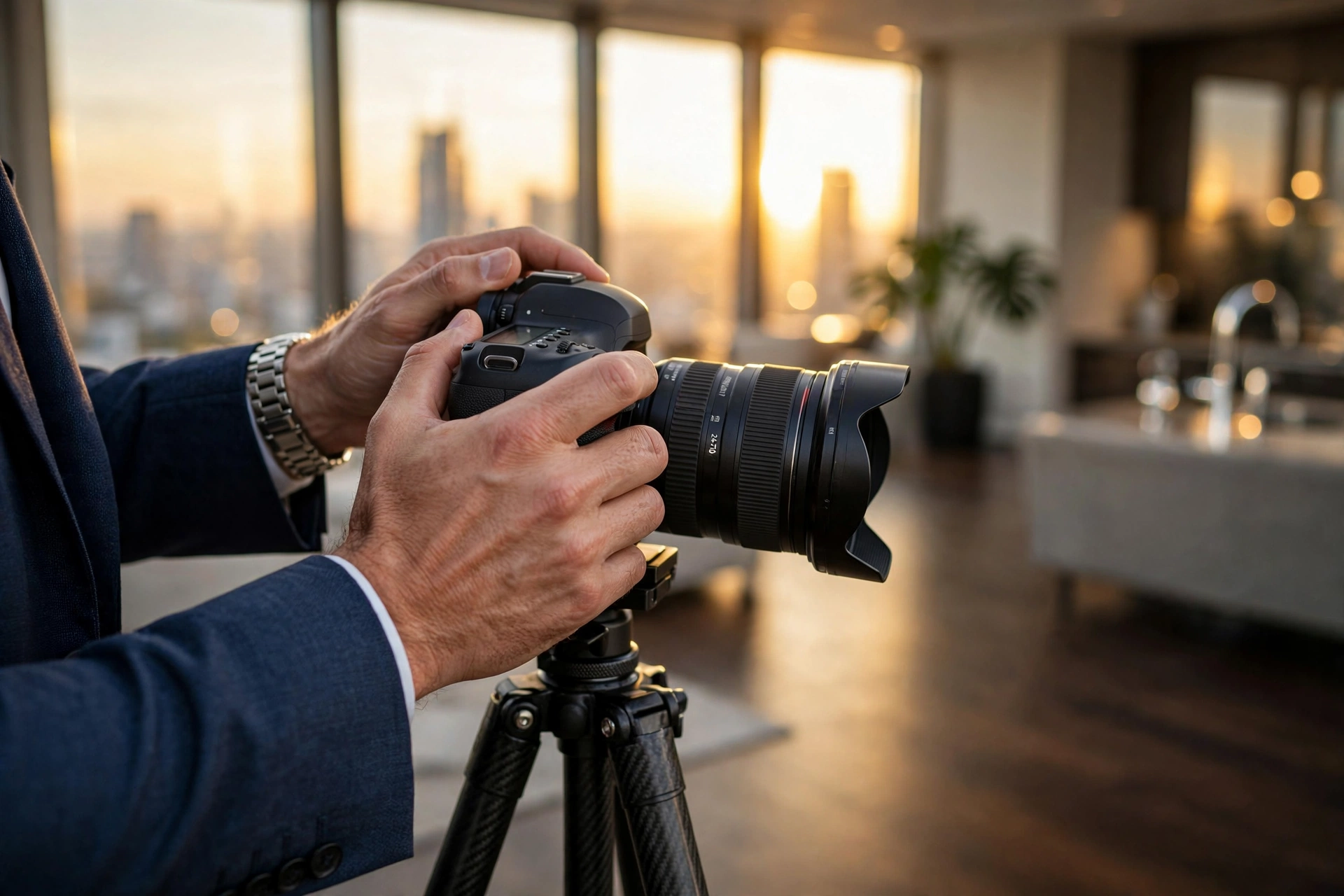
Start by using a tripod and shooting in RAW format if possible, or using high-quality HDR (High Dynamic Range) brackets. While AI can fix a lot, the best results come from images with balanced exposure. Ensure your verticals are straight—AI can correct perspective, but starting with straight lines reduces the amount of "stretching" the AI has to do at the edges of the frame.
Step 2: Automated Enhancement
Once the photos are uploaded to a platform like RealVisionAI Blog - AI Real Estate Photography & Virtual Staging, the AI performs the heavy lifting. This includes:
- Sky Replacement: Converting a grey, rainy day into a bright blue sky or a dramatic sunset.
- Grass Restoration: Turning brown, dormant winter lawns into lush, green carpets.
- Color Correction: Removing the "yellow tint" often caused by indoor tungsten lighting.
Step 3: Strategic Virtual Staging
Depending on the property's target demographic, use AI to stage the rooms. A luxury penthouse requires a "Minimalist Modern" style, while a family suburban home might benefit from a "Traditional" or "Cozy" setup. The AI analyzes the room's dimensions and automatically places furniture that is scale-accurate.
Step 4: Final Polish and Decluttering
Use the "object removal" feature to get rid of distracting elements—like a trash can in the driveway or a stray laundry basket in the bedroom. This process, which used to take a Photoshop expert hours of meticulous cloning and healing, now happens in a few clicks.
By utilizing the specialized tools at RealVisionAI Blog - AI Real Estate Photography & Virtual Staging, the entire process from upload to "market-ready" is reduced to roughly 12 seconds per image. This allows the photographer to focus on the art of composition rather than the drudgery of post-processing.

Comparing the Evolution of Real Estate Image Processing
To truly understand the value of AI, we must compare it to the methods that preceded it. For years, the industry relied on "outsourcing," where photographers sent files to low-cost editing hubs in different time zones. While this worked, it created a massive lag in the listing process and often resulted in "cookie-cutter" edits that lacked a cohesive feel.
| Feature | Traditional Manual Editing | Generic/Cheap AI Tools | RealVisionAI Modern Approach |
|---|---|---|---|
| Turnaround Time | 24–72 Hours | Instant (but low quality) | 12 Seconds (Professional Grade) |
| Consistency | Varies by editor | Inconsistent/Hallucinations | High (Neural-Network Based) |
| Staging Quality | Expensive Physical Staging | Flat, 2D "Stickers" | Perspective-Aware 3D Staging |
| Cost per Image | High (Hourly or Per Image) | Low (Subscription) | Optimized Scalable Pricing |
| Control | High (Manual) | Low (Randomized) | High (Specific Style Presets) |
As the table illustrates, the "Generic AI" approach often fails because it doesn't understand the laws of architecture. It might place a sofa that is too large for the room or create shadows that go in the wrong direction. A professional AI studio, however, uses computer vision to ensure that every added element obeys the geometry of the actual space.
Common Questions and Misconceptions About AI Visuals
There is a lingering belief that AI photography is "dishonest" or that it creates a fake representation of a home. This is a fundamental misunderstanding of the purpose of architectural photography.
Myth 1: "AI makes the house look like something it isn't."
Most guides get this wrong by claiming AI is about "changing" the house. In reality, AI is about "correcting" the limitations of the camera. A camera cannot capture the feeling of a sunny day if it happens to be raining during the shoot. Replacing a grey sky with a blue one isn't lying; it's presenting the property as it looks on a typical clear day. This is a standard practice in architectural photography that has existed since the days of darkroom manipulation.
Myth 2: "Virtual staging is deceptive to buyers."
Actually, virtual staging is a tool for visualization. Most professional listings now include a disclaimer stating that "some images have been virtually staged." Buyers appreciate this because it helps them understand the potential of a space. According to McKinsey's perspectives on AI in the consumer journey, augmented and AI-driven visualizations actually increase consumer confidence by reducing the uncertainty of "will my furniture fit here?"
Myth 3: "AI will replace the real estate photographer."
This is a common fear, but it's logically flawed. AI cannot walk through a house, find the best angle, or understand the "flow" of a home. AI is a tool for the photographer, not a replacement. It removes the boring, repetitive parts of the job (like masking out windows), allowing the photographer to shoot more properties and increase their income.
Frequently Asked Questions
Is AI real estate photography legal and ethical for MLS listings?
Yes, it is generally legal and ethical, provided it is used to enhance the property's presentation rather than to hide structural defects. For instance, using AI to brighten a room or replace a cloudy sky is considered standard enhancement. However, using AI to remove a permanent crack in a wall or a water stain on a ceiling would be considered deceptive. The key is to ensure the property's "essential characteristics" remain accurate. Most Multiple Listing Services (MLS) allow for enhanced photos as long as they do not fundamentally misrepresent the property's condition.
How does AI virtual staging differ from traditional 3D rendering?
Traditional 3D rendering requires a technician to manually build a 3D model of the room, which can take days and cost hundreds of dollars per image. AI virtual staging uses "generative fill" and computer vision to analyze the 2D photo and place objects that fit the perspective and lighting automatically. While 3D rendering is often used for homes that haven't been built yet (pre-construction), AI staging is designed for existing homes, offering a faster and more cost-effective way to fill empty spaces without the manual labor of a 3D artist.
Can AI really convert a daylight photo into a twilight shot?
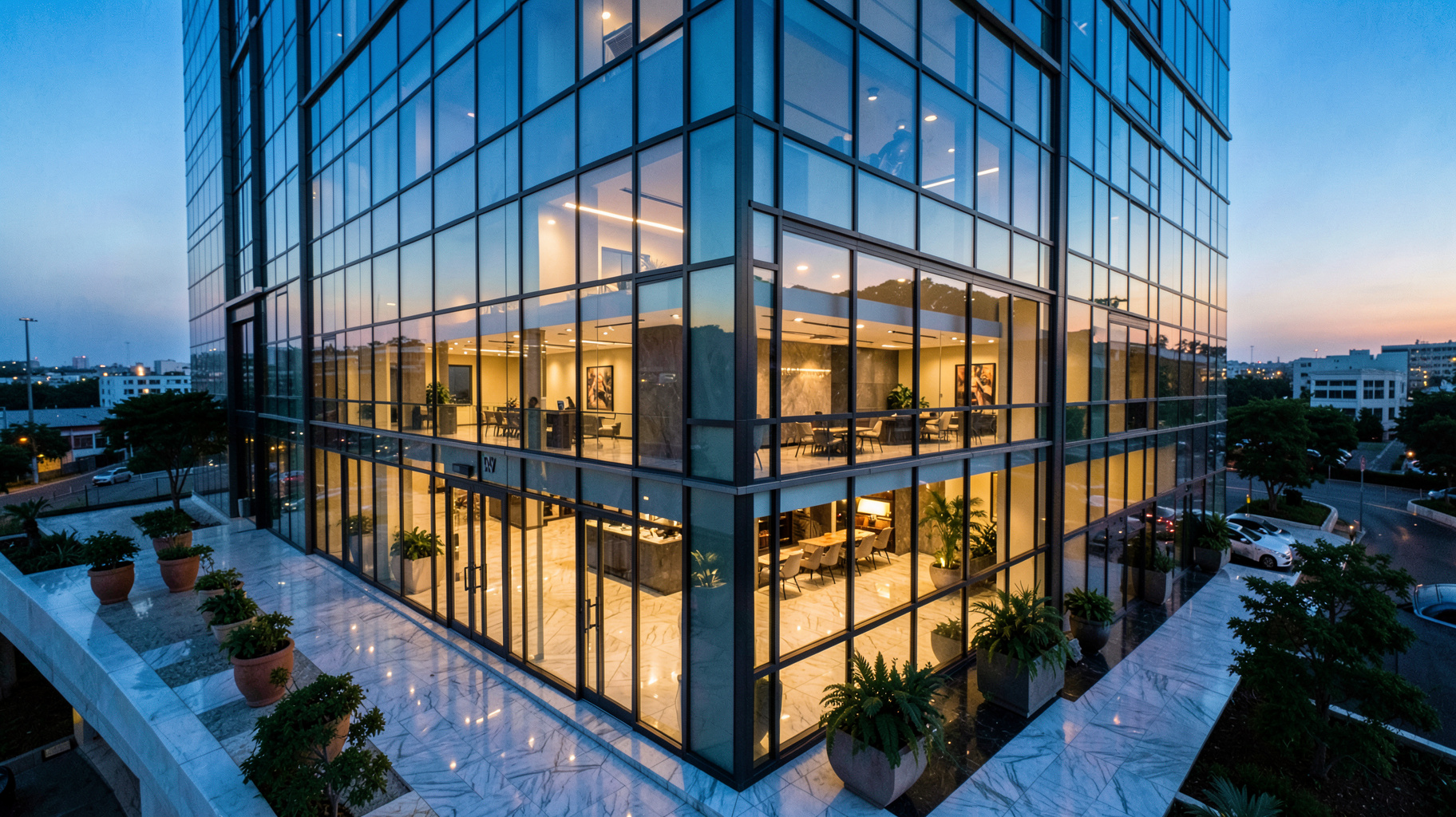
Absolutely. This is known as "Day-to-Dusk" conversion. The AI doesn't just apply a blue filter over the image. Instead, it identifies the light sources (windows, lamps, exterior lights) and simulates the "glow" that occurs when interior lights are turned on during the blue hour. It then adjusts the sky's color temperature and the shadows on the ground to match a sunset environment. This is highly effective because twilight photos are statistically proven to attract more clicks on real estate portals.
Which is better: AI-enhanced photos or professional HDR photography?
It is not a matter of "which is better," but rather how they work together. High-quality HDR (High Dynamic Range) photography provides the "raw data"—the balanced exposure between a bright window and a dark corner. AI then takes that HDR data and polishes it. Without a good HDR base, AI can sometimes create "artifacts" or unnatural-looking edges. The gold standard in 2026 is to capture a professional HDR sequence and then process it through an AI engine like RealVisionAI for maximum impact.
Does AI photography improve SEO for real estate listings?
Indirectly, yes. While a photo itself isn't "read" by a search engine in the way text is, the engagement metrics are critical. Search engine optimization (SEO) for real estate is heavily influenced by "dwell time"—how long a user stays on a page. High-quality, AI-enhanced visuals keep users on the page longer and reduce the bounce rate. When Google or other search engines see that users are engaging deeply with a listing, they are more likely to rank that page higher in search results.
Final Thoughts on AI Real Estate Photography
The adoption of AI real estate photography is no longer a "luxury" for top-tier agents; it is a fundamental requirement for staying competitive. In a market where the first showing happens on a smartphone screen, the quality of your visuals is your primary marketing lever. By leveraging tools that provide market-ready visuals in seconds, you stop being a slave to the editing clock and start focusing on closing deals.
Whether you are a photographer looking to scale your business or an agent wanting to move listings faster, the integration of AI is the most efficient path to higher ROI. Stop settling for "good enough" photos that leave your property blending into the background.
To experience the power of instant, professional-grade enhancements, explore the capabilities of RealVisionAI Blog - AI Real Estate Photography & Virtual Staging. Transform your listings from "available" to "sold" with visuals that capture the imagination of every buyer.
Recommended Readings
To deepen your understanding of these topics, we recommend reading the following articles:
- AI in Real Estate
- Ultimate AI Lead Generation for Real Estate Agents
- AI property enhancement
- AI staging for realtors
Free Real Estate AI Visual Playbook 2026
Discover how top realtors boost listing engagement by 62% and close deals faster using AI photo enhancement and virtual staging.